Toronto attendance: dropping like a Rock

Attendance has long been a topic of conversation within the NLL community. Some of the news is good, like Colorado, Buffalo, Calgary, and this season, Saskatchewan. Some of it is bad, like Georgia, New England, and any team called Stealth. Rochester is Rochester: not super high numbers but consistent.

And then there’s the Rock.

The Rock were once the darling of the NLL: consistently high attendance numbers and always a great team. They went to five straight Championship games, winning four of them. They went 42-9 at home in the regular season from 1999-2005, and 9-2 in the playoffs. They had the highest attendance in the league from 2001-2003 and again in 2005.

I remember wondering (in about the 2004-2005 time frame) what might happen when the Rock had some down seasons. We’d seen the huge crowds during the 11-5 and 10-6 seasons, but what would we see during a 6-10 season? Or after a couple of them? Well, now we know.

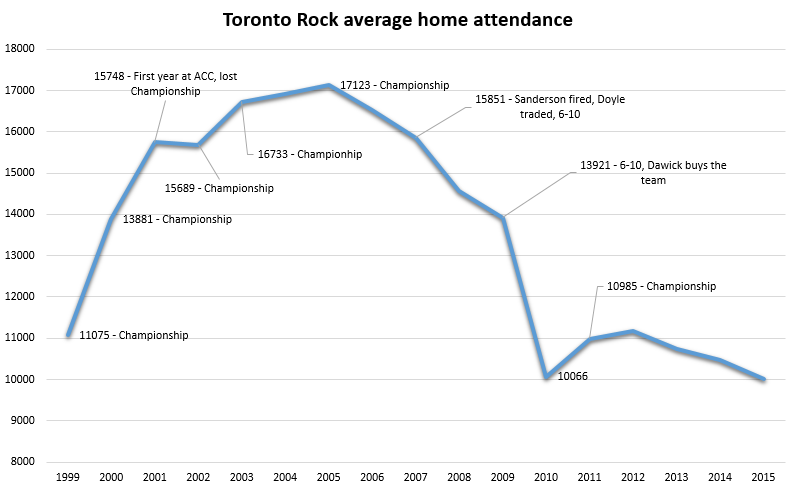
Check out the following chart of average Rock regular season home game attendance per season:
RockAttendance

Six seasons after their debut, the Rock had grown their attendance from 11,075 to 17,123 in 2005. But then it only took five seasons for it to drop to 10,066. What happened? The honeymoon ended. After all the Championship seasons and home victories, they finished 8-8 in 2006, Terry Sanderson was fired, and fan favourite Colin Doyle was traded. Then they had three straight sub-.500 seasons, missing the playoffs in two of them. They went four full seasons between home playoff games. Jim Veltman, the only captain in team history to that point, also retired in that span. Attendance dropped like a rock (pun most certainly intended) and recovery since 2010 has been minimal.

The most misleading thing about this graph is that the biggest single-season decrease came in 2010, when average attendance dropped 3,855. 2010 was also the first year that Jamie Dawick owned the team, making making it look like Dawick’s ownership caused the drop. Could it be that the fans thought the previous ownership group (which included such names as Don Cherry, Tie Domi, and Brad Watters) was giving up on the team, and so they should too? That seems unlikely, so Dawick’s presence is almost certainly not the cause. Indeed, the first thing he did as owner was to get Terry Sanderson back, the re-acquisition of Colin Doyle followed, and the team made the Championship game in 2010, losing to the Stealth.

That playoff success did bump attendance a little, about 900 per game. Winning the Championship in 2011 also gave it a bump but a small one, not even 200. It’s dropped every season since. This year (as of March 19), they’re right smack in the middle in 5th place at 9,039 per game, just below the league average of 9,219. The 0-6 start did not help, nor did the Thursday night game in January or the two home games in the same weekend in mid-March.

You might think that in a city that hosts the hapless Toronto Maple Leafs, who sold out every game at Maple Leaf Gardens from 1946 to 1999 and then every game at the Air Canada Centre from then until 2015, wouldn’t have attendance problems with a team that’s actually good. But it seems that not only is Toronto a Leafs-first city (we always knew that), but they’re awfully quick to dive off the bandwagon once a team stops winning. We also saw that in the mid 1990’s – after the Blue Jays won their back-to-back Championships, the baseball strike plus a mediocre team dropped average attendance at SkyDome from over 50,000 in 1993 to 31,600 only four years later.

So Rock fans, here’s a plea. Get your butt out to the ACC, and bring friends. This is a gate-driven league, meaning the way the league and teams make money is primarily ticket sales. The NFL has such lucrative TV deals that they could play to empty stadiums every week and still make a fortune. That’s not the case with NLL teams, some of whom (like Toronto) actually pay to get their games televised in order to bring in new fans. Jamie Dawick pays big money to get Rock games on TV and to rent the ACC, and I don’t know for sure but I suspect he’s losing money on every one. That can’t continue forever so make sure you support the team by getting to as many games as you can. And buying merch doesn’t hurt either.

Note: Before you accuse me of being a Rock shill, I receive no compensation of any kind (money, tickets, swag) from the Rock or the league. I just want the team to succeed.
Missing the point

In his excellent 30-second shot clock column this week, Teddy Jenner mentioned that if the league used points rather than games behind to decide the standings, they’d look a little different. Then he went so far as to say:

Maybe it’s because the league doesn’t have ties that it’s gone with this system but maybe it’s time to go the route of the NHL and give points for wins and maybe even an OTL point.

Over twitter, I expressed my disagreement with this idea and Teddy asked why, and the best I could come up with on the spot was that I didn’t like rewarding teams that lose. If you lose, you lose. You don’t get a partial win for losing in 18 innings, nor do basketball or football teams gain anything for losing in overtime. So why hockey?

Well, we kind of know why: it’s because hockey used to have ties. Once the NHL initiated the shootout, they should have scrapped the points system since there was no longer the possibility of a tie. For unknown reasons they didn’t. But the NLL never had ties in the first place, so a points system makes no sense.

Callum Crawford wins a 2015 game in OT

Here are five reasons (in no particular order) why this is a bad idea. This assumes the NHL system: a win gets you 2 points, an OT loss gets you 1, and a regulation loss gets you 0.

  1. This kind of points system makes sense if there are wins, ties, and losses. A tie isn’t as good as a win, but better than a loss. But if there are no ties, there are just wins and losses. Why are the points necessary? Teddy says “maybe even an OTL point” – what if you don’t include the OTL point? If you just give two points for a win and nothing for a loss, then you’re just ranking teams by wins. This means that a team that has won more than another team but has also lost more is still ranked higher. In the points system a team that’s 5-4 is ranked ahead of a team that’s 4-3. In the current system, they’d be tied. At the end of the season, it won’t matter but during the season, the points system is less fair.
  2. If you lose a game in regulation time, you get 0 points. But if you lose in OT, you get one point. You are rewarded for keeping the score tied for 60 minutes – making it to OT is somehow “less” of a loss. Does a team really need to be rewarded for taking slightly longer to lose? So shouldn’t winning in OT be “less” of a win? It seems that if we’re going this route, we should give 3 points for a regulation win, 2 for an OT win, and 1 for an OT loss.
  3. It’s near the end of the season and a team is on the threshold of missing the playoffs. With five minutes left in the fourth quarter, the score is tied. The team realizes that if the 4th quarter ends tied, they get a point. They decide it’s in their best interest to play as defensively as possible, making sure that they get the single point, and then fight over the extra point in OT. As a result, we have play-it-safe boring lacrosse. And what if both teams are in the same situation and desperately need that single point? We end up with the most boring five minutes in lacrosse history as both teams run out the clock and take a token shot every 29 seconds.
  4. If you lose a regular season game in OT, three points are awarded. Since the losing team gets one of them, they sort of get 1/3 of a win. What if you lose game 3 of the Championship series in OT? Do you get 1/3 of the Championship? (SPOILER: no)
  5. Related to #4, even the NHL doesn’t use this system in the playoffs. If you lose after 15 seconds of OT in the regular season, you get a point. If you lose after 3½ periods of OT in the playoffs, you just lose. Consistency.

The ironic part is that many NLL players talk in interviews and on twitter and such about a win giving them “two points”. That’s how ingrained the NHL is in Canadian culture.

BTW just to clarify the title of this article, I’m not saying Teddy is wrong or hasn’t thought it through. This is just all my opinion. He’s a very knowledgeable guy when it comes to sports in general and knows more about lacrosse than I ever will. I just thought it was a clever pun.

Goalie tandems

Back in my day, things were simple. You had a goalie who played every day. If he had a bad outing or was sick or something, you put the backup goalie in but the next game, the regular goalie was back. Bob Watson was the man and Anthony Cosmo was his backup. We Rock fans all knew Cosmo was more than capable of being a starter, but he was unquestionably Whipper’s backup at the time. Eliuk was the man in Philly. O’Toole was the man in Rochester. Chugger in Buffalo. Nash in Colorado.

That’s just how it worked, and we liked it.

And then the Minnesota Swarm came along and changed everything.

In 2012, the Swarm started the season with a 20-14 loss to the Mammoth. Longtime Swarm goalie Nick Patterson went the distance and gave up all 20 goals on 50 shots. He was immediately benched and rookie Tyler Carlson started the next game, winning 19-11 over the Bandits. They returned to Carlson for the next two, a 16-14 loss to the Knighthawks and then a 10-9 overtime win over the Rush. Two nights after the Rush victory, the Swarm kept the Knighthawks to only 6 goals with a sparkling debut performance from Evan Kirk. That was when Patterson was released.

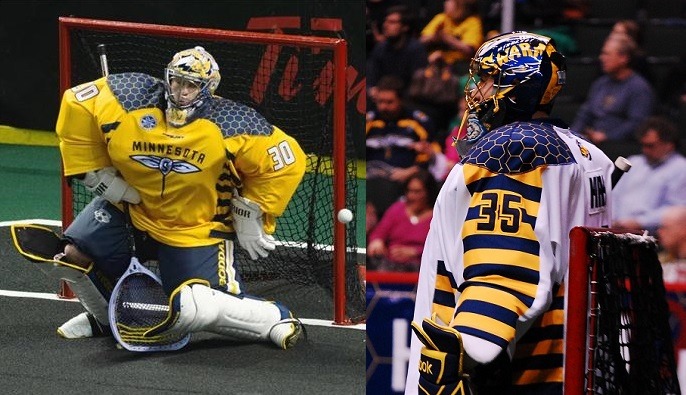
Carlson (left) and Kirk

After that, the Swarm just kept going back and forth. Carlson, 11 goals against. Then Kirk, only 7 goals against. Carlson again, 11 goals. The Swarm finished the season at 9-7 and lost in the first round of the playoffs. But they had proved that their tandem of rookie goalies had worked: Kirk played all 60 minutes of six games, winning 4 and holding opponents to <10 goals in three of them. Carlson went the distance in seven, winning four. Both finished in the top 10  in GAA and if you remove the “true” backups, they were first and fifth.

Since then, the Swarm has gone with a tandem goalie plan pretty much every season. First Carlson and Kirk, then Carlson and Higgins, and now Higgins and MacDonald. But the idea seems to be catching on.

The Swarm still have Higgins and MacDonald, though MacDonald has played twice as many minutes as Higgins this year. Toronto has Rose and Miller, splitting time about evenly, just like last year. Calgary had Scigliano backing up Poulin a couple of years ago, then that was reversed last year. This year it’s more even. Cosmo is the main guy in Buffalo but they have a ton of confidence in Davide DiRuscio who filled in very well when Cosmo was recently hurt. At 38, Cosmo is the fourth-oldest player in the league, so a tandem going forward may be in the cards in Buffalo.

But not everyone has bought into it. New England has Evan Kirk, Colorado has Dillon Ward, and Rochester has Matt Vinc, and those guys are the unquestionable starters for their teams. Saskatchewan is having no part of this at all. Aaron Bold has more minutes than any other goalie and his backup, Tyler Carlson, has the fewest.

Vancouver is a weird case. They have said on more than one occasion that Eric Penney is their starter and Tyler Richards is the backup, but Richards has played almost 70% of the minutes in the four games since his return. A Richards/Penney tandem would not be surprising the rest of the way in 2016.

Now having said all that, the Minnesota Swarm didn’t invent this idea. It had been done before. In 2007 the Bandits had Steve Dietrich & Mike Thompson, and the next year they had Ken Montour & Thompson. In 2010, the Washington Stealth had Matt Roik & Tyler Richards. Even the Swarm themselves had Matt Disher & Nick Patterson in 2006 and Kevin Croswell & Patterson in 2009. But it really seemed to take off in 2012 once Kirk and Carlson became the two-headed monster for the Swarm.

In some of those older cases, it might have been “play one goalie until he has a crappy outing, then play the other until he blows it” but the tandems we’re seeing now don’t work that way, and maybe that is what the Swarm started. Kirk would allow 6 goals in a game and Carlson would start the next one. The idea of “ride the hot goalie” isn’t what they were doing.

Maybe in a few years, that will be the norm – every team has their pair of goalies and they each start half of the games. It certainly seems to make more sense than having one goalie play every minute of every game and then when he has an off night, the other goalie who’s played zero minutes for half a season is then expected to come in and be effective. But if we ever get to the point where every team is doing this, I suspect it won’t be until after Matt Vinc and Aaron Bold retire.

Top 6 surprises of 2016

I did this last year and it was fun, so here’s this year’s version of the top surprises at the season’s midway point. I only did five last year, but I couldn’t narrow down this list any further.

6. Logan Schuss & Johnny Powless

These guys both struggled with their original 2015 teams and were traded for each other in what has turned out to be one of those rare trades where each team thinks they got the better of the deal, and they’re both right. Interestingly, Powless and Schuss had almost identical points/game averages at the time of the trade – Schuss at 3.56, Powless at 3.55. After the trade, Schuss’s numbers jumped 1.3 points to 4.86/gm while Powless’s dropped 1.38 to 2.17/gm.

But this year’s a different story for both of them. Nobody’s really surprised that these guys are having good seasons. But they’re not just having good seasons, they’re having career seasons. Each is leading his team in scoring, and that’s saying something when Schuss is playing with guys like Billings and Duch. Each is averaging 2+ points/game more than last season and also 2+ more than their career average. At this rate, Powless will finish with 93 points, beating his career high by 40, and Schuss will finish with 114, beating his career high by 37.

5. Dhane Smith

Dhane SmithSimilar to Schuss and Powless, nobody’s surprised that the Great Dhane is leading the Bandits in points. Nobody’s particularly surprised that he’s leading the league in points. To be 21 points ahead of second place halfway through the season is surprising, but it gets better.

Last season, Shawn Evans shattered the single-season points record with 130, breaking the previous record by 14. Evans averaged 7.22 points per game, a pace many thought he wouldn’t be able to keep up for the whole season. Some have even asked if anyone would ever be able to match it. But only one year later, Smith is not just on a pace to break that record, he’s way ahead. Smith is averaging 8.44 points per game, a pace that will give him 152 points. In fact, Smith only needs to average 6 points per game over the rest of the season to break Evans’s record so even if he falls off a bit, the record is still quite breakable.

4. Welcome to Saskatchewan

Many people, myself included, criticized Edmonton Rush owner Bruce Urban for leaving Edmonton and taking the team to Saskatchewan last year. While I don’t particularly like the way he did it (announcing the possible move as a threat during the playoffs, criticizing the City of Edmonton during negotiations, etc.) and I still think Edmonton is a legitimate lacrosse market, it looks so far like this was a great move. Saskatoon has welcomed the Rush and the NLL with open arms. The municipal government and local businesses seem to have grabbed hold of the team and the crowds have been great. The Rush are averaging 9765 per game, a number higher than eight of the ten seasons they were in Edmonton.

Now, let’s remember that the Rush averaged over 10,000 per game for their first two seasons, when they were a combined 7-25. So perhaps we should wait until season 3 or 4 in Saskatchewan before deciding whether or not this was a good idea long term. But for now, it’s great to see.

Another big pro of having a team in Saskatchewan: I can now type the word Saskatchewan in less than four minutes.

3. Struggling goaltenders

In 2015, six goaltenders had a GAA under 10. One was Cody Hagedorn who played about 14 minutes, and another was Angus Goodleaf who played 92 minutes. But the rest played at least 250 minutes and two of them (Aaron Bold & Matt Vinc) were everyday starters with over 1000 minutes.

This year, only one goalie has a GAA under 10, Tye Belanger who’s only played 43 minutes. Bold is third at 10.53 and Vinc is eighth at 11.76. Bold’s GAA is over a full goal higher than 2015, and almost two higher than 2014. Vinc’s is two goals higher than both 2015 and 2014. He has only had a GAA that high twice in his career: 2006 when he played 14 minutes with the Stealth, and 2012 when he had a 12.22 GAA but won the Championship with the Knighthawks.

But they’re not the only goalies having tough seasons – Nick Rose, Brandon Miller, Angus Goodleaf, Frankie Scigliano, Anthony Cosmo, Zack Higgins, Davide DiRuscio, and Tyler Carlson all have higher GAAs than last season. On the flipside, Dillon Ward, Evan Kirk, and Mike Poulin are all having strong seasons, and Eric Penney and Tyler Richards also have lower numbers than last season though they’re in a weird situation – their roles are reversed and Richards has only played in a couple of games.

2. The Toronto Rock

0-6 to start the season? Have you ever heard of such a thing? The Rock had never started a season worse than 0-4 in their history, and this is a team that went to the Championship game last season. They averaged 6.25 goals in their first four games, and then gave up 18.5 in the next two. Finally they got the offense and defense both working at the same time and have pulled off two wins in a row.

The only reason that this is not the #1 most surprising thing is that the Roughnecks did exactly the same thing last year, including going to the Championship game the previous year. The only difference is that the Roughnecks had never started a season worse than 0-2. The Roughnecks pulled it together though, and not only made the playoffs but went to the Western division final. The Rock seemed to have pulled themselves together as well, so the fact that Calgary salvaged their season last year gives the Rock some hope.

1. The New England Black Wolves

The Black Wolves started last season with a victory over the Bandits and then a 17-7 blowout of the Knighthawks, and things looked very promising for the relocated Wings. But then they must have realized that they were the relocated Wings. When I think about last year’s Black Wolves, I think of a team that wasn’t very good but looking at the numbers, they were even worse than that. After their 2-0 start they went 2-14. Their 14 losses is the second-worst in league history and their -63 goal differential is the fifth-worst in league history. They gave up 20 goals three times, and lost by eight or more five times. Only two teams have ever given up more goals than the 249 that the Black Wolves gave up in 2015 (though one was the Stealth of 2015).

So a coaching change was not all that surprising, though picking up the reigning league MVP was. But Clark, Veltman, and Evans can’t make that much of a difference, can they? Clearly, they can.

Kevin Crowley

Last year, they only had six players with more than 30 points – and it’s really only five since two of them were Garrett Billings and Kevin Crowley, who were traded for one another. This season, they already have four with 30, and they’ve only played seven games. Pat Saunders led the team with 68 points last season; Saunders, Evans, Kevin Crowley, and Kevin Buchanan are all on pace to beat that this year. In fact, Shawn Evans could have that total by the end of next weekend – after nine games.

They’ve already won more games than last season, and are on pace to score 55 more goals and give up 54 fewer. Shawn Evans is still in the MVP conversation (though that conversation is being dominated by Dhane Smith right now), and they have five players above four points per game, something not even the Mammoth can boast. They are allowing a league-low 10.9 goals per game, the defense has been great, and Evan Kirk is playing his best lacrosse since his debut season with the Swarm in 2012. These guys are for real.

Game Report: Knighthawks 6 @ Rock 17

Now that’s more like it.

After last week’s back-and-forth squeaker victory over the Bandits broke the winless streak (which I didn’t write about – sorry, just ran outta time), the 2016 Rock turned into the 2015 Rock for one night, blowing the Knighthawks out of the water 17-6 on Saturday night. On Stephan Leblanc bobblehead night, Leblanc had a great game with 8 points, Colin Doyle had 9 and Rob Hellyer had 11, his third game out of his last four with double-digit points. But the star of the show for the second straight game was Nick Rose who was seeing the ball very well all night and kept the Knighthawks to only 6 goals despite facing 58 shots.

That said, Rosey’s point production did drop by 100%. He did have an opportunity near the end of the game with the Knighthawk net empty but wisely chose not to shoot it. In general, I think that if the game is close enough that you pull your goalie, then it’s close enough for the other team to score an empty-netter. That’s the risk you take. If it’s the goalie that scores, so be it. But I’m not entirely sure why the Knighthawks had pulled their goalie, considering they were down by about ten and it wasn’t a delayed penalty situation. Having the goalie score on them at that point would have been showing them up in my opinion, and not terribly sportsmanlike so I’m glad he pulled back.

Toronto had it all working on this night. The offense was crisp, the defense was strong, and the goaltending was outstanding. It’s certainly possible I’m misremembering but the only shot clock violations I remember from the Rock were on the PK or near the end of the game when they were running out the clock, and they didn’t have any 8-second violations.

Nick Rose

The Knighthawks did not have it working at all. Dan Dawson was a little off all night – missing the net with shots, missing teammates with passes, and losing his head and taking penalties. He took two in this one – intentional off-ball contact (by giving Billy Hostrawser a good shove after the whistle) and head-butting. Heat-butting? Is that really a thing? Yup, though this was only the fourth head-butting penalty in the NLL since 2005. Cody Jamieson also took two penalties – one for slashing and also one for off-ball contact on the same play as Dawson’s. As a Rock fan, seeing both Dawson and Jamieson walking to the penalty box at the same time while the Rock only lost Hostrawser was pretty sweet. Even the Rock themselves thought it was a good trade-off.

In the 4th quarter, Knighthawk captain Sid Smith took three separate slashing penalties in just over five minutes. The Rock scored on two of them. Toronto scored eight power play goals on the night.

Matt Vinc wasn’t on his game either. He was yanked after 14 minutes and 7 goals, though Angus Goodleaf had a pretty good game in relief. He did give up 10 goals but made some timely saves that on a night when their offense was working (and he wasn’t staked to a 7-goal deficit already) would have kept his team in the game. But any time you have Dawson, Jamieson, and Vinc all struggling on the same night, the Knighthawks are unlikely to win. The Knighthawks’ struggles were summed up at the end of the first quarter when they were down 7-1. Scoring on your final possession of the quarter would be a good way to kill any Rock momentum, right? Nope. With just over 30 seconds left, they took a lazy 8-second violation, giving the Rock the final possession of the quarter.

Toronto playing like they did on Saturday almost guarantees a win. Rochester playing like they did almost guarantees a loss. When both happen in the same game, you get what we saw: total dominance. It looks like the Rock are back, and now we have to see if they can get out of the huge hole they dug for themselves in the first six games.

Other game notes:

  • At the Georgia game, the Rock didn’t play the Mission: Impossible theme in the 4th quarter after I asked them to stop. This week they didn’t play the annoying “Holla Holla” song before the game, a couple of weeks after I asked them to stop. What should I ask for next, folks? Free drinks? Box seats? A pony?
  • I love Bruce Barker’s announcing of Rock games. He’s never once made fun of the opposing team or any opposing players, and always keeps it classy and respectful. But when the Rock score a goal that puts them up by 12 with a few minutes left in the game, I might have held back on the “Toronto: Do you want another?” call.
  • Bill Greer got lifted off his feet and deposited into the Rochester bench, and then he was given a penalty while the Knighthawks who shoved him (Hossack and someone else) got nothing. But then I wondered what rule was broken that should have resulted in a penalty to the Knighthawks. It wasn’t exactly boarding, but surely that would have qualified as roughing, no?
  • Dan Lintner had a great game, scoring a beauty near the end of the second and adding a few assists. I keep associating him with Kevin Crowley and Garrett Billings since Lintner was acquired for Crowley who was acquired for Billings. But Lintner’s game is very different. He’s not firing top-corner bullets like Billings or plowing through defenders like Crowley. Lintner’s game is to squeeze between or around defenders to get in close and it looks like he’s pretty good at it.
  • Odd: In 2015, Dan Dawson had four penalties all season. Two of them came in one game, a game in which Dawson scored 1 goal (on the power play) and had 3 assists but the Knighthawks only scored 6 goals. In 2016: same.
  • It looked (to my friends, I didn’t see the play) like Billy Hostrawser either broke his arm or dislocated his shoulder near the end of the game. I’ve been hard on Hostrawser in the past for taking dumb penalties, but I thought he played a great game. Solid defense, gritty without taking dumb penalties, and the one penalty he did take was justified since he took Dan Dawson and Cody Jamieson to the box with him. I hope he’s OK.

The NLL Pronunciation Guide 2016

Presenting the NLL Pronunciation Guide for the 2016 season. This is the fifth year I’ve done this, and it seems to grow in popularity every year. Teddy Jenner even linked to it in a recent IL Indoor article. The league makes such a list as well but I saw last year’s, and even that had some names wrong.

This was originally done because I got tired of hearing play-by-play guys and other announcers talking about NLL players and butchering their names. As I said in last year’s article, this isn’t really done as a criticism of announcers who get them wrong; many of them are new to lacrosse or the NLL so they’re simply not as familiar with the players as others.

Maybe someday the broadcasters will be full-time employees of the teams or league and familiar enough with the players that this isn’t an issue anymore. Until then, I shall persist in this endeavour.

Not this day.

Names are organized alphabetically within teams.

Buffalo

Ryan Benesch – buh-NESH

Kevin Brownell – brow-NELL. brow rhymes with “cow”.

Chad Culp – CHAD CULP. Like BIG GULP.

Davide Diruscio – DAY-vid dih-ROOSH-ee-o

Tyler Ferreira – fur-AIR-uh

Alexander Kedoh Hill – Kedoh sounds like KID-o

Steve Priolo – pree-O-lo

Dhane Smith – DANE

Mark Steenhuis – STAIN-house

Jay Thorimbert – THOR-im-burt

Nick Weiss – WEES


Calgary

Dane Dobbie – DOUGH-bee. Not like Dobby.

Greg Harnett – har-NET

Jon Harnett – no idea

Karsen Leung – lee-UNG

Mike Poulin – POO-lin

Frankie Scigliano – shill-ee-ANN-o

Bob Snider – SNY-der. Not SHNY-der.


Colorado

Alex Buque – boo-KAY

Callum Crawford – CAL-um. Not CAY-lum.

Joey Cupido – koo-PEE-do. Not KYOO-pid-o.

Ilija Gajic – ILL-ee-ya GUY-ch

Jordan Gilles – GILL-ess. Not the same as Brad Gillies.

Eli McLaughlin – E-lie muh-GLOCK-lin

Creighton Reid – CRAY-ton

Corbyn Tao – COR-bin TOW. TOW rhymes with “cow”.


Georgia

Mitch Belisle – buh-LYLE

Alex Crepinsek – CREP-in-seck

Josh Gillam – GILL-um. Not GILL-ee-um

Jordan Houtby – HOWT-bee. Kinda rhymes with “house”.

Joe Maracle – MARE-a-cull. Similar to “miracle”.

Kiel Matisz – KYLE muh-TEEZ

Randy Staats – STOTS. Rhymes with “slots”. Not STATS.


New England

Tye Belanger – buh-LAHN-jay

Kevin Crowley – KROW-lee. Not like the bird. KROW rhymes with “cow”.

Ryan Hotaling – ho-TAL-ing

Brian Megill – muh-GILL

Jimmy Purves – PURR-viss


Rochester

Brad Gillies – GILL-ees. Not the same as Jordan Gilles.

Graeme Hossack – GRAY-um HOSS-ack

Stephen Keogh – KEY-o

Joe Resetarits – res-uh-TARE-its

Derek Searle – SURL. Rhymes with “pearl”. Also pronounced ROOK-ee PUNK depending on who you ask.

Matt Vinc – like the name “Vince”. Not VINK.

Cory Vitarelli – vit-uh-REL-ee


Saskatchewan

Nik Bilic – bee-LEETCH but many people say BIL-itch. Definitely not BIL-ik.

Chris Corbeil – cor-BEEL

Riley Loewen – LOW-en. LOW is like the word “low”, not rhyming with “cow”.

Brett Mydske – MID-skee

Adrian Sorichetti – sore-i-KET-ee

Kyle Rubisch – ROO-bish


Toronto

Kyle Aquin – a-KWIN

Kasey Beirnes – BEERns. Not BEER-ness and not BURNS.

Rob Hellyer – HELL-yer. Don’t forget the Y – it’s not HELL-er.

Billy Hostrawser – HO-straw-zer

Bradley Kri – KREE

Stephan Leblanc – STEFF-in luh-BLONK. Not steh-FAWN and not luh-BLANK.

Dan Lintner – LINT-ner. There are two N’s in there, not LINT-er or LIT-ner.

Luc Magnan – LUKE MAG-nun. I would have expected man-YON but I’ve never heard it pronounced that way.

Brock Sorensen – SOR-en-sen


Vancouver

Keegan Bal – KEE-gan BALL

Rhys Duch – REES DUTCH

Tyler Hass – HASS. Not HOSS. Rhymes with pass.

Jeff Moleski – muh-LESS-ski

Chris O’Dougherty – O DORT-ee. Or O DOUGH-erty if you say it slowly.

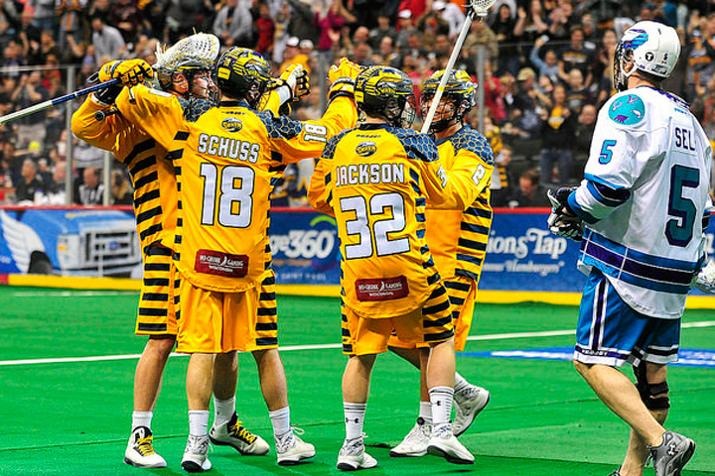
Logan Schuss – SHUSS (rhymes with BUS). Not SHUSH, SHOOSH, or SHOOS.


Coaches & Execs

Aime Caines – AMY CANES.  Swarm assistant coach.

Ed Comeau – KO-mo. Swarm head coach.

Jamie Dawick – DOW-ick. DOW rhymes with “cow”. Owner & GM of the Rock.

Lee Genier – JEN-yay. President of the Saskatchewan Rush.

Steve Govett – GUV-it. President & GM of the Mammoth.

Mike Hasen – HAY-zen. Knighthawks head coach.

Darris Kilgour – DARE-iss KILL-gore. Not DARE-ee-us. Former Bandits coach/GM.

Curt Malawsky – I’ve had muh-LOW-skee (LOW rhymes with “cow”) on this list for years but that’s wrong. It’s muh-LAW-skee. Thanks Jake Elliott. Roughnecks head coach.

Dan Perreault – pair-O. Sounds similar to my name but the emphasis is on the O. Stealth head coach.

Nick Sakiewicz – sic-KEV-itch. NLL commish.

Kyle Sorensen – SOR-en-sen. Stealth defenseman assistant coach assistant GM.

Kaleb Toth – KAY-leb TOE-th, not TAW-th. Stealth assistant coach.


Other

Steve Bermel – BERM-ull. Rhymes with “thermal”. Bandits beat writer.

Melissa Dafni – DAF-nee. One of my co-hosts on Addicted to Lacrosse.

Tyler Fitch – TY-ler FITCH. My other co-host on Addicted to Lacrosse.

Marisa Ingemi – muh-RISS-a in-JEM-ee. In Lacrosse We Trust writer.

Graeme Perrow – GRAY-um PAIR-o. Yours truly.

Craig Rybczynski – rib-CHIN-skee. Knighthawks broadcaster.

Grant Spies – SPEEZ. NLL ref.

Guy Who Knows Nothing About Sports Video Production’s Guide To Producing Sports Video

I’ve watched a lot of lacrosse over the web and on TV during the past several years. I’ve seen games with low quality chunky and choppy feeds, feeds with terrible lag (it’s irritating when you find out about a goal on twitter a full minute before the “live” feed gets there), feeds with video but no audio, feeds with audio but no video, and feeds that just stop. But I’ve also seen games with sparkling, hi-definition, smooth, beautiful video and flawless audio. Much of that is based on the cameras and other video hardware as well as the network hardware and connection, so there isn’t much that can be done short of refitting the arena. You’re not going to get the beautiful hi-def video from the BCA in Rochester because they just don’t have the equipment to do that, whereas the LEC in Langley does – and I’ve seen some gorgeous feeds from the LEC.

But regardless of the actual video and audio quality, producing an NLL broadcast can be either great or terrible depending on the decisions made by the producers. So as a public service, here’s my:

Guy Who Knows Nothing About Sports Video Production’s Guide To Producing Sports Video


DO: Use the mid-floor camera almost all the time. Now and again a lower camera in the corner gives a good view, but not always, and not for very long. And the behind-the-net camera is rarely useful unless it’s way up high.
DON’T: Switch to the lower corner camera every single time the ball is down near the goal.
ALSO DON’T: Install (or ever use) a corner camera that can barely see the net, Mohegan Sun people.

DO: Hire broadcasters who are knowledgeable but not biased, or at least not homers. I’ve said all this before. If the announcer is more excited when his team scores than when the other team scores, that’s fine. But if every time a player on one team is hit, he says “so-and-so is knocked to the ground, no call, …” but he never adds the “no call” when someone on the other team is hit, that irritates me.

DON’T: Broadcast the in-game host. The people in the arena should hear him/her, the people watching the broadcast should not.

DO: Have the broadcasters read my NLL Name Pronunciation Guide.

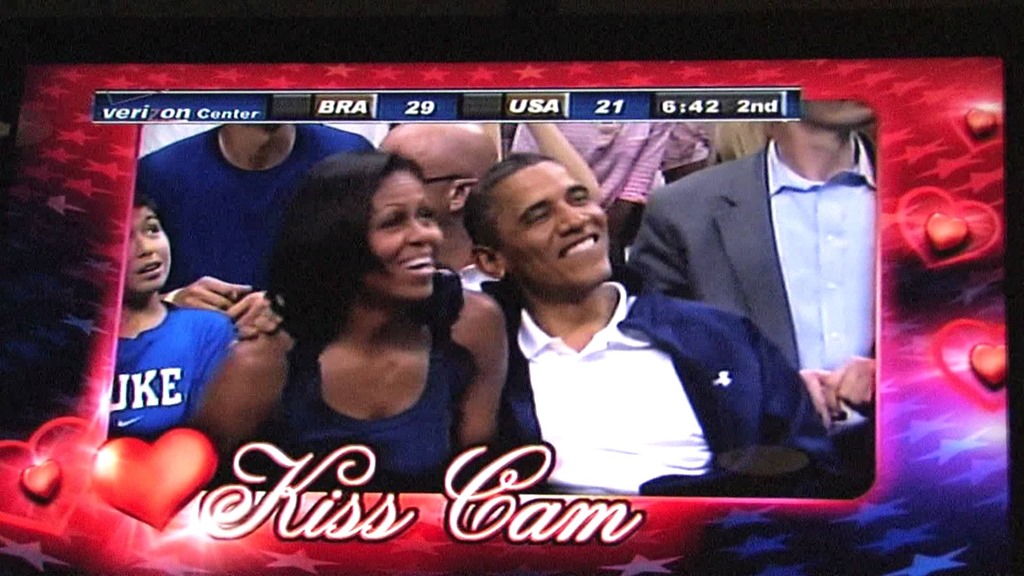
DO: Show the dance cam, kiss cam, “show us your muscles” cam, or just general shots of the audience when play is not happening. That can be entertaining and fun.
DON’T: Show any of these while play is on. This shouldn’t need to be said but I’ve seen it happen more than once.
ALSO DON’T: Simply show the Jumbotron feed with the “make some noise!” graphics and that sort of thing. Ever.

And he scores! That beautiful goal ends the game in overtime!

DO: Hire broadcasters who are familiar with indoor lacrosse. If you get field lacrosse guys, make sure they use the correct terms: there are no “ground balls” (or GBs, Randy Mearns) in indoor lacrosse, they are called “loose balls”. (I’ll give Mearns a bit of a pass because he played in the NLL but he’s also a field coach so he concentrates on field lacrosse these days.) Recently a broadcaster talked about a player having his foot in the “goal circle”. We call it the “crease”.

DO: If you’re showing a replay, make it obvious by putting a “replay” banner or something on the screen. In a recent Black Wolves game, they showed the fancy swooshing NLL graphic that usually precedes and follows replays but then went immediately back to live action. It took me quite a while to stop yelling at the screen “SHOW ME THE GAME” and to realize that they were.
DON’T: Cut to that replay while play is on. Or switch away from live action for a replay of nothing interesting happening as the Black Wolves did in the same game.

DO: Display the score, quarter, and time remaining (and ideally, shot clock) in a narrow bar across the top of the screen or in one corner (top left is my personal preference). If it’s possible, also indicate when a team is on a power play (and how much time is left). Other “nice-to-haves” would be an indication of whether a net is empty and when a delayed penalty is called.
DON’T: Have this graphic take up the top quarter of the screen.

DO: Have the announcers explain some of the weird or lacrosse-specific rules. We understand that not everyone watching is a lacrosse die-hard.
DON’T: Let them anywhere near the microphone if they don’t know these rules. Now and again the refs make a call that seems incomprehensible or incorrect because of some information the announcers don’t have. I get that. But when the broadcaster is baffled on why a penalty shot is awarded when a team already two men down takes another penalty, or wonders why a goal scored with 30 seconds left in the 4th quarter is being reviewed when neither coach asked for it, that’s not helpful to the newbies, annoying to the die-hards who are yelling at their screens, and gives a bad impression of the league – that they would hire broadcasters that don’t know the game.

DO: If you have someone interviewing the players or coaches during breaks in play or at the end of a quarter, have them ask specific questions.
DON’T: Let them take the easy way out and just say “Talk about the play of <Player having a good game>”.
ALSO DON’T: Ask how someone is feeling immediately after an emotional loss, whether it’s in OT, or after a big comeback, or in a playoff game. We all know how they’re feeling and they don’t want to talk about it.
DO: Interview Alexis Buque after he wins.

Tyler Richards returns: I have a bad feeling about this

The news came out a couple of weeks ago and caught the NLL world by surprise – Tyler Richards had been moved by the Stealth from the retired list to the “active roster evalutation list”. As revealed on Teddy Jenner’s Off the Crossebar podcast, Richards simply missed the game too much and wanted to return.

Normally this would be fine. Lots of people have retired and then un-retired, most notably Gary and Paul Gait in the NLL, Michael Jordan in the NBA, and Mario Lemieux in the NHL. But this one makes me nervous because of the reason Tyler Richards retired: multiple concussions.

A number of years ago, Stephen Stamp wrote a must-read article for IL Indoor about concussions and their effect (note that the formatting of the article was messed up in the IL Indoor website redesign from a year or two ago). He talked to Tracey Kelusky, who lost playing time due to concussions, and Merrick Thomson, who had to retire after only two seasons in the NLL. But the most frightening part of the article was his conversation with former Bandit goalie Ken Montour, who was hit in the head (with a player’s knee) during a game and never played lacrosse again. At the time of the article he hadn’t been able to work (as a teacher) in a year and a half either.

Tyler RichardsIn some cases someone who is concussed feels weird for a couple of days and then they’re fine. They just “got their bell rung”. But I work with a woman who smacked her head on her kitchen cabinet and was off work for at least 8 months because of concussion symptoms. Kelusky, Dan Carey, and many others have missed significant playing time, while concussions ended the careers of Thomson and Montour and in Montour’s case at least, affected his off-floor career as well.

While concussions are still not entirely understood, it’s fairly well documented that people who get them are more likely to get them again. So this is not like a knee or ankle or shoulder injury where with the right medical care and enough rehab, you could be back to your pre-injury level and you are at no increased risk of re-injuring yourself. Richards cannot simply say “I was hurt before but I’m better now.” The more concussions you get, the more you’re likely to get, and the worse they’re likely to be. It’s true that one bad hit could take anyone out of the game for good, but in Richards’ case it’s more likely than others, and the hit doesn’t have to be as hard to cause damage.

So Richards is more likely to suffer a concussion than other players, but perhaps he feels the risk is worth it. Remember, he was never told by doctors that he should retire. But he also needs to consider his quality of life if he suffers more concussions. What if another shot to the head ends your lacrosse career and your off-floor career? I imagine that living with chronic knee or shoulder pain due to sports injuries is no fun at all, but having to live with headaches, dizziness, and difficulty concentrating for the rest of your life would be much worse.

I’m sure Richards knows all of the risks. I’m sure he’s talked to doctors and his family and the Stealth people and they’ve all come to the conclusion that this is a good idea. Who am I to tell him he’s wrong? That said, I can’t help but feeling a little uncomfortable with it. Remember, he’s a goaltender so it’s not as if he’ll be fine as long as nobody cross-checks him in the head. People are shooting a rock-hard rubber ball at him as hard as they can. Taking shots off the head is an absolutely unavoidable part of his job.

I wonder how many players who we enjoy watching today could have had their careers cut short if the NLL hadn’t made a point of cracking down on head shots in recent years. Would we have missed watching Shawn Evans for the the last few amazing years? Or Cody Jamieson? What if Brett Hickey had been concussed by a hit to the head in his final game with the Stealth? We might have been deprived of his remarkable 2015 season and a remarkable young athlete, and he would have been deprived of a lot more.

An interesting question is how will this affect opposing shooters? If you’re Kevin Buchanan and can shoot 100 mph and you’re facing TRich, do you dial it back a notch hoping not to be the one to end his career? Do you shoot low even if you see a high opening? Do you try a cross-crease dive if there’s even a chance you run into him? I can’t imagine that none of the opposing players have thought about this. This isn’t just changing your behaviour because different goalies have different strengths and weaknesses, this could be taking it easy on him so as not to injure him. The cynic in me can’t help but wonder if this gives the Stealth a tiny little advantage. I totally understand that a team wants to take every advantage it can get, but I’ll be honest, using something like this to your advantage seems a little scummy.

This should go without saying but I wish Richards nothing but the best in his return. I hope this is all for naught and he never suffers another concussion. He’s not even 30 so he could have another decade of lacrosse in front of him. However I know that whenever I see him between the pipes and someone is rearing back to fire a laser at him, I’ll be hoping for a goal so that the ball misses his head.

Game report: Georgia 20 @ Toronto 17

So Rock fans, we have good news and we have bad news. The good news is that the offense has finally woken up! 17 goals including 3 by Hellyer and Hickey and 4 by Leblanc, 7 assists from Hellyer and 6 from Doyle, even a couple of transition goals from Brodie Merrill and Rob Marshall. After four games featuring 7 or fewer goals, this was quite welcome.

The bad news is that the fairly solid if unspectactular defense we saw in those four games vanished. When you give up 20 goals, it’s hard not to blame the goaltending and indeed, Rosey didn’t have a great start and Miller wasn’t an awful lot better in relief. But for the most part I didn’t think goaltending was the problem.

Ironically, the Rock offense still didn’t look as good as we hoped. As Colin Doyle said in a post-game interview, they were getting into the middle more and giving themselves better scoring chances, which was good. But just like the previous couple of games, there were a lot of dangerous passes. Many more of them found their intended target than previous weeks (hence the increased scoring), but they were ripe for being picked off, deflected, or missed. I thought the offensive guys were too rushed, continually taking what looked like desperation shots with plenty of time left on the shot clock, and they must have hit MacDonald (or Higgins) square in the chest twenty times. He’s not going to move out of your way, shooters. Shoot it where he ain’t.

Many times, the Rock players held onto the ball too long and ended up getting it stripped away from them. Not everybody can be Mark Steenhuis and hold onto the ball while being triple-teamed – and it’s especially unnecessary when you’re not killing a penalty and there are people you could pass to. It wasn’t just the offense guys, many of the transition plays looked like this as well.

As for the Rock defense and transition teams, they were not on their game either. They were certainly missing Jesse Gamble and Damon Edwards but Swarm forwards found themselves open much more often than they should have. In one case, the Swarm were killing a penalty and Chad Tutton found himself with the ball right in front of Miller, and with no defender anywhere near him. He had an eternity to decide where to shoot and of course, he scored. There’s no way a five-man defense covering four men should allow one of them to be wide open like that.

Dave Thomas/Toronto Sun

But I don’t want to put the loss all on the Rock D and discount the excellent play of the Swarm offense. Even if the Rock was playing at their defensive best, they’d have had a tough time on Friday night. The Swarm had five players with 6 or more points (including two in double digits), and that doesn’t count Randy Staats’s four goals. They were passing well, they were shooting well, and like I’ve said before, they really do look like they’re having fun out there.

Another problem for the Rock was penalty trouble. They took three (three!) too many men penalties and Billy Hostrawser had five (five!) minor penalties, though no majors. As a result, the Swarm had five power play goals. Then again, the Rock scored eight (eight!) power play goals. This has been a common complaint (or at least a common comment) about the Rock in past years – they’re not as good five-on-five as many other teams, but they’re deadly on the power play.

But despite my mostly negative comments above, it certainly wasn’t all bad. In particular, the team was in the game all the way to the end. The Rock were actually leading with six minutes left in the fourth, but Brodie MacDonald played really  well in the last half of the fourth to keep them from coming back. As for Miller, he made a huge stop on a Randy Staats penalty shot five minutes into the fourth quarter to keep the Swarm from taking a three-goal lead. Such a lead might have been deflating considering the Rock had scored three straight to get back into it at that point, but Miller’s stop helped keep the Rock’s momentum and Toronto scored the next three to take that brief lead. It won’t get him any Money Baller points but it was a clutch play nonetheless, so kudos to Miller and the Rock offense for keeping them in the game.

Colin Doyle summed it up perfectly:

The offence was there tonight. Maybe the defence wasn’t. But we certainly can’t say anything because they were there for us the first four games and we weren’t there for them.

Other game notes:

  • No player intros, just “here’s your Toronto Rock!” and the whole team came out. When the team is 0-4, I guess you try anything to shake things up.
  • Of the Rock’s five losses, they’ve scored first in four of them, and taken 2-0 leads in three of them.
  • This was a game of runs. Starting from 5:17 of the second, Toronto scored four straight in less than five minutes, then Georgia scored seven straight over about 15 minutes, then Toronto scored six in about eight minutes, then Georgia finished up with four in six.
  • Dan Lintner scored his first career goal… again. In game 1, Lintner scored a goal but it was called back after a review because his foot was in the crease. In this one, the goal was also reviewed but held up.
  • Maybe the game was just so fast that it was inevitable, but the Rock seemed to have a lot of people on the “wrong” end of the floor. A number of times we saw four Rock offensive players passing around the Swarm net and Glen Bryan or Brock Sorensen setting picks, or Kevin Ross trying to get in Shayne Jackson’s way in front of Miller.
  • I did not hear the Mission: Impossible theme during the fourth quarter of this one. Maybe someone at the Rock offices read my last game report. Now if they could just get rid of that annoying “Holla Holla” song they play before the game starts.

Let the music play

When you watch an NHL game, there’s frequently music playing between plays. But the second the puck is dropped, the music stops. One of the things about the NLL that’s unique in the world of professional sports is that the music doesn’t stop. (“Can’t stop the Rock” one might say.) It surprised me the first time I went to a game. It surprises people I bring to games. My wife comes to one or two games a year and she says it still surprises her sometimes. You hear “They don’t stop the music while the game is on? Wow!”, frequently followed by either “that’s cool” or “that’s weird”.

So this is unique to the NLL – almost. CLax plays music but MSL and WLA do not. But is it a good thing? Let’s look over the pros and cons. I asked what peple on Facebook and Twitter thought, and I’ll include some of their comments below.

A few people (including Stealth player Jarrett Toll) simply liked my tweet but didn’t respond. I don’t know if that means they are for or against.

Pros

It’s unique and memorable. It’s something interesting about the whole experience that might catch first-timers’ memory and give them something to talk about at the water-cooler the next day.

It can get people pumped up and excited. This is useful if, for whatever reason, the lacrosse game isn’t exciting enough already.

It makes sure the place isn’t silent if the crowd isn’t in it.

Pro comments:

  • Darci Becker: “Vancouver would be a library without it!”
  • Ron Flesher: “I have no issue with music being  played during game play.”
  • Travis Holland: “Rock on”
  • Grant Miller: “Feels like it’d be quiet without. Maybe do NBA style with nothing heavy but still something”
  • Craig: “Don’t mind music, but for whatever reason it sometimes gets turned up to 11 at Pepsi Center”
  • Luscious Dick Tacoma: “conundrum. I like it live. Don’t like it watching outside the arena.”
  • J Bro: “the kids LOVE the music aren’t on Twitter and won’t vote. They are the future players that will grow the sport”
  • Bob Cox: “Music is one of the great things that makes NLL games more fun than other sports”
  • Carmen Widdess: “It makes for a great atmosphere with the music cranked.”
  • Chuck Hill: “I sometimes don’t even notice the music anymore (if it’s a good game and I’m into it) but I enjoy the music”

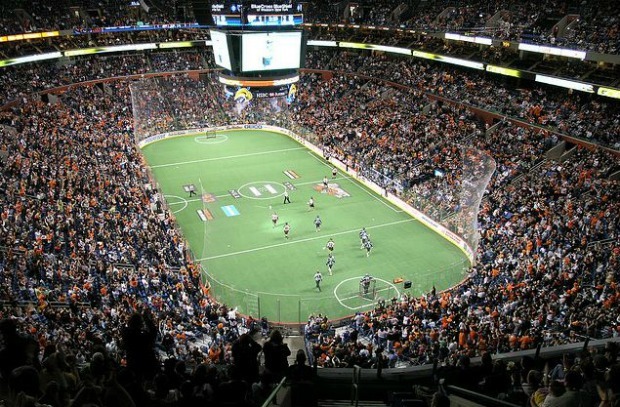
Big crowd in Buffalo

Cons

The fact that the other major sports (NHL, NBA, MLB, NFL, even MLS if you want to count them) don’t play music during the game may make the NLL seem a little more bush-league.

The actual sounds of the game – the grunts, the hits (ball hitting goalie, sticks hitting each other, sticks hitting players, players hitting boards, etc.), the yelling of coaches and players – get drowned out. I went to a pre-season game at the TRAC back in December and there was no music playing. Hearing what a lacrosse game really sounds like was fantastic.

When watching on TV, music playing is terrible. It seems much more distracting on TV, especially when the commentators have to talk over it.

Con comments:

  • Marisa Ingemi: “YES YES YES YES” (to the question “Should the NLL stop playing music during play?”)
  • Stephen Stamp: “I personally dislike it but have gotten used to it so doesn’t bother me too much”
  • Richard Bell: “May be up to the team”
  • Marcel Paillard: “Only if it flows with the game! Play whole song”
  • Marko Ćelić: “Only when the play is going on is it annoying….but I’m assuming it would be relatively quiet for the non uber lacrosse fans at the game.”
  • Brad Challoner: “No music is great if concrete or wood floors, you hear game sounds but turf is very quiet. I vote no.”

Interesting: other than Marisa’s rather unequivocal comment, even the “con” comments aren’t entirely “con”.

The Science

OK, that title is a joke. There’s no science here, it’s entirely opinion.

In a Twitter poll, 57% of votes chose “Love the music” over “No music please”. There probably should have been a “don’t care” option, and there were only 28 votes in the first place so it doesn’t tell you much.

I had a good chat over twitter with a fan named Nick who said that “it’s one of the reasons the casual fan enjoys the game” and that the lack of music would drive away fans. He said that he’s talked to many fans at many NLL games and they say they like the atmosphere better than at NHL games.

However talking to fans at NLL games doesn’t give you all the information, nor do polls on Twitter. It could be that many people came to NLL games, were turned off by the music, and never came back. And if they were turned off, they’re not there to talk to you about it the next time, and they’re very likely not answering lacrosse polls on Twitter. What if there are twice as many of those people as the ones who like the music and still go to games? Until we can find the people who left because of the music and include them in the numbers, we don’t know the whole story. Of course, finding those people is the challenge.

Other than Toll’s non-response, I didn’t hear from any players (though they might have voted in the poll) so I don’t know how they feel about it. I imagine they’re so dialed into the game itself that they don’t really notice the music.

Personally, I lean towards the “no music” side of things, though I’m not cancelling my season tickets over it. A lot of the music they play at the ACC is classic rock, which is my jam, so I tend to get into the music and the game (and the music selection is even better at the First Niagara Center in Buffalo – Dream Theater and Metallica!), so I’m kind of good either way. But like I mentioned earlier, the music-free game I saw at the TRAC was amazing, with nothing to distract you from the sounds of the action, and I enjoyed hearing the players calling to each other or yelling from the bench. But judging by the poll and the comments I got on social media, it seems that I’m in the minority.