Top 5 Colin Doyle memories

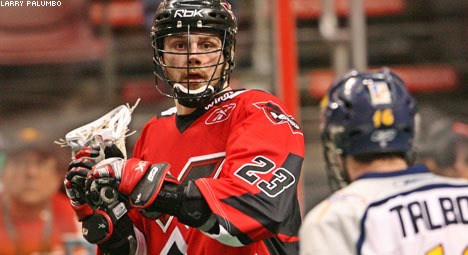
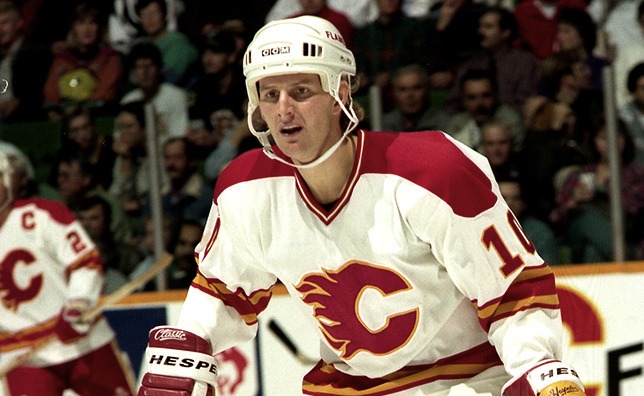
Last week we talked about Colin Doyle, his retirement, and how well respected he was throughout his career. This week I’ll talk about a few of my own memories of Colin over the years. Here are the top five:

5. The Shoes

In February 2011, the Calgary Roughnecks came to Toronto for a mid-season tilt. As many Calgary-Toronto games tend to be, this one was exciting and came down to the wire, finishing with the Rock on top after an Aaron Pascas winner in overtime. But during a stoppage in play in the overtime period, a ref sent Colin Doyle to the bench. I was at the game and didn’t know why at the time. I only knew that Doyle was not happy about it, vanished into the dressing room, and returned a couple of minutes later.

It turned out that Doyle was not wearing league-sponsor Rebook shoes, and the Calgary bench waited until overtime to notify the refs, who were obligated by the rules to send Doyle off the floor. He went to the dressing room, put on a pair of Reeboks (apparently belonging to the trainer, and 2½ sizes too big), and returned. Calgary’s tactic was sound, but didn’t work. Pascas’s goal was unassisted but Doyle helped set it up.

4. The Fighter

In January of 2010, Colin Doyle made his second debut with the Rock after an off-season trade brought him back from San Jose. His return to the ACC was a game against the Boston Blazers, and things got rough in the first quarter. Five minutes into his return, he got into a fight with the 6’5″ Paul Dawson, one of the better fighters in the NLL. Note that Doyle is 6’3″, so that’s only a 2 inch difference. I don’t have career numbers, but from 2005-2016, Doyle was given TWO fighting majors. In fact, in those twelve seasons he only picked up seven major penalties and no misconducts. What I remembered about this game was that despite not being as seasoned a fighter as Dawson (12 fighting majors since 2008), Doyle held his own.

Both were given facemasking and roughing penalties in addition to fighting, and four other fights broke out while the refs were sorting that one out. All of the additional fighters got game misconducts. In all, 23 penalties were handed out and eight players ejected 4:39 into the first quarter.

Oddly, that game also ended with a Rock victory in OT, this time with Garrett Billings scoring the winner. Doyle got the first assist.

3. The Speaker

The Toronto Rock held a Town Hall meeting in December 2012, where they invited season ticket holders to come out to the brand-new TRAC and talk to owner Jamie Dawick, coach Troy Cordingley, GM Terry Sanderson, and several players (Doyle, Billings, Rose). They talked about the state of the team as well as the TRAC, and answered questions from fans on various topics. One thing I remember about this meeting was that Doyle was very well-spoken. There weren’t a lot of “um” and “uh” and filler words like “well, like, ya know” (i.e. he didn’t sound like me on Addicted to Lacrosse). He used to be a teacher and so is obviously comfortable speaking in front of people. Being a pro athlete in general requires some fan interaction and tons of interviews, and being a veteran and team captain means he was used to having the attention of everyone in the Rock and Stealth dressing rooms. Thus it’s not surprising that he’s a great speaker.

2. The Cup

The Rock won their sixth Championship in May 2011. It was also Doyle’s sixth title. Similar to the NHL and other sports, after every Championship-winning game, the league commissioner (George Daniel at the time) would call up the captain of the winning team and present them with the Champion’s Cup. This was Doyle’s first (and only) Championship as team captain, but he declined this traditional honour. Instead, Doyle sent veterans Cam Woods and Kasey Beirnes up to get it. At that time, Woods had played 12 seasons in the NLL and Beirnes 10, and since this was their first Championship, Doyle decided that he would give them the honour. That’s class.
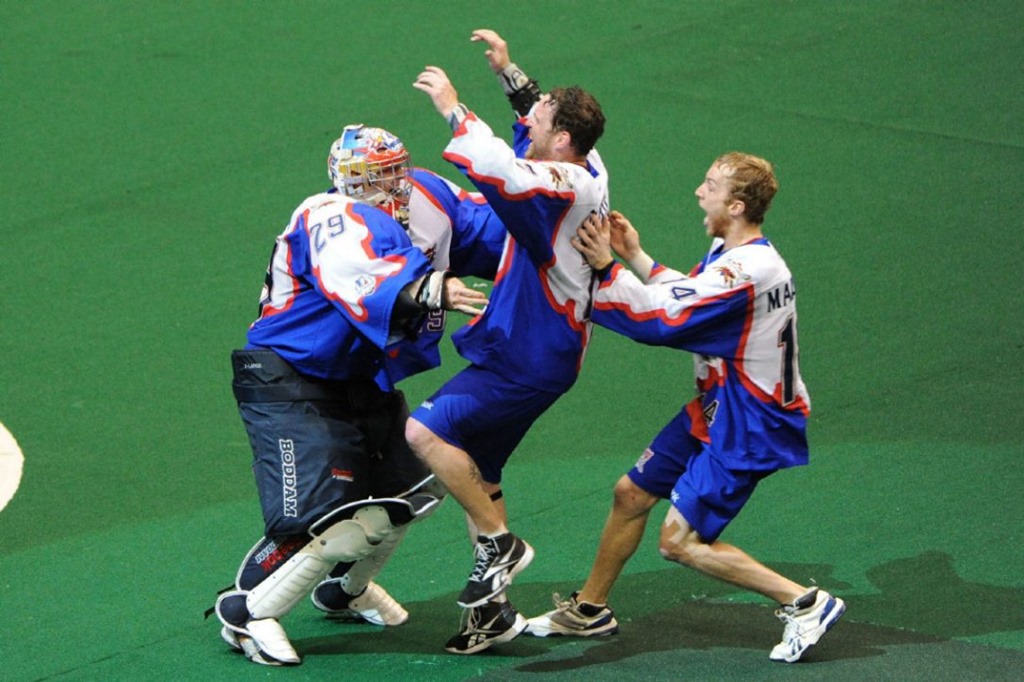
Photo credit: Carlos Osorio, Toronto Star

1. The Patriot

During the national anthems, many players bounce around from foot to foot and jump up and down. This has bugged me forever. Some say it’s because they just finished warming up and they’re trying to stay loose, but that’s a crock – right after the anthems, most of them go and sit on the bench. Nobody ever jumps around behind the bench trying to stay loose. I’ve also heard that they’re so full of adrenaline and ready to play that they can’t stand still, and I can buy that. But not everybody does this. Many years ago I noticed that Colin Doyle stands completely still during the anthems. Even better, he looks at the Canadian flag and sings along with O Canada (or at least mouths the words). Every game. Respect.


Honourable mentions

  • It didn’t happen in the NLL so I didn’t include it above but I can’t leave it out entirely. When Six Nations Chiefs goalies Brandon Miller and Evan Kirk were both ejected for using illegal equipment during a Mann Cup game in 2013, someone had to step up and strap on the pads. Doyle told the team’s defenders that they were all needed on the floor, so he’d do it, and he did. He played 11 minutes and made 6 saves on 9 shots. Question: This article says that Doyle had to put on his teammates’ soaking wet equipment, but wasn’t Miller’s and Kirk’s equipment illegal?
  • Doyle is known far and wide as a clutch player. Since I know a thing or two about clutch players, I took a look at his Money Baller numbers. I only have these going back to 2005, but Doyle is #10 in those 12 seasons combined (though he only played 1 game in 2015). He’s #5 in the playoffs.
  • I remember paying close attention to Doyle’s first game as a member of the Stealth. It wasn’t that I wanted him to fail, but I didn’t like the trade and so I guess I figured that if he didn’t do well in San Jose, it would somehow make the trade less bad. His first game was decent but not spectacular: a goal and three assists. His next game? Nine assists. The one after that? A goal and seven assists. He ended up with 81 points that season, 88 the next, and 111 in 2009. Safe to say he did well in San Jose. (For the record, that year I became, and remain, a big fan of Ryan Benesch, the guy the Rock received in the Doyle trade.)
Trades revisited: an exercise in hindsight

There was a conversation on the IL Indoor message boards recently about Chris Corbeil and how he was traded to the Rush from the Buffalo Bandits. A Bandits fan was unhappy that Corbeil is now the captain of the reigning champs, while the Bandits got draft picks in return. I looked it up and found that the Bandits didn’t get quite as screwed as it might seem. That was fun so I thought I’d look up a few other trades from a few years ago. Now that we know which players played well, which were busts, and which players were drafted with the picks that were exchanged, we can see how they ended up working out.

I just randomly picked a bunch of trades that involved draft picks. This was not planned, but all but one of these trades involved the Edmonton Rush.

Chris Corbeil for picks

September 9, 2011: The Bandits sent Chris Corbeil to the Rush for a 2nd round pick in 2011 and a 1st round pick in 2012.

Chris Corbeil, hopefully in MovemberFour years after this trade, Corbeil is one of the premiere defenders in the league and as stated above, the captain of the defending champions. Did the Bandits get fleeced? Not at all, as it turned out. The second round pick in 2011 turned out to be Jeremy Thompson, but the Bandits traded the first round pick (3rd overall) to Minnesota who used it to draft Kiel Matisz. In return, the Bandits got Brendan Doran, Shawn Williams, the 5th overall pick, and two later picks. The Bandits drafted Dhane Smith and Carter Bender and traded the other pick to the Rock for Glen Bryan and Jamie Rooney. Doran never played for the Bandits and Bender scored 3 points in 3 games. But Bryan, Rooney, and Williams each played two seasons in Buffalo and Dhane Smith is one of the Bandits top offensive weapons.

Thompson played in 14 games for the Bandits in 2012, scored 9 points, won 46% of 140 face-offs, and was traded to the Rush a year later (see below).

Winner: Corbeil vs. Dhane Smith, two years of Williams, Bryan, and Rooney plus a year of Jeremy Thompson? Calling it for Buffalo.

Jeff Cornwall for picks

February 10, 2012: The Bandits sent Jeff Cornwall to the Rush for a 2nd round pick in 2012 and a 2nd round pick in 2014.

The second round pick that the Bandits got in 2012 was Jordan Critch, who scored five points in five games in 2013 and hasn’t played in the NLL since. The 2014 pick got complicated. In July 2013, the Bandits traded that pick, a second round pick in 2013, and Carter Bender to Colorado for Rory Smith and a 4th rounder in 2015 (Tim Edwards). Colorado ended up trading the pick to Calgary for Jackson Decker, and Calgary drafted Tyson Roe.

The end result for the Bandits: they gave up Jeff Cornwall for 5 games from Critch, a season of Rory Smith, and Tim Edwards. Rory Smith was later sent to the Stealth along with Eric Penney for Nick Weiss and even more draft picks, but that’s as far as I think I want to go with this one.

Winner: Hard to determine since the picks got pretty complicated but I’d go with Edmonton.

Anthony Cosmo for picks

February 16, 2012: The Swarm sent Anthony Cosmo to the Bandits for 1st round picks in 2013 and 2014.

Anthony Cosmo was picked up by the Swarm in the Boston Blazers dispersal draft despite the fact that he told them he wouldn’t play for them. He was true to his word and didn’t play, but they held onto him for part of the 2012 season until the Bandits came calling. The Swarm love those first round draft picks and Buffalo offered some, so Cosmo was sent east. In 2013, their pick from Buffalo turned into the first overall pick, which became Logan Schuss. In 2014, it was #5, Shane MacDonald. Schuss scored 104 points for the Swarm in a year and a half before being traded to Vancouver for Johnny Powless, while MacDonald scored 13 points in 11 games last season and has since been traded to New England for Drew Petkoff.

Winner: Cosmo vs. Schuss + Powless. Another tough call but I have to give this one to the Bandits.

Cousins for Williams

July 25, 2011: The Rush sent Ryan Cousins, Andy Secore, and Alex Kedoh Hill to Rochester for Shawn Williams, Aaron Bold, and a 2nd round pick in 2012.

Shawn WilliamsThe second round pick that the Rush received was traded to the Stealth along with Athan Iannucci for Paul Rabil and a first rounder. The Stealth drafted Justin Pychel with that pick, while the Rush picked Mark Matthews. The Rush later traded Rabil to the Knighthawks for Jarrett Davis. The Knighthawks sent Rabil (and others including Jordan Hall) to the Wings for Paul and Dan Dawson.

Cousins played 10 games for the Knighthawks before retiring. Secore never played again, while Hill played 5 games with the Knighthawks before being sent to the Bandits. Shawn Williams played one season in Edmonton before being sent to Buffalo via Minnesota. Aaron Bold, I believe, is still with the Rush.

Winner: From this trade, the Rush ended up with Aaron Bold and a season of Shawn Williams. Add in the Iannucci deal (below) and the draft pick turned into Mark Matthews. I’d call Edmonton the clear winners here.

Thompson for Wilson

November 14, 2012: The Bandits just love sending players to the Rush. This time, it’s Jeremy Thompson for Aaron Wilson and a 2nd round pick in 2013.

The second round pick was Nick Diachenko, who never played for the Bandits but was picked up as a free agent by the Rock. Thompson is one of the best transition players in the game. Aaron Wilson scored 59 points in a year and a half with the Bandits before being sent to the Knighthawks. He only played 4 games last year and retired in the off-season.

Winner: Rush again but the Bandits did OK here.

Merrill for Nooch

August 9, 2011: The Rush sent Brodie Merrill, Mike McLellan, Dean Hill, the 41st overall pick in 2011, and a 4th round in 2013 to the Wings for Athan Iannucci, Alex Turner, Brodie MacDonald, and 1st round picks in 2012, 2013, and 2014.

Athan Iannucci

This was one of the biggest blockbuster trades of the last decade. Merrill had already been named Defender of the Year once and Transition Player of the Year twice, while Iannucci set the single-season goal-scoring record. Not only does his record of 71 still stand, only four people have come within 20 goals of that number in the 7 seasons since.

The picks involved: The 2011 pick ended up in Buffalo (not sure how it got there), who drafted Dwight Bero. The Wings got goalie Don Alton in 2013. Edmonton’s 2012 first rounder went to Buffalo (for Chris Corbeil – see above) and then Minnesota (for the Dhane Smith pick and Shawn Williams – see above) who turned it into Kiel Matisz. The 2013 first rounder was Robert Church. The 2014 pick was sent to the Swarm with Brodie MacDonald for Tyler Carlson, the first overall pick in 2014 (Ben McIntosh) and a second-rounder in 2015 (Dan Taylor).

Merrill had three very good seasons with the Wings before being traded to the Rock. McLellan scored 7 points in 11 games with the Wings in 2013 and hasn’t played in the NLL since. Dean Hill never played with the Wings, but played 40+ games with the Stealth, Mammoth, and Swarm before retiring this past off-season. Alton played one minute in one game, got scored on, and retired with a career GAA of 60.00.

Edmonton’s picks turned into Corbeil, Church, and Tyler Carlson, all of whom are still on the Rush. Alex Turner scored 25 points in two seasons before being traded to the Swarm for a draft pick (later traded to Calgary for Matthew Dinsdale). After scoring 71 in 2008, Nooch never again got within forty goals of that record. He blew out his knee after the 2008 season and hasn’t been the same player since, never scoring more than 29 goals in any season. He refused to report to the Rush and was traded to the Stealth for Paul Rabil and a first rounder, which turned into Mark Matthews.

Winner: Edmonton by a landslide.


The end result from all this analysis: Derek Keenan (who was the Edmonton GM for all of these deals) is pretty good at his job.

Shoutout to John Hoffman (@Corporal763) for his awesome site swarmitup.com, which contains unbelievable detail about every NLL draft.

5 things you never knew about the NLL! #3 will shock you

I originally started this article as a joke, playing on the popularity of sites like Buzzfeed and their click-baity “you won’t believe what happened next”-type headlines. But then I wondered if I could come up with 5 actual things that many NLL fans didn’t know and I hadn’t used on @NLLFactOfTheDay (and that I don’t have to fit into 140 characters). Many people know that John Tavares the (former) lacrosse player is the uncle of John Tavares the hockey player. Many know that Josh Sanderson played for his father Terry (four times, actually: Rochester, Calgary, and Toronto twice). Many know that there are far more failed NLL teams than there are current teams.

But did you know these?

1. Before they secured nll.com, the league’s website was be-lax.com. (OK, I could have squeezed that one into a tweet.)

Gary Roberts

2. The Calgary Roughnecks once drafted former Calgary Flames star Gary Roberts (after he had retired from hockey). He said he was flattered and surprised, but did not report. The Bandits once drafted Gil Nieuwendyk, Joe’s brother and Derek Keenan’s brother-in-law. He never reported either.

3. The 2007 Championship final was hosted by the Arizona Sting rather than the top seed Rochester Knighthawks because of arena unavailability. A circus had booked the Blue Cross Arena and no alternative arena in Rochester could be found. A 2002 playoff game between the 5th place Washington Power and the 6th place Philadelphia Wings was held in Philadelphia because Washington decided they’d lose more money by hosting it than by travelling.

4. In 2001, the league accidentally posted an article on its web site announcing expansion to Montreal before the deal was actually done. The article was immediately pulled and the deal was put on hold. The Montreal Express joined the league a year later.

5. In 2007, the Arizona Sting went on hiatus and the players were loaned to other teams for a year (through a dispersal draft), the idea being that when Arizona returned the next season, they’d continue with the team they had before. After the 2008 season, the players were returned to the Sting, where the team promptly folded and they were dispersed again.


Did I fool you? One of those five is not true; I made it up. But which one?

The deadliest lacrosse game ever

Since it’s the off-season, there isn’t an awful lot happening in the National Lacrosse League these days. Sure, two teams have moved including the team that won the Championship just a couple of months ago. This would be huge in any other sport but in the NLL, that’s just a little unusual. So here’s a lacrosse story, but it’s not exactly a new one. In fact, it’s over 250 years old.

The state of Michigan is divided into two pieces: the Lower Peninsula (the “mitten”) and the Upper Peninsula. The two meet at the very top of the mitten at the Straits of Mackinac*, where you’ll find the impressive mile-and-a-half long Mackinac Bridge. At the south end of the bridge is the amusingly-named Village of Mackinaw City (population 806) and within that lies Fort Michilimackinac**.

*Note that whether it’s spelled “Mackinac” (like the straits, the bridge, or the island) or “Mackinaw” (like the city), it’s always pronounced MACK-in-aw.
**It looks like a mouthful but it’s not that hard to pronounce: MISH-ill-uh-MACK-in-aw.

Built by the French in the early 1700’s, the Fort was as much a trading post as a military fort. Fur traders would come from as far away as Montreal, and hundreds of Native Americans lived at or near the Fort as well. The French and Indian War (the North American part of the Seven Years’ War) began in 1754, when the French and Natives combined forces to battle the British and Americans. Most of the fighting occurred much further east in New York and Pennsylvania but once the North American part of the war ended in 1761, the French abandoned Fort Michilimackinac and the British took over.

But the British rule didn’t sit well with the local Native population, the Obijwe. Indeed, many Native communities throughout the area were unhappy with the British. (Aside: Even today, they don’t seem to get along, as the British have consistently refused to honour the passports of the Haudenosaunee Nation for lacrosse tournaments in the UK. But that’s another story.) The Natives decided to band together and rise up against their oppressors. This rebellion became known as Pontiac’s War, named after the chief of the Odawa tribe and namesake of both the city of Pontiac, Michigan as well as the GM brand of cars. The way that the Ojibwe chose to rebel was interesting and unique, and here’s where lacrosse enters the picture.

Old school

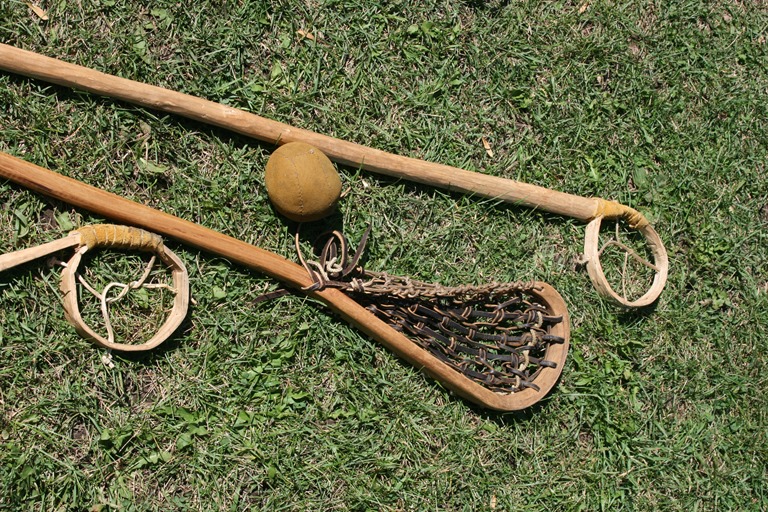
This picture of some very old lacrosse equipment (including a horsehide ball stuffed with feathers) was taken by me, though not at Fort Michilimackinac. It was actually taken at Fort William in Thunder Bay, Ontario during the summer of 2012.

On June 2, 1763, the Ojibwes held a game of baaga’adowe*, a forerunner to modern (field) lacrosse, in front of Fort Michilimackinac. This is something they’d do from time to time, and it always brought out a crowd of spectators from the Fort. As usual, the soldiers left their weapons inside and the gates of the Fort open while watching the game. On this hot June day, none of the British soldiers thought anything was odd about the fact that all of the Native women, who were also watching the game, were sitting near the gate of the Fort wrapped up in thick blankets.

* – An Ojibwe word meaning “to hit”. Note that Wikipedia‘s translation of “bump hips” is incorrect – that’s the translation of the Onondaga word for lacrosse. Thanks to Ryan Zunner for helping me get this right!

It went on for a while until the ball was thrown through the open gate of the Fort, and at that point the game changed dramatically. As the players ran into the Fort after the ball, the Native women pulled out the guns, knives, and tomahawks they had been hiding under their blankets. The players dropped their sticks and grabbed the weapons. There are lacrosse fights, and then there are lacrosse fights. Geoff Snider and Tim O’Brien had nothing on these guys, and when it was over, most of the British soldiers were dead (though not the French-Canadians who were still there). The Ojibwe took over control of Fort Michilimackinac and held control for a year.

The Ojibwe really had no interest in the Fort itself, they just wanted the British out and they staged the deadliest game of lacrosse ever played to do it. A year later the British reclaimed the Fort with no bloodshed, promising more gifts to the Ojibwe in exchange. They would later combine forces against their common enemy, the brand new United States of America.

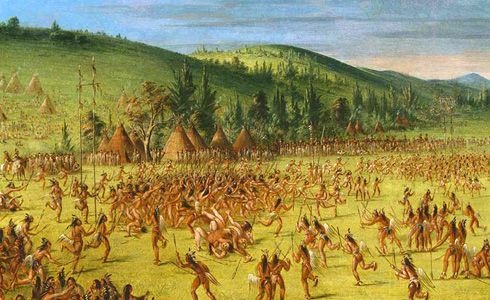
"An Indian Ball-Play" by George Catlin


References

Stokes, Keith. (2015) Colonial Fort Michilimackinac. Retrieved from http://www.mightymac.org/michilimackinac.htm

Edwards, Lissa. (2010) Deadly Lacrosse Game in Mackinac Straits at Fort Michilimackinac in 1763. Retrieved from http://mynorth.com/2010/05/deadly-lacrosse-game-in-mackinac-straits-at-fort-michilimackinac-in-1763/

Ojibwa. (2011) Lacrosse at Fort Michilimackinac. Retrieved from http://nativeamericannetroots.net/diary/947

Wikipedia. (2015) Fort Michilimackinac. Retrieved from https://en.wikipedia.org/wiki/Fort_Michilimackinac

Six degrees of Kevin Buchanan

A recent conversation about how small the lacrosse world is got me thinking, and I came up with a fun game which I call “Six degrees of Kevin Buchanan”.

The idea is to pick two players A and B, and make a chain of players starting from A and ending with B. Every player in the chain must have played on the same team at the same time as the player before and after him. Unlike the Kevin Bacon game, you don’t actually have to include Kevin Buchanan – if that was the case, I might have picked Mat Giles (12 NLL teams) or Chris Panos (10) rather than Buchanan (5). But their names don’t sound nearly as much like “Kevin Bacon”.

I’ve stretched the rules a touch: if two players played for the same team in the same season, I’m calling that a link. This is only because I don’t have sufficiently accurate data so in some cases (anything before 2005) I don’t know if they actually both played on the same team at the same time – for all I know, one might have been traded for the other in a mid-season deal.

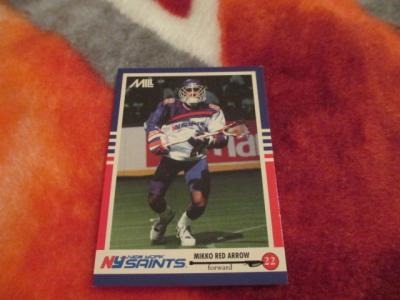
As an example, let’s pick the player with the coolest name in NLL history: Mikko Red Arrow, who played with the New York Saints from 1993 to 1996. We’ll try and match him up with one of the youngest players in the league, Rob Hellyer.

Mikko Red Arrow –> Rob Hellyer

  1. Mikko Red Arrow played with Pat O’Toole on the New York Saints in 1995.
  2. O’Toole played with Josh Sanderson on the Knighthawks in 1999.
  3. Sanderson has played with Rob Hellyer on the Rock from 2012-2015.

So Hellyer is three links away from Red Arrow.

Let’s go back even further, to 1992 and another player with a cool name, Butch Marino. I had never heard of him before this exercise, and picked him at random. He played from 1992-1994 and again in 1996. The target this time is another young player picked at random, Miles Thompson of the Swarm.

Butch Marino –> Miles Thompson

  1. Butch Marino played with Chris Gill on the Baltimore Thunder in 1996.
  2. Gill played with Colin Doyle on the Toronto Rock from 1999-2001.
  3. Doyle played with Ethan O’Connor on the Rock in 2014.
  4. O’Connor plays with Miles Thompson on the Swarm in 2015.

Thompson is four links away from Marino. Note that this is the shortest list I found while just looking over team lists and going by memory. There may be shorter ones.

Here’s one more, starting from Brian Lemon, the current NLL VP of Lacrosse Operations. Let’s try and link him to Edmonton goalie Aaron Bold.

Brian Lemon –> Aaron Bold

  1. Brian Lemon played with Kevin Finneran on the 1992 Detroit Turbos.
  2. Finneran played with Dave Stilley on the 2002 Philadelphia Wings.
  3. Stilley played with Gavin Prout on the 2006 Mammoth.
  4. Prout played with Corey Small on the 2010 Rush.
  5. Small played with Aaron Bold on the 2013 Rush.

So Bold is five links away from Lemon. But there’s a faster way:

  1. Brian Lemon played with Randy Mearns on the 1995 Knighthawks.
  2. Mearns played with John Tavares on the 1993 Bandits.
  3. Tavares played with Jeremy Thompson on the 2012 Bandits.
  4. Thompson has played with Aaron Bold on the Rush since 2013.

Of course, anyone who’s ever played for the Bandits is at most 2 links away from anyone else who’s ever played for the Bandits, since they both played with John Tavares. In addition to JT, there are players like Shawn Williams, Colin Doyle, and Josh Sanderson who have had very long careers with multiple teams and allow you to jump 10-15 years in one step. Thanks to guys like them, I’d be surprised if anyone who’s ever played in the NLL is more than five links away from anyone else. In fact, I think you’d be hard pressed to find a player who has never played with a former Bandit and given Mr. Tavares’s longevity, I imagine that finding two players with a count no lower than five is almost impossible.

Hey Kevin, what do you think of this game?

Any other pairs of players you want linked? Do you know of shorter chains than the ones I have above? Leave a comment or hit me up on Twitter!

The Wings fly away, Part 2

In Part 1, I looked at how great the Philadelphia Wings were from 1987 until their 2001 Championship. And make no mistake, they were great. Then I asked how a team as successful as the Wings could possibly fold or move.

To answer that, we need to realize that all of the great numbers I mentioned in that article were only for the first half (well, about 57% to be accurate) of the Wings tenure in Philadelphia. To say the rest of their tenure (2002-2014) was less successful would be quite the understatement.

Instead of being 42 games over .500, they were 30 games under at 82-112. They allowed 161 more goals than they scored. In 12 seasons, they made the playoffs three times (losing all three games) and finished over .500 only once. Their last playoff win will forever remain that 2001 Championship, thirteen seasons ago.

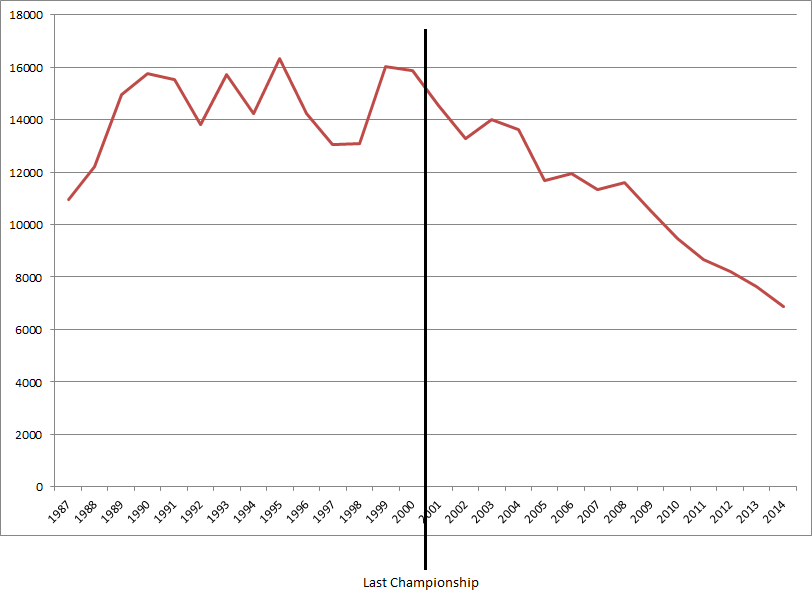
Things got so bad for the Wings that even the loyal fans started to abandon them. In the years following their sixth Championship, attendance dropped, rebounded again, and then dropped again. In 2005, it dropped over 14%, falling below 12,000 for the first time since their 1987 debut. 2008 saw a little rebound once again but after that it dropped between 5 and 10% every year. In the last fourteen years of the team’s existence (starting the year before their last Championship), the Wings reported year-over-year attendance increases only three times.

In 2014, their final year in the league, the Wings averaged a paltry 6,864 fans per game. Only the Vancouver Stealth drew fewer. If your attendance is being compared to that of the Stealth (whether Vancouver, Washington, or San Jose), you’re in trouble.

WingsAttendance

It’s not that ownership didn’t try. The Wings had more rebuilds than Joan Rivers’ face. After Marechek, Bergey, and Ratcliffe it was supposed to be Sean Greenhalgh, Athan Iannucci, and Merrick Thomson. But Greenhalgh was sent to Buffalo, concussions ended Thomson’s career early, and Nooch missed almost two entire seasons with injuries. Kyle Wailes scored 50+ points in 2009 and 2010 and never played again. The Dan Dawson experiment got them to the playoffs but no further than the first round before he was off to Rochester. Brodie Merrill has played well since coming to the Wings in 2012 but the price for landing him was steep – Iannucci, Alex Turner, Brodie McDonald, and three first round draft picks, one of which won’t happen until this coming fall.

They tried having a morning game on a Friday. I’m not sure if this was a conscious decision and they were trying to draw school trips (as it was advertised) or if it was required because of arena availability. It ended up as a dismal failure, drawing the lowest crowd (5139) in Wings history. They tried putting the players’ Twitter handles on their uniforms to draw attention. It did, but not from anyone outside of the lacrosse world, or at least not for more than a few seconds.

They tried rebranding themselves as “America’s team”, drafting and signing lots of American-born players. Most of these guys were field players who had played very little or no indoor lacrosse, and this strategy had varying degrees of success. Some guys like Drew Westervelt took to the game and became strong indoor players, while others like Ned Crotty never saw the same level of success indoors that they had seen outdoors. In 2014, this plan was further scuttled by a number of players including Crotty, Paul Rabil, and Brendan Mundorf bailing on the team sitting out the season to prepare for the World Field Championships.

Can we find someone to blame for the failure of the Wings? Ownership? Players? Fans? Is there really so much competition for your entertainment dollar in Philadelphia that the Wings can no longer compete? Well, when you only play 3 playoff games in twelve years (and lose them all), it’s hard to convince people to continue paying money to watch your team (unless you’re the Toronto Maple Leafs, but they’re a huge anomaly in the world of sports). You obviously can’t blame the fans who kept going to games, and considering the lack of on-floor success over the last twelve years, it’s also pretty tough to blame the ones who stopped.

If we must blame someone, I suppose it’ll have to be ownership, since they’re the top of the food chain and therefore ultimately responsible. But playing the blame game really doesn’t buy us anything. It doesn’t bring the Wings back, and it doesn’t make losing them any easier for fans of the league, least of all the Philly fans.

The Philadelphia Wings were the cornerstone of the NLL for half of its existence. They were so good for so long and were as close to being a solid fixture in a city’s sports scene as the NLL has ever seen. It’s unfortunate that we now have to add Philadelphia to the long list of cities in which the NLL ultimately failed.

The Wings fly away, Pt. 1

Wings

The 2015 NLL season will not include the Philadelphia Wings. For longtime fans of the league, this is unfathomable. It’s the NHL without the Leafs or Canadiens. It’s the American League without the Yankees. It’s the NFL without the Packers. After 28 seasons, the franchise is moving, though we don’t yet know where. It’s possible that they’ll find a new home fairly close to their old one but even if they do, it won’t be the same.

Starting in 1987, they were outstanding. In their first sixteen seasons, they missed the playoffs once, finished under .500 only three times, and appeared in nine Championship finals, winning six of them. They won 100 games while only losing 58, and they scored 316 more goals than they allowed. They had future Hall-of-Famers all over the place: Gary and Paul Gait, Tom Marechek, Tony Resch, Dallas Eliuk, and owners Mike French, Russ Cline, and Chris Fritz. In 2001 they won their sixth Championship, the same number (at the time) as the Rock, Bandits, and Knighthawks combined.

The Wings had arguably the most loyal fans in the league. In 1987, the league’s inaugural season, their average attendance was 10,972 when the other three teams in the league had averages under 8,000. Their average attendance increased each of the next four years, and stayed above 13,000 for sixteen straight seasons from 1989 to 2004.

So how is it possible that a team that successful could ever fold or move? We’ll get into that in part 2.

Gavin Prout – the Knighthawk?

Gavin Prout spent two seasons in New York and then six in Colorado, the last five as captain of the Mammoth, averaging 84 points per season. So it was a bit of a shock in Colorado, and throughout the NLL world, when he was traded in 2009 to the Edmonton Rush. He played with the Rush for the 2010 season and about half of 2011 before being traded back to the Mammoth. But something that many people, myself included until recently, don’t remember about Prout being traded from the Mammoth to the Rush was that it never happened.

What could have beenProut, along with Andrew Potter, was traded from the Mammoth to the Rochester Knighthawks in 2009 for Ilija Gajic (some draft picks were involved as well). Potter had been sent to the Mammoth from the Knighthawks the previous year in the deal that brought Gary Gait out of retirement. Interesting that a guy that played all of five games in his NLL career was involved in two such significant trades. Anyway, two weeks later, the Knighthawks sent Prout and Dean Hill to the Rush for a first round draft pick. But the fact that Prout was a Knighthawk for a couple of off-season weeks is usually forgotten.

A number of other players also spend time on teams for which they never played. Here are just a few:

After the Boston Blazers folded, Anthony Cosmo and Josh Sanderson were both selected in the dispersal draft by the Minnesota Swarm. Before the first round of the draft had even ended, Sanderson had been traded to the Rock, while Cosmo sat out half of the next season before being traded to the Bandits.

Shawn Williams is another player who, like Sanderson, can measure the amount of time he spent on the Minnesota roster with a stopwatch. In July 2012, Williams was traded from the Rush to the Swarm for two second-round draft picks. The same day, he was sent off with Brendan Doran as well as the #5 overall pick in the 2012 draft and two other 2012 draft picks to Buffalo for the #3 overall pick. That seems to me like an expensive way to move up two positions – and in fact, it really only moved the Swarm up one position since they went from having picks #2, 4, and 5 to having picks #2, 3, and 4.

Paul Rabil might be the only player to have joined two separate organizations consecutively and never play for either of them. But this story begins six months before Rabil got involved. In the summer of 2011, the Wings traded Athan Iannucci, Alex Turner, Brodie MacDonald, and three first round draft picks to the Rush for Brodie Merrill, Dean Hill, Mike McLellan, and a couple of later draft picks. Nooch never signed with the Rush, and a month into the 2012 season, he was traded to the Stealth for Paul Rabil. Rabil also refused to sign with the Rush and sat out the rest of the 2012 season.

Almost a year after the original Iannucci trade, the Rush sent Rabil to the Knighthawks for Jarrett Davis, but Rabil never reported to Rochester either. Only a couple of weeks before the 2013 season began, he was sent to Philadelphia along with Jordan Hall, Joel White, and Robbie Campbell in exchange for Dan Dawson, Paul Dawson, and a first round draft pick. Rabil is now happy in Philadelphia, and I’m pretty sure the Knighthawks were OK with what they got out of the deal.

But not every player was traded to a team they never played for. Here are some players who were drafted by teams they never played for:

  • Ilija Gajic, Rochester, 2009
  • Joel Dalgarno, Toronto, 2009
  • Craig Point, Boston, 2007
  • Ryan Benesch, San Jose, 2006
  • Blaine Manning, Calgary, 2001
  • Geoff Snider, Vancouver, 2001 (he opted to return to university and was drafted again by the Wings in 2006)
  • Tom Marechek, Buffalo, 1992
  • John Tavares, Detroit, 1991 (and not until the third round!)

I’m sure there are plenty of others. Leave a comment if I missed any!

The top 10 one-team NLL players

Last week, Down Goes Brown did a post (actually on Grantland.com) called The 10 Greatest One-Team NHL Players. Since DGB is unlikely to cover lacrosse anytime soon, I decided to do it myself. Given that there are fewer teams in the NLL, the history is much shorter, and there has been far more team movement than the NHL, there really aren’t all that many such players. If we restrict ourselves to players with more than 50 games in their NLL careers, all with a single team, we find that there are only 54 of them. But there are still some pretty good names on this list.

Incidentally, DGB is one of the funniest sports blogs anywhere. If you’re a hockey fan, I strongly recommend it.

So without further ado, here are the top 10 players who spent their entire NLL careers with one team. The number of games listed includes playoff games. I’m restricting the number of games played to 100 or more, since it’s not quite fair to put people like Cody Jamieson (54 games) or Garrett Billings (72 games) on this list so early in their careers.

10. Jeremy Hollenbeck, Rochester Knighthawks (127 games)

Jeremy Hollenbeck

Hollenbeck played ten seasons with the Knighthawks, winning a Championship in 1997. In 2011, he was inducted into the Rochester Knighthawks Hall of Fame.

9. Dan Ladouceur, Toronto Rock (150 games)

Dan Ladouceur

In the early 2000’s, Laddy was one of the anchors of the best defense in the NLL, along with guys like Jim Veltman, Glenn Clark, Terry Bullen, and Pat Coyle. He even scored a goal or two here and there (I distinctly remember a breakaway where he ran up the floor frantically looking around for someone to pass to, then buried it himself), including one in the 2002 Championship game. At about 6’6″ he was an imposing figure and a good fighter too (see above, having a chat with Shawn Evans), though I did once see him dropped with one punch. In a 2002 fight in Toronto, Matt Green hit him with a shot to the jaw that knocked him unconscious.

I have heard rumours that the Rock were not allowed to trade Ladouceur because of his job as a Durham Regional police officer (I believe he’s on the SWAT team), but I confirmed with Laddy himself that it’s not true. He said they could have traded him at any time but they were a classy organization and worked with him.

8. Peter Jacobs, Philadelphia Wings (158 games)

Peter Jacobs

As good a face-off guy as Geoff Snider is, he’s only matched Peter Jacobs’ high of 318 face-off wins in a season once. (The all-time record is 319 by Bob Snider in 2012.) Jacobs is also the only person not named Snider to ever have a face-off percentage above 70% for a season. Jacobs played 12 seasons for the Wings, winning just shy of 60% of almost 3,000 face-offs. He didn’t finish a single one of those seasons with a percentage below 50%.

7. Jake Bergey, Philadelphia Wings (142 games)

Jake Bergey

Bergey played ten seasons in Philly and won two Championships. He scored 50+ points six times, including 86 in 14 games in 2001. He’s currently second all-time in Wings goals, assists, and points.

In the 2007 expansion draft, he was chosen by the Boston Blazers, but was traded back to Philly before the season started. Then the Blazers sat out the 2008 season so there was another expansion draft. Bergey was chosen by Boston again, and again was traded back to the Wings. He has to be one of the few players who played for a single team his entire career and yet was traded twice.

6. Andrew McBride, Calgary Roughnecks (185 games)

Andrew McBride

McBride has played 11 seasons in Calgary, and has been the captain since Tracey Kelusky was traded after the 2010 season. He’s a defender, transition player, a fighter, an outstanding team leader, and you’ll never hear a more well-spoken guy during an interview. And when is Movember time of year, he is look like Borat.

5. Rich Kilgour, Buffalo Bandits (225 games)

Rich Kilgour

Darris’ big brother was captain of the Bandits for 12 years, won four championships, had his number retired by the Bandits and is in the NLL Hall of Fame. Only one player personifies the Bandits better than Richie Kilgour and, well, we’ll get to him later.

4. Regy Thorpe, Rochester Knighthawks (217 games)

Regy Thorpe

Regy Thorpe was a big tough defender who played an amazing fifteen seasons with the Knighthawks, beginning in 1995, the team’s first season in the league. He won two Championships and was captain of the 2007 Championship team. But most interestingly, he was the first player-GM in NLL history when he took the reins of the team and played in the 2009 season. His tenure as a GM only lasted one season before owner Curt Styres took over, but much to the chagrin of NLL scorers, Thorpe played one more season before retiring in 2010.

3. Blaine Manning, Toronto Rock (199 games)

Blaine Manning

Blaine Manning had a pretty successful start to his NLL career, winning championships in 3 of his first 4 seasons (2002, 2003, 2005) with the Toronto Rock. It kind of went downhill after that for a couple of years, but after The Rock GM Who Must Not Be Named was fired and Terry Sanderson was brought back, Manning was a big part of the rebuilding process that resulted in the 2011 NLL Championship. Long before Dan Dawson arrived in Boston, Manning was one of the original Big Three along with Colin Doyle and Josh Sanderson in Toronto. They peaked in 2005 when Doyle finished first overall in scoring, Manning tied with John Grant for second, and Sanderson tied with John Tavares for third – and all five of them finished with over 100 points.

I went on and on about Manning in an article right after he retired, so I won’t rehash all his stats here. Suffice it to say that Manning should be a lock for the NLL Hall of Fame once he is eligible.

2. Tom Marechek, Philadelphia Wings (161 games)

Tom Marechek

Tom “Hollywood” Marechek won four championships in 12 NLL seasons and was inducted into the NLL Hall of Fame in 2007. Marechek is the all-time Wings leader in both goals and assists, and is 8th all-time in the league in goals. But of the top goal-scorers in league history, only one player in the top 10 (and two in the top 25) have played fewer games than Marechek. The only players who averaged more goals per game than Marechek are Gary Gait, Paul Gait, John Grant, and John Tavares. Not bad company.

Hard to believe he’s only the third-best lacrosse player from Victoria, BC.

1. John Tavares, Buffalo Bandits (313 games)

John Tavares

No-brainer. Tavares is one of the best players ever to play in the NLL (many argue he is the best), and after 22 seasons with the Buffalo Bandits, there’s no argument who’s at the top of this list. Or most lists, for that matter.

Tavares owns pretty much every offensive NLL record, most of them by a mile. As of the end of the 2013 season, he has 778 career goals, ahead of second-place Gary Gait by 130 and ahead of third-place (and the closest still active player) John Grant by over 200. He has 887 assists, 108 more than Colin Doyle. He has 1665 points; if he retired today, second place Doyle couldn’t catch him even with four more 100 point seasons. He’s scored an amazing 5.95 points per game over his career, second only to John Grant’s 6.37. (Technically he’s also behind a guy named Gary Edmands with a career average of 6 – he scored 6 points in his only NLL game with the Bandits in 1996.)

Since Tavares is still active, the amazing numbers will just continue to climb.

Honourable mentions

  • Billy Dee Smith, Buffalo Bandits, 149 games
  • Pat McCabe, New York Saints, 119 games
  • Mike Carnegie, Calgary Roughnecks, 105 games
  • Kyle Sorensen, San Jose / Washington Stealth, 105 games (I know, two different teams but they’re the same franchise so it counts.)

Just under the radar

These guys didn’t quite make the 100 game limit, but I wanted to acknowledge them anyway.

  • Devan Wray, Calgary Roughnecks, 99 games
  • Jeff Zywicki, San Jose / Washington Stealth, 99 games
  • Sal LoCascio, New York Saints, 95 games

Careers cut short

Again this year, the NLL has been hit by the worst kind of injury bug – the one that takes a player out of the league permanently. It’s been almost two months since Knighthawks defender Ryan Cousins was forced to retire due to persistent injuries. Cousins is a former two-time Defender of the Year and was captain of the Minnesota Swarm for seven years. Now, he also played in the league for eleven seasons so it’s not like his career was cut short after only a few years, but at 31, he could easily have played 5 or 6 more years and possibly more than that.

As an aside, while looking for details on Cousins’ retirement, I came across this article by Rochester fan (and NLL employee) Alex Hinkley and was stunned to read that Hinkley believes Cousins should not have retired. Cousins makes what is likely one of the most difficult decisions of his life and Hinkley has the gall to say he shouldn’t have retired? Yes, he was injured last year and came back to play, but he says himself that he had yet another injury before this season began. Normally when a player retires due to injury, it’s not because he can’t be bothered to do the work required to get back in shape, it’s because their doctor has told them that any further injuries could do irreparable damage. Cousins might have decided that playing one more year of lacrosse wasn’t worth spending the rest of his life walking with a cane. It’s possible, even likely, that Cousins may come to regret retiring. But I think it’s more likely that Cousins, along with his family and doctor, decided that he’d much rather retire and wish he hadn’t than not retire and wish he had.

Ryan CousinsCousins wasn’t the only player who retired this season because of injury. Dan Carey, also 31, announced his retirement just before the season began after suffering a concussion near the end of the 2012 season. Carey also missed half of 2009 and all of 2010 due to concussion. Phil Sanderson, another concussion victim on the Rock, hasn’t officially retired, but he missed the last two games of 2012 plus the playoffs and has yet to play in 2013.

If you go over the list of NLL players who have had to retire early due to injuries, a few pretty big names show up:

  • Merrick Thomson accumulated 124 points in two seasons with the Wings (and was an MLL star as well) before concussions ended his very promising career in 2011 at the age of only 27.
  • Ken Montour, the 2009 NLL goaltender of the year, experienced a concussion during a game in 2010 (also at age 31) and never played again. Montour (as well as Thomson and Tracey Kelusky) talks about his experiences in a must-read interview with IL Indoor’s Stephen Stamp from back in 2011.
  • Paul Gait retired after the 2002 season (during which he scored 114 points, the third highest total ever) at the age of 35 due to knee injuries. We’ll ignore the four games he played with the Mammoth in 2005. His twin brother Gary played 3 more full seasons with the Mammoth before retiring, and then unretired in 2009, played 24 more games with the Knighthawks, then retired again.
  • Mark Miyashita was the first overall draft pick of the Vancouver Ravens in 2003 but only played 46 games over 5 seasons with Vancouver, Colorado, and Minnesota before multiple ACL injuries forced him to retire.

The quintessential example of an athlete forced to retire early because of injuries is Bobby Orr. Orr, considered by some as a better hockey player than Wayne Gretzky, played nine full seasons in the NHL and then parts of three more before retiring at age 30 because of repeated damage to his knees. Now Sidney Crosby is in danger of being added to this list, having missed much of the last couple of seasons due to a couple of serious concussions. Last week, he was hit in the head with a puck, breaking his jaw. He’s reporting no concussion symptoms from that, but we all know that if he suffers one more concussion, his career is likely over. Crosby won’t even be 26 until this summer.

There has been a lot of research and a lot more discussion on head injuries in sports in recent years, which will hopefully reduce the number of concussions and early retirements. But due to the nature of sports, particularly contact sports like football, hockey, and lacrosse, you will never completely eliminate the possibility. It’s something the athletes know and a risk they’ve accepted. When you see a freak accident like the one that ended Andrew Suitor’s 2013 season, you start to appreciate the ability of players like Colin Doyle, Shawn Williams, and John Tavares to be able to play for so long. How do they do it? There’s some conditioning involved – being in top physical shape can help you avoid some injuries and recover more easily from others. Being a smart player, and therefore being able to avoid situations that could result in injury, is another advantage these guys have. But Suitor is also a professional athlete, in top shape, and is unquestionably a smart lacrosse player.

Sometimes, as they say, shit happens. Part of the “secret” to a long playing career is just to be lucky.


Have you done the NLL Chatter survey yet? If not, I’d greatly appreciate a minute or two of your time. Please head over here, answer a few questions, and help me make NLL Chatter even better. Thanks for your help!