My NLL 2017 wish list (part I)

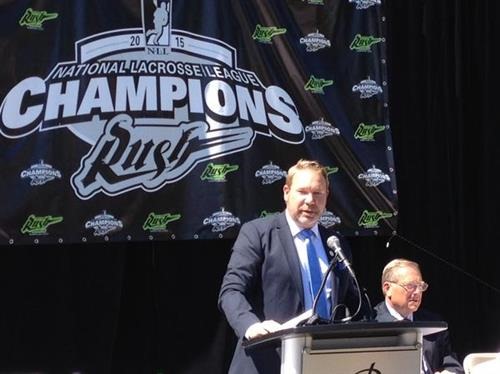
At the end of the 2015 season, I posted a list (Part 1 and Part 2) of my wishes for this past season. As expected, some of my wishes came true while others didn’t. In fact, one of them didn’t (the Edmonton Rush did not stay in Edmonton) but I think things actually turned out better overall than if it had.

So let’s do this again. Some of the wishes that didn’t come true last year will carry over – I’m still hoping for a new hi-def camera setup for Rochester – but I’m not going to list all the wishes again. Again, remember that this is a wish list, not things I think will happen.

Just like last year, it got kinda long so I’m splitting it into two articles.


NLLTV for all games – The league experimented with this new video streaming service in the playoffs this year and I have to say, I was impressed. The feeds were solid, the picture and sound were great, and the games were (mostly) easy to find. The ability to rewind and fast forward the stream, go back 10 seconds with a single button click, play in slow-motion, and then rejoin the game live are invaluable. Best of all, you can watch games after the fact: the next day, a week later, or whatever. This replay ability alone is worth the switch, but given all the other advantages, it’s a no-brainer.

Ideally, this will be available for all games next season for free, but I suspect this will be a pay service. Maybe they’ll give you 3 free games and then you have to start paying, which would help to get new fans interested (or at least it wouldn’t immediately turn them away). Maybe there will be a “season ticket” package for each team, and a “golden ticket” package for those of us who will watch any and all games. I can’t speak for anyone else but as long as it’s not going to cost me $100 for the season and the quality stays high, I’ll pay it.

Expansion – I did mention this last year, but I’m going to list it again. Given the number of NLL-calibre players that did not play in 2016, spent the season on the practice roster, or were cut mid-season, I think the league could definitely support two more teams.

The league has a new commissioner who has been talking about expansion a lot, so I’d be very surprised if we don’t have at least a couple of new teams by 2018, and possibly 2017. Oddly, I haven’t heard any significant rumours of where the league might expand, so Mr. Sakiewicz is playing it pretty close to the vest.

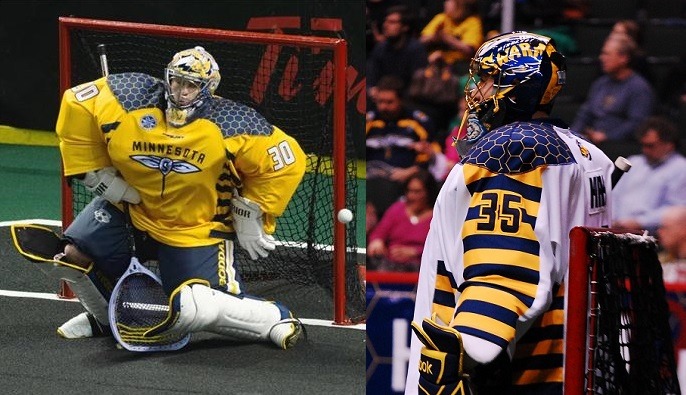
Better be..... EDMONTON!But where to put them…? How about Edmonton and Minnesota, for starters? Both the Rush and Swarm had decent (though not great) crowds but finances were their downfalls. I wrote last year about NHL ownership, and I think an Edmonton team owned by the Oilers and a Minnesota team owned by the Wild would be pretty successful. It might be tough for Edmonton fans to go from the Championship Rush to an expansion team that will probably be terrible for the first couple of years – they’ve already had more than their share of “sucky expansion team” years. Lucky Minnesota fans won’t have to worry about that – the Swarm were never that good anyway. If you want to call that “lucky”.

Other possibilities: the Portland LumberJax failed but not due to low attendance, so with the right ownership, Portland could work. I might consider giving Philadelphia another shot. Boston too, with the right arena deal.

As for new NLL cities, I have no idea. But then again, nobody else does either without having done a ton of market research. Looking solely at population hasn’t worked (right New York? Chicago? Anaheim?), and lacrosse popularity hasn’t worked either (right Baltimore? Albany? Syracuse? Vancouver?). On the other hand, few expected Saskatoon to be successful because it had neither population nor lacrosse popularity. Denver is a big city but I’m not sure the popularity there was expected either. To find the next NLL success story, we need a lot of market research and a little bit of luck.
2016 NLL Awards

As we do every year, the IL Indoor staff have each submitted our choices for a number of annual awards. On Addicted to Lacrosse a couple of weeks ago, the three of us went over our choices for those awards as well. Here are the picks I announced on A2L:

  • MVP: Shawn Evans, New England
  • Rookie of the Year: Randy Staats, Georgia
  • Transition Player of the Year: Alex Kedoh Hill, Buffalo
  • Defender of the Year: Chris Corbeil, Saskatchewan
  • Goalie of the Year: Nick Rose, Toronto

Not all of the IL Indoor winners have been posted yet, so I’ll just include the ones here that have. My choice is listed first, followed by the winner in brackets.

Goaltender of the Year hasn’t been announced yet but I’ll say here that when doing my IL Indoor picks, I changed my mind and voted for Dillon Ward (sorry Nick). I’m now… well, not exactly regretting that decision since Ward did have a great season but if I were to submit my picks now, I think I’d stick with Rosey (sorry Dillon).

But there are a couple of other awards that weren’t included in either list, so I wanted to cover them here.

Tom Borrelli Award (Media Person of the Year)

Teddy Jenner. I mean no disrespect to the recent winners of this award, all of whom are deserving, but I’ve had Teddy as my Borrelli pick for several years now. Given how much he does for lacrosse every year, I’m kind of surprised he hasn’t won this. He is an all-around sports guy for sure (from hockey to basketball to Teddy Jennerrugby – huddy huddy, whatever that means), but clearly lacrosse is his passion. He does colour for various TV broadcasts, he’s been doing his Off the Crossebar podcast for several years, he writes for IL Indoor (and his 30 Second Shot Clock articles this past season were awesome – insightful thoughts from his many-times concussed head), he had a lacrosse radio show (also called Off the Crossebar) in Vancouver for a couple of years, he was the on-floor host of the Stealth when they were in Washington, and he’s active on twitter. Did I miss anything? Probably.

He clearly knows the NLL but he’s just as knowledgeable (if not more) about the WLA, MSL, MLL, NCAA, as well as senior, intermediate, and junior A, B, C, and any other letters there are. He knows the game as well as anyone and loves to talk about it, and we love to hear him talk about it.

Full disclosure: I’ve never actually met the man in person but we’ve been Twitter-buds for a few years. Then again, Teddy’s Twitter-buds with everyone. He interviewed me on his radio show once, and I interviewed him for this blog a few years ago.

Honourable mention: Paul Tutka. Given his year-long twitter rant about how to improve the NLL (which came down to “change everything but the game itself, and even change some of that”), it’s unlikely that the league will honour him again, but three-time Borrelli winner Tutka is still one of the most knowledgeable lacrosse writers around. He wrote a preview of the 2016 Champion’s Cup series which is about as in-depth as any article you will ever see. I read stuff like that and think “WTF am *I* doing writing about lacrosse? I don’t have a hope of covering things to that level of detail.” The old adage about “he’s forgotten more about lacrosse than I’ll ever know” has never been more apt.

But I’ve decided that I cater to a different audience. I’m going for the “I want to read articles written by someone who doesn’t know anywhere near as much about lacrosse as Paul Tutka” demographic. And I’m killing it, thankyouverymuch.

I guess more full disclosure: The Money Ballers column that I’ve been writing on IL Indoor for the past five seasons was created and written by Tutka for the previous five seasons. Again, though, I’ve never met him personally.

Executive of the Year

Lee Genier, Saskatchewan Rush. The lowest attended game in Saskatoon this year was their second game, when they had 8,624 come out. Again, that’s the lowest attendance this year. The Edmonton Rush only had three regular season games higher than that in the previous six seasons. They went from 7th in the league in average home attendance to 3rd in one year. Saskatchewan averaged 11,737 per game, an average higher than every Edmonton Rush season – in fact the Edmonton team only had four games higher than that ever. One of those four was a Championship game and another was $1 ticket night.

Lee GenierWe certainly can’t give all the credit for the success of the team in Saskatchewan to Mr. Genier, the President of the Rush, but there’s no question that he’s been instrumental. The Rush didn’t have the crazy theme nights they had in Edmonton, when they put Twitter handles on their jerseys and brought in wrestlers and GSP (who, it turns out, is not me despite those being my initials) and the Dallas Cowboy cheerleaders and other celebrities. Not that these were bad ideas, but if you’re filling your arena based solely on the lacrosse team, those extras just aren’t necessary.

They even held a rally on a Friday afternoon (not a game day) and got a thousand people out. Can you see that happening in Edmonton?

Now, Edmonton averaged over 10,000 per game in their first two seasons, and then it started to drop off until it was down in the mid-6,000’s by 2015. Could that happen here too? Sure it could. But the first season of the Saskatchewan Rush has been an unqualified success, regardless of how the team does in the finals.

Honestly, I have no way to know if Mr. Genier himself is the architect of the plan that brought in the big crowds. Maybe the award should go to owner Bruce Urban, or the entire Rush marketing team, or someone else. But Genier is one of the more public NLL team Presidents, popping up on social media and doing radio and TV interviews and such. The way that Saskatoon has embraced the Rush is partially due to lacrosse being an exciting sport and partially due to their team being the defending champs and one with a very good chance of repeating. But getting the word out to the public and getting the local businesses and politicians involved takes significant work and Genier and his team have done an outstanding job.

Sportsmanship Award

I have no particular opinion on this award, but I will fearlessly predict the three finalists for the 2016 NLL Sportsmanship award:

  • Eli McLaughlin, Colorado
  • Corey Small, Vancouver
  • Travis Cornwall, Vancouver

If they don’t want to put two Stealth players on the list, the third would be John LaFontaine from Saskatchewan.

It’s not really much of a prediction, it’s just the non-goaltenders with the most games and lowest penalty minutes. None of these guys picked up a single penalty in 2016. McLaughlin and Small played 18 games, Cornwall 15, and LaFontaine 13.

The NLL Experience: Buffalo vs. Toronto Part II

This is part II of a short series comparing the lacrosse experience in Buffalo and Toronto. Part I was my own observations. This second one contains other people’s comments as well as a summary.

As I mentioned in the previous article, I have never been harassed in any way wearing my Rock jersey in Buffalo, and none of my Bandit-supporting friends have had bad experiences in Toronto. But unfortunately, that’s not true for everyone.

A player’s wife told me a story of when she was cheering for her husband (who played for the visiting team) while in Toronto a couple of years ago. Her husband had been hurt and was down on the floor, but she didn’t know how bad it was. The woman behind her was shouting things like “get up you f**king pussy”. The player’s wife was there with their toddler who was already upset that daddy was hurt. She turned around and politely informed the screaming lady that it was her husband who was hurt and that their child is quite upset, and asked her to stop. The lady simply told her AND her crying child to f**k off. Nobody around her said a word to this obnoxious woman.

She acknowledged to me that this was a rare incident and that not all Rock fans are like that, but she hasn’t been back to a Rock game since and it’s hard to blame her. Not only am I shocked at the douchebag who yelled at her and her child, but I’m surprised that other fans around her didn’t step up and tell this lady to STFU.

Air Canada Centre

A few thoughts from other fans:

@TimNThen: “Probably biased, but Buffalo is better. Swennie is more into it. More basic fan interactive. Have had probs with Rock fans.”

@hardison34: “Rock season tic holder. Buffalo is what Rock games were like at Maple Leaf Gardens. Very envious. Rock lost 7000 fans somehow!”

@hardison34: “By the way, Bruce Barker has been increasingly repetitive and annoying. Toronto..do you want another,always when opp. has ball”

[GP: I figure this is because after the goal there’s a faceoff, and Toronto usually loses those. So by the time Barker has finished announcing the goal and asks “Do you want another?”, the opponents already have the ball. This has been much better this year, thanks to Brad Kri.]

@kevinmad: “not a fan of either team, but have been to both. Toronto was a awesome experience with great fans. Buffalo not so much #khawks”

[GP: The lone dissenting opinion.]

Steve Lorimer: “Buffalo atmosphere is way better! Probably because they’re owned and operated under NHL ownership! Toronto rock should be too! There’s more fans in Buffalo and most people are covered head to toe in bandits clothing! The announcer is even better! What’s he got? NOTHING! Toronto has nothing! Gotta change things around here but fans doesn’t want or like idea if mlse owns the rock…”

[GP: I’m not sure I agree with MLSE owning the Rock being a good thing, but that’s a whole ‘nother article…]

Extras

I said in Part I that I wasn’t going to look at food or ticket prices, but I will mention them briefly. Not only are the tickets cheaper in Buffalo but the outdoor parking lot right next to the arena is $10 – parking that close to the ACC would be $20 at least. There’s a parking garage connected to the FNC which is a little more expensive ($15 I think, still not terrible) but it’s a nightmare to get out of after the game. We walk the three minutes past it to the outdoor lot and we’re generally on the expressway in no more than ten minutes. Five minutes after that, we’re at the border.

The food and beer options are different but I can’t really compare them. When I’m at games, I rarely buy anything more than a Coke Zero (or a Diet Coke in Buffalo since they don’t have Coke Zero Sad smile), and maybe popcorn if my kids are there and hungry. Depending on timing we sometimes get dinner at the arena, and usually opt for a pizza slice or hot dog; we don’t get the more expensive pulled pork sandwich or beef on a weck. Thus I can’t compare the food quality in the two arenas other than to say the popcorn is comparable.
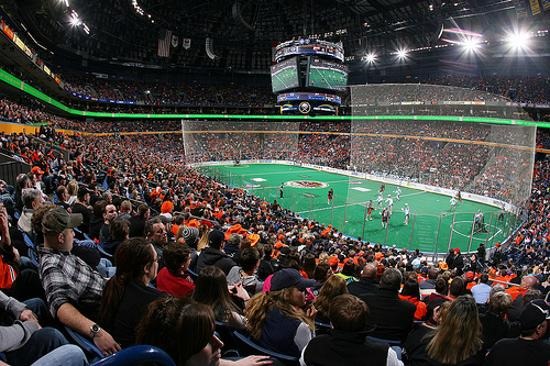
One other issue in Buffalo (other than the Diet Coke fiasco): my younger son isn’t a big fan of soft drinks but the only other option we could find for him was water or unsweetened iced tea. Did you know: it’s a scientific fact that you can’t add sugar to unsweetened iced tea and make it taste good.

Conclusion

Of the people I talked to, just one person preferred the Toronto experience to Buffalo, and it wasn’t me. Don’t get me wrong, I love my Rock and have no plans to stop going to Rock games. For me, the game is the main thing and the atmosphere is fine. But I do love going to games in Buffalo. The game is still the main thing for me but it’s just so much fun – it feels like Toronto did in the early 2000’s when we were getting 17,000+ to every game. But even then, 10,000 fans in Buffalo were louder than 17,000 in Toronto.

I wish I could point to something and say “Hey Jamie Dawick, here are a couple of things you could do to bump attendance and improve the game experience!” Because you know, he probably hasn’t had teams of people looking into that for years. Also, what might work in Buffalo might not in Toronto, and vice versa. But as long as the Coke Zero is available, you’re on the right track.

The NLL Experience: Buffalo vs. Toronto, Part I

I attended a recent Rock-Bandits game in Buffalo, and in my game report, I added an entire section about “Banditland environment notes”. Over the years, I’ve been to a number of NLL games in Buffalo, mostly Rock games. I try to get to at least one Rock @ Bandits game each season, sometimes more than one, and I’ve seen some other non-Rock games there as well. In fact, the first NLL game I ever attended was the Bandits hosting the Philadelphia Wings back in 2000. As for Rock home games, I’ve been at well over 90% of those since 2001.

I decided to write a whole article comparing the experiences of a Rock game in Toronto with a Bandits game in Buffalo. Then I reached out to my audience and twitter followers to see if they had any comments, and got a few. The article ended up getting kinda long so I split it into two. This first one is my own observations. The second one (coming tomorrow) will be other people’s comments as well as a summary.

I’m just talking about the game experience itself – I’m not talking about parking or food options or ticket prices or the quality of the cheese sauce on the nachos (mostly – I’ll touch on this stuff a little in Part II). I know these are all part of the whole “game-day experience” but there’s stadiumjourney.com for that (Toronto gets a 4.1, Buffalo gets a 4.6 – both reviews written by the same guy).

Please remember that when I say “Many fans are <whatever>” or “Many fans <do or don’t do something>”, I don’t mean ALL fans, I just mean “I see this occurring in arena A more often than in arena B”. This could be due to my own biases, or where I sit, or any number of other things. It’s also possible that since many more people generally attend games in Buffalo (13-18k this year) than in Toronto (8-10k), certain things just happen more often. Thus it may seem that something is more prevalent when it’s really the same. I’m sure you and your friends don’t do these terrible things. But others do.

As a rule I don’t generalize. But yes, I know there is some generalization here.

Buffalo

Pros

  • Very loud
  • Swennie (aka Chris Swenson, the Bandits PA announcer) is one of the best. He and the fans have catch phrases for specific players – Dhane Smith, Benesch, Tavares, Steenhuis – and specific situations. Swennie was asking “What’s he got?” on a big save long before they were doing it in Edmonton or Calgary. FYI: His nickname is not “Sweaty” as I once thought it was.
  • Fans really get into the game. Chants are sometimes started by fans and sometimes by Swennie. Far more often by the fans than in Toronto.
  • Way more fans dress up, colour their hair, wear face paint, hold up painted signs, etc. Very little of that in Toronto.
  • I’ve always liked their penalty chant. When an opposing player gets a penalty, they chant “B‑O‑X! B‑O‑X! To the box! To the box! To the box box box!” When I first started going to Bandits games, that was it. In recent years they’ve sped the whole thing up and added a “Woooo” to the end, but I don’t like it quite as much now because the “Woooo” seems to be the focus. Now it’s “B‑O‑X! B‑O‑X! Totheboxtotheboxtotheboxboxbox WOOOOO!
  • I don’t remember Swennie ever taking cheap shots at the other team or players like some other announcers do. Or did before they were let go by the Mammoth. Not to mention any names.

Cons

  • Very loud, which is a con if you don’t like that sort of thing. But then who goes to a pro sporting event hoping it will be quiet?
  • In my experience, there seem to be more “homers” in Buffalo, i.e. booing or screaming for a penalty every time a Bandit is checked (legal or not), booing every time a Bandit is given a penalty (deserved or not), that kind of thing. If I were an NLL ref, I’m not sure I’d like working games in Buffalo.
  • At the game that inspired this article, every time a Rock player was hit to the floor and needed the trainer to come out (it happened three times), some Bandits fans around us accused them of faking the injuries. I’ve seen this more often in Buffalo than in Toronto.

First Niagara Center

Toronto

Pros

  • Fewer fans as in previous years but the ones that are left are generally die-hards and are pretty lacrosse-savvy. They will applaud good defensive plays and penalty killing, not just good goals.
  • PA announcer Bruce Barker also doesn’t take shots at the other team or its players. The closest he’ll get is saying “Let’s crush the Rush!” or something to that effect, but even that he’ll say once at the beginning of the game and that’s it.
  • In playoffs games or overtime, I’ve heard the Toronto crowds get pretty loud. They’re not generally as loud as Buffalo, only in certain situations.
  • If an opposing player gets injured and is down on the floor for a while, there is almost always applause when he gets up, even if he has to be carried off the floor. I don’t generally hear accusations of diving or faking injuries, or at least not as many as I have in Buffalo. But that doesn’t mean they don’t occur. (Foreshadowing for Part II)

Cons

  • Fewer fans as in previous years. I wrote about this last month.
  • Quiet for the most part. They obviously shout when the Rock score and when they win and during fights and such, but just during regular play, there’s not much noise.
  • Barker does his best to get the crowd fired up but it doesn’t always work. Fans yell “Go Rock Go!” as long as Barker is yelling it over the PA, but once he stops, the crowd stops almost immediately. If Nick Rose makes a great save, Barker yells “Rooooooo-sey!” and sometimes the crowd yells “Roooooo-sey!” back, but sometimes not. But when Rose is having a really good game, the “Rosey”s are louder.
  • I’ve heard the crowd start “Go Rock Go” or similar chants by themselves with no help from Barker, but rarely. Usually only in playoff games. There is one that the fans do themselves – when the Rock score, a group of fans (mostly in section 118) stand up, chant the opposing goalie’s last name three times, and then add “You suck!” (This is quite amusing when the Rock score their fifth goal of the game in the fourth quarter while the opponents have 15 or so.) Also, earlier this year Nick Rose was having a spectacular game and a chant of “Rosey! Rosey! Rosey!” started from the fans.


In every arena in the league, there are stories about fans of the opposing team being harassed by home team fans, but as I mentioned above, I have never personally had any trouble at all in Buffalo. I have worn a Toronto Rock jersey to every Bandits/Rock game I’ve been to in Buffalo (except the “Tucker out Lymphoma” night this past April when I wore my “Braver than Brave” t-shirt) and have never been harassed in any way. In fact, after Canada won the hockey gold medal in the 2002 Olympics, I had Bandits fans see my Rock jersey and congratulate me on the victory. I also know some Bandits fans who sit with us at Rock games and they’ve never been harassed because of their Bandits jerseys, except once by Iggy but that was fun.

Unfortunately, this is not always the case. But that’s a story for another day.

Missing the point

In his excellent 30-second shot clock column this week, Teddy Jenner mentioned that if the league used points rather than games behind to decide the standings, they’d look a little different. Then he went so far as to say:

Maybe it’s because the league doesn’t have ties that it’s gone with this system but maybe it’s time to go the route of the NHL and give points for wins and maybe even an OTL point.

Over twitter, I expressed my disagreement with this idea and Teddy asked why, and the best I could come up with on the spot was that I didn’t like rewarding teams that lose. If you lose, you lose. You don’t get a partial win for losing in 18 innings, nor do basketball or football teams gain anything for losing in overtime. So why hockey?

Well, we kind of know why: it’s because hockey used to have ties. Once the NHL initiated the shootout, they should have scrapped the points system since there was no longer the possibility of a tie. For unknown reasons they didn’t. But the NLL never had ties in the first place, so a points system makes no sense.

Callum Crawford wins a 2015 game in OT

Here are five reasons (in no particular order) why this is a bad idea. This assumes the NHL system: a win gets you 2 points, an OT loss gets you 1, and a regulation loss gets you 0.

  1. This kind of points system makes sense if there are wins, ties, and losses. A tie isn’t as good as a win, but better than a loss. But if there are no ties, there are just wins and losses. Why are the points necessary? Teddy says “maybe even an OTL point” – what if you don’t include the OTL point? If you just give two points for a win and nothing for a loss, then you’re just ranking teams by wins. This means that a team that has won more than another team but has also lost more is still ranked higher. In the points system a team that’s 5-4 is ranked ahead of a team that’s 4-3. In the current system, they’d be tied. At the end of the season, it won’t matter but during the season, the points system is less fair.
  2. If you lose a game in regulation time, you get 0 points. But if you lose in OT, you get one point. You are rewarded for keeping the score tied for 60 minutes – making it to OT is somehow “less” of a loss. Does a team really need to be rewarded for taking slightly longer to lose? So shouldn’t winning in OT be “less” of a win? It seems that if we’re going this route, we should give 3 points for a regulation win, 2 for an OT win, and 1 for an OT loss.
  3. It’s near the end of the season and a team is on the threshold of missing the playoffs. With five minutes left in the fourth quarter, the score is tied. The team realizes that if the 4th quarter ends tied, they get a point. They decide it’s in their best interest to play as defensively as possible, making sure that they get the single point, and then fight over the extra point in OT. As a result, we have play-it-safe boring lacrosse. And what if both teams are in the same situation and desperately need that single point? We end up with the most boring five minutes in lacrosse history as both teams run out the clock and take a token shot every 29 seconds.
  4. If you lose a regular season game in OT, three points are awarded. Since the losing team gets one of them, they sort of get 1/3 of a win. What if you lose game 3 of the Championship series in OT? Do you get 1/3 of the Championship? (SPOILER: no)
  5. Related to #4, even the NHL doesn’t use this system in the playoffs. If you lose after 15 seconds of OT in the regular season, you get a point. If you lose after 3½ periods of OT in the playoffs, you just lose. Consistency.

The ironic part is that many NLL players talk in interviews and on twitter and such about a win giving them “two points”. That’s how ingrained the NHL is in Canadian culture.

BTW just to clarify the title of this article, I’m not saying Teddy is wrong or hasn’t thought it through. This is just all my opinion. He’s a very knowledgeable guy when it comes to sports in general and knows more about lacrosse than I ever will. I just thought it was a clever pun.

Goalie tandems

Back in my day, things were simple. You had a goalie who played every day. If he had a bad outing or was sick or something, you put the backup goalie in but the next game, the regular goalie was back. Bob Watson was the man and Anthony Cosmo was his backup. We Rock fans all knew Cosmo was more than capable of being a starter, but he was unquestionably Whipper’s backup at the time. Eliuk was the man in Philly. O’Toole was the man in Rochester. Chugger in Buffalo. Nash in Colorado.

That’s just how it worked, and we liked it.

And then the Minnesota Swarm came along and changed everything.

In 2012, the Swarm started the season with a 20-14 loss to the Mammoth. Longtime Swarm goalie Nick Patterson went the distance and gave up all 20 goals on 50 shots. He was immediately benched and rookie Tyler Carlson started the next game, winning 19-11 over the Bandits. They returned to Carlson for the next two, a 16-14 loss to the Knighthawks and then a 10-9 overtime win over the Rush. Two nights after the Rush victory, the Swarm kept the Knighthawks to only 6 goals with a sparkling debut performance from Evan Kirk. That was when Patterson was released.

Carlson (left) and Kirk

After that, the Swarm just kept going back and forth. Carlson, 11 goals against. Then Kirk, only 7 goals against. Carlson again, 11 goals. The Swarm finished the season at 9-7 and lost in the first round of the playoffs. But they had proved that their tandem of rookie goalies had worked: Kirk played all 60 minutes of six games, winning 4 and holding opponents to <10 goals in three of them. Carlson went the distance in seven, winning four. Both finished in the top 10  in GAA and if you remove the “true” backups, they were first and fifth.

Since then, the Swarm has gone with a tandem goalie plan pretty much every season. First Carlson and Kirk, then Carlson and Higgins, and now Higgins and MacDonald. But the idea seems to be catching on.

The Swarm still have Higgins and MacDonald, though MacDonald has played twice as many minutes as Higgins this year. Toronto has Rose and Miller, splitting time about evenly, just like last year. Calgary had Scigliano backing up Poulin a couple of years ago, then that was reversed last year. This year it’s more even. Cosmo is the main guy in Buffalo but they have a ton of confidence in Davide DiRuscio who filled in very well when Cosmo was recently hurt. At 38, Cosmo is the fourth-oldest player in the league, so a tandem going forward may be in the cards in Buffalo.

But not everyone has bought into it. New England has Evan Kirk, Colorado has Dillon Ward, and Rochester has Matt Vinc, and those guys are the unquestionable starters for their teams. Saskatchewan is having no part of this at all. Aaron Bold has more minutes than any other goalie and his backup, Tyler Carlson, has the fewest.

Vancouver is a weird case. They have said on more than one occasion that Eric Penney is their starter and Tyler Richards is the backup, but Richards has played almost 70% of the minutes in the four games since his return. A Richards/Penney tandem would not be surprising the rest of the way in 2016.

Now having said all that, the Minnesota Swarm didn’t invent this idea. It had been done before. In 2007 the Bandits had Steve Dietrich & Mike Thompson, and the next year they had Ken Montour & Thompson. In 2010, the Washington Stealth had Matt Roik & Tyler Richards. Even the Swarm themselves had Matt Disher & Nick Patterson in 2006 and Kevin Croswell & Patterson in 2009. But it really seemed to take off in 2012 once Kirk and Carlson became the two-headed monster for the Swarm.

In some of those older cases, it might have been “play one goalie until he has a crappy outing, then play the other until he blows it” but the tandems we’re seeing now don’t work that way, and maybe that is what the Swarm started. Kirk would allow 6 goals in a game and Carlson would start the next one. The idea of “ride the hot goalie” isn’t what they were doing.

Maybe in a few years, that will be the norm – every team has their pair of goalies and they each start half of the games. It certainly seems to make more sense than having one goalie play every minute of every game and then when he has an off night, the other goalie who’s played zero minutes for half a season is then expected to come in and be effective. But if we ever get to the point where every team is doing this, I suspect it won’t be until after Matt Vinc and Aaron Bold retire.

Guy Who Knows Nothing About Sports Video Production’s Guide To Producing Sports Video

I’ve watched a lot of lacrosse over the web and on TV during the past several years. I’ve seen games with low quality chunky and choppy feeds, feeds with terrible lag (it’s irritating when you find out about a goal on twitter a full minute before the “live” feed gets there), feeds with video but no audio, feeds with audio but no video, and feeds that just stop. But I’ve also seen games with sparkling, hi-definition, smooth, beautiful video and flawless audio. Much of that is based on the cameras and other video hardware as well as the network hardware and connection, so there isn’t much that can be done short of refitting the arena. You’re not going to get the beautiful hi-def video from the BCA in Rochester because they just don’t have the equipment to do that, whereas the LEC in Langley does – and I’ve seen some gorgeous feeds from the LEC.

But regardless of the actual video and audio quality, producing an NLL broadcast can be either great or terrible depending on the decisions made by the producers. So as a public service, here’s my:

Guy Who Knows Nothing About Sports Video Production’s Guide To Producing Sports Video


DO: Use the mid-floor camera almost all the time. Now and again a lower camera in the corner gives a good view, but not always, and not for very long. And the behind-the-net camera is rarely useful unless it’s way up high.
DON’T: Switch to the lower corner camera every single time the ball is down near the goal.
ALSO DON’T: Install (or ever use) a corner camera that can barely see the net, Mohegan Sun people.

DO: Hire broadcasters who are knowledgeable but not biased, or at least not homers. I’ve said all this before. If the announcer is more excited when his team scores than when the other team scores, that’s fine. But if every time a player on one team is hit, he says “so-and-so is knocked to the ground, no call, …” but he never adds the “no call” when someone on the other team is hit, that irritates me.

DON’T: Broadcast the in-game host. The people in the arena should hear him/her, the people watching the broadcast should not.

DO: Have the broadcasters read my NLL Name Pronunciation Guide.

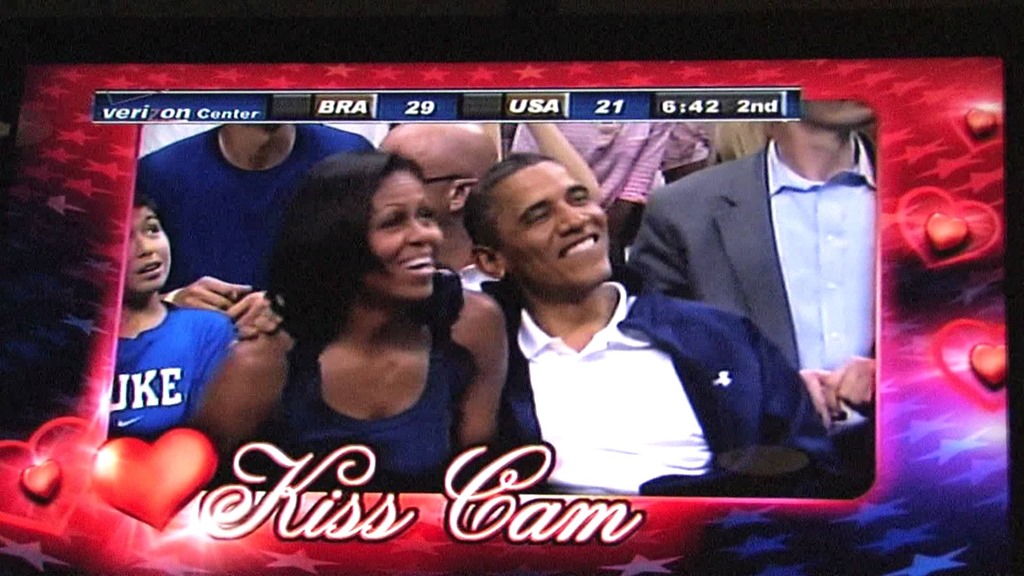
DO: Show the dance cam, kiss cam, “show us your muscles” cam, or just general shots of the audience when play is not happening. That can be entertaining and fun.
DON’T: Show any of these while play is on. This shouldn’t need to be said but I’ve seen it happen more than once.
ALSO DON’T: Simply show the Jumbotron feed with the “make some noise!” graphics and that sort of thing. Ever.

And he scores! That beautiful goal ends the game in overtime!

DO: Hire broadcasters who are familiar with indoor lacrosse. If you get field lacrosse guys, make sure they use the correct terms: there are no “ground balls” (or GBs, Randy Mearns) in indoor lacrosse, they are called “loose balls”. (I’ll give Mearns a bit of a pass because he played in the NLL but he’s also a field coach so he concentrates on field lacrosse these days.) Recently a broadcaster talked about a player having his foot in the “goal circle”. We call it the “crease”.

DO: If you’re showing a replay, make it obvious by putting a “replay” banner or something on the screen. In a recent Black Wolves game, they showed the fancy swooshing NLL graphic that usually precedes and follows replays but then went immediately back to live action. It took me quite a while to stop yelling at the screen “SHOW ME THE GAME” and to realize that they were.
DON’T: Cut to that replay while play is on. Or switch away from live action for a replay of nothing interesting happening as the Black Wolves did in the same game.

DO: Display the score, quarter, and time remaining (and ideally, shot clock) in a narrow bar across the top of the screen or in one corner (top left is my personal preference). If it’s possible, also indicate when a team is on a power play (and how much time is left). Other “nice-to-haves” would be an indication of whether a net is empty and when a delayed penalty is called.
DON’T: Have this graphic take up the top quarter of the screen.

DO: Have the announcers explain some of the weird or lacrosse-specific rules. We understand that not everyone watching is a lacrosse die-hard.
DON’T: Let them anywhere near the microphone if they don’t know these rules. Now and again the refs make a call that seems incomprehensible or incorrect because of some information the announcers don’t have. I get that. But when the broadcaster is baffled on why a penalty shot is awarded when a team already two men down takes another penalty, or wonders why a goal scored with 30 seconds left in the 4th quarter is being reviewed when neither coach asked for it, that’s not helpful to the newbies, annoying to the die-hards who are yelling at their screens, and gives a bad impression of the league – that they would hire broadcasters that don’t know the game.

DO: If you have someone interviewing the players or coaches during breaks in play or at the end of a quarter, have them ask specific questions.
DON’T: Let them take the easy way out and just say “Talk about the play of <Player having a good game>”.
ALSO DON’T: Ask how someone is feeling immediately after an emotional loss, whether it’s in OT, or after a big comeback, or in a playoff game. We all know how they’re feeling and they don’t want to talk about it.
DO: Interview Alexis Buque after he wins.

Tyler Richards returns: I have a bad feeling about this

The news came out a couple of weeks ago and caught the NLL world by surprise – Tyler Richards had been moved by the Stealth from the retired list to the “active roster evalutation list”. As revealed on Teddy Jenner’s Off the Crossebar podcast, Richards simply missed the game too much and wanted to return.

Normally this would be fine. Lots of people have retired and then un-retired, most notably Gary and Paul Gait in the NLL, Michael Jordan in the NBA, and Mario Lemieux in the NHL. But this one makes me nervous because of the reason Tyler Richards retired: multiple concussions.

A number of years ago, Stephen Stamp wrote a must-read article for IL Indoor about concussions and their effect (note that the formatting of the article was messed up in the IL Indoor website redesign from a year or two ago). He talked to Tracey Kelusky, who lost playing time due to concussions, and Merrick Thomson, who had to retire after only two seasons in the NLL. But the most frightening part of the article was his conversation with former Bandit goalie Ken Montour, who was hit in the head (with a player’s knee) during a game and never played lacrosse again. At the time of the article he hadn’t been able to work (as a teacher) in a year and a half either.

Tyler RichardsIn some cases someone who is concussed feels weird for a couple of days and then they’re fine. They just “got their bell rung”. But I work with a woman who smacked her head on her kitchen cabinet and was off work for at least 8 months because of concussion symptoms. Kelusky, Dan Carey, and many others have missed significant playing time, while concussions ended the careers of Thomson and Montour and in Montour’s case at least, affected his off-floor career as well.

While concussions are still not entirely understood, it’s fairly well documented that people who get them are more likely to get them again. So this is not like a knee or ankle or shoulder injury where with the right medical care and enough rehab, you could be back to your pre-injury level and you are at no increased risk of re-injuring yourself. Richards cannot simply say “I was hurt before but I’m better now.” The more concussions you get, the more you’re likely to get, and the worse they’re likely to be. It’s true that one bad hit could take anyone out of the game for good, but in Richards’ case it’s more likely than others, and the hit doesn’t have to be as hard to cause damage.

So Richards is more likely to suffer a concussion than other players, but perhaps he feels the risk is worth it. Remember, he was never told by doctors that he should retire. But he also needs to consider his quality of life if he suffers more concussions. What if another shot to the head ends your lacrosse career and your off-floor career? I imagine that living with chronic knee or shoulder pain due to sports injuries is no fun at all, but having to live with headaches, dizziness, and difficulty concentrating for the rest of your life would be much worse.

I’m sure Richards knows all of the risks. I’m sure he’s talked to doctors and his family and the Stealth people and they’ve all come to the conclusion that this is a good idea. Who am I to tell him he’s wrong? That said, I can’t help but feeling a little uncomfortable with it. Remember, he’s a goaltender so it’s not as if he’ll be fine as long as nobody cross-checks him in the head. People are shooting a rock-hard rubber ball at him as hard as they can. Taking shots off the head is an absolutely unavoidable part of his job.

I wonder how many players who we enjoy watching today could have had their careers cut short if the NLL hadn’t made a point of cracking down on head shots in recent years. Would we have missed watching Shawn Evans for the the last few amazing years? Or Cody Jamieson? What if Brett Hickey had been concussed by a hit to the head in his final game with the Stealth? We might have been deprived of his remarkable 2015 season and a remarkable young athlete, and he would have been deprived of a lot more.

An interesting question is how will this affect opposing shooters? If you’re Kevin Buchanan and can shoot 100 mph and you’re facing TRich, do you dial it back a notch hoping not to be the one to end his career? Do you shoot low even if you see a high opening? Do you try a cross-crease dive if there’s even a chance you run into him? I can’t imagine that none of the opposing players have thought about this. This isn’t just changing your behaviour because different goalies have different strengths and weaknesses, this could be taking it easy on him so as not to injure him. The cynic in me can’t help but wonder if this gives the Stealth a tiny little advantage. I totally understand that a team wants to take every advantage it can get, but I’ll be honest, using something like this to your advantage seems a little scummy.

This should go without saying but I wish Richards nothing but the best in his return. I hope this is all for naught and he never suffers another concussion. He’s not even 30 so he could have another decade of lacrosse in front of him. However I know that whenever I see him between the pipes and someone is rearing back to fire a laser at him, I’ll be hoping for a goal so that the ball misses his head.

Let the music play

When you watch an NHL game, there’s frequently music playing between plays. But the second the puck is dropped, the music stops. One of the things about the NLL that’s unique in the world of professional sports is that the music doesn’t stop. (“Can’t stop the Rock” one might say.) It surprised me the first time I went to a game. It surprises people I bring to games. My wife comes to one or two games a year and she says it still surprises her sometimes. You hear “They don’t stop the music while the game is on? Wow!”, frequently followed by either “that’s cool” or “that’s weird”.

So this is unique to the NLL – almost. CLax plays music but MSL and WLA do not. But is it a good thing? Let’s look over the pros and cons. I asked what peple on Facebook and Twitter thought, and I’ll include some of their comments below.

A few people (including Stealth player Jarrett Toll) simply liked my tweet but didn’t respond. I don’t know if that means they are for or against.

Pros

It’s unique and memorable. It’s something interesting about the whole experience that might catch first-timers’ memory and give them something to talk about at the water-cooler the next day.

It can get people pumped up and excited. This is useful if, for whatever reason, the lacrosse game isn’t exciting enough already.

It makes sure the place isn’t silent if the crowd isn’t in it.

Pro comments:

  • Darci Becker: “Vancouver would be a library without it!”
  • Ron Flesher: “I have no issue with music being  played during game play.”
  • Travis Holland: “Rock on”
  • Grant Miller: “Feels like it’d be quiet without. Maybe do NBA style with nothing heavy but still something”
  • Craig: “Don’t mind music, but for whatever reason it sometimes gets turned up to 11 at Pepsi Center”
  • Luscious Dick Tacoma: “conundrum. I like it live. Don’t like it watching outside the arena.”
  • J Bro: “the kids LOVE the music aren’t on Twitter and won’t vote. They are the future players that will grow the sport”
  • Bob Cox: “Music is one of the great things that makes NLL games more fun than other sports”
  • Carmen Widdess: “It makes for a great atmosphere with the music cranked.”
  • Chuck Hill: “I sometimes don’t even notice the music anymore (if it’s a good game and I’m into it) but I enjoy the music”

Big crowd in Buffalo

Cons

The fact that the other major sports (NHL, NBA, MLB, NFL, even MLS if you want to count them) don’t play music during the game may make the NLL seem a little more bush-league.

The actual sounds of the game – the grunts, the hits (ball hitting goalie, sticks hitting each other, sticks hitting players, players hitting boards, etc.), the yelling of coaches and players – get drowned out. I went to a pre-season game at the TRAC back in December and there was no music playing. Hearing what a lacrosse game really sounds like was fantastic.

When watching on TV, music playing is terrible. It seems much more distracting on TV, especially when the commentators have to talk over it.

Con comments:

  • Marisa Ingemi: “YES YES YES YES” (to the question “Should the NLL stop playing music during play?”)
  • Stephen Stamp: “I personally dislike it but have gotten used to it so doesn’t bother me too much”
  • Richard Bell: “May be up to the team”
  • Marcel Paillard: “Only if it flows with the game! Play whole song”
  • Marko Ćelić: “Only when the play is going on is it annoying….but I’m assuming it would be relatively quiet for the non uber lacrosse fans at the game.”
  • Brad Challoner: “No music is great if concrete or wood floors, you hear game sounds but turf is very quiet. I vote no.”

Interesting: other than Marisa’s rather unequivocal comment, even the “con” comments aren’t entirely “con”.

The Science

OK, that title is a joke. There’s no science here, it’s entirely opinion.

In a Twitter poll, 57% of votes chose “Love the music” over “No music please”. There probably should have been a “don’t care” option, and there were only 28 votes in the first place so it doesn’t tell you much.

I had a good chat over twitter with a fan named Nick who said that “it’s one of the reasons the casual fan enjoys the game” and that the lack of music would drive away fans. He said that he’s talked to many fans at many NLL games and they say they like the atmosphere better than at NHL games.

However talking to fans at NLL games doesn’t give you all the information, nor do polls on Twitter. It could be that many people came to NLL games, were turned off by the music, and never came back. And if they were turned off, they’re not there to talk to you about it the next time, and they’re very likely not answering lacrosse polls on Twitter. What if there are twice as many of those people as the ones who like the music and still go to games? Until we can find the people who left because of the music and include them in the numbers, we don’t know the whole story. Of course, finding those people is the challenge.

Other than Toll’s non-response, I didn’t hear from any players (though they might have voted in the poll) so I don’t know how they feel about it. I imagine they’re so dialed into the game itself that they don’t really notice the music.

Personally, I lean towards the “no music” side of things, though I’m not cancelling my season tickets over it. A lot of the music they play at the ACC is classic rock, which is my jam, so I tend to get into the music and the game (and the music selection is even better at the First Niagara Center in Buffalo – Dream Theater and Metallica!), so I’m kind of good either way. But like I mentioned earlier, the music-free game I saw at the TRAC was amazing, with nothing to distract you from the sounds of the action, and I enjoyed hearing the players calling to each other or yelling from the bench. But judging by the poll and the comments I got on social media, it seems that I’m in the minority.

The NLL’s most successful franchise

It’s a cycle that almost every pro sports team goes through. If you look back over the history of most teams that have been around for a while, they’ve had periods where they’re really good, at or near the top of the league, and then other periods where they’re terrible. Think of any team that’s been successful over the last year or two: the Royals in baseball, the Clippers in basketball, the Islanders in hockey. It wasn’t that long ago that all three of those teams were terrible, near the bottom of their respective leagues.

Alternatively, think of any team that’s been terrible over the last few years: the Knicks, the Oilers, the Phillies. I can certainly remember times when those teams were at the top of their leagues.  Every team has times where they’re really great and times where they’re really bad. Even the Cubs won the NL Central three times from 2003-2008.

This has certainly happened in the NLL as well. The Edmonton Rush were arguably the best team of each of the last two years but were terrible for a decade before that. The Washington Stealth went to the Championship in three out of their four seasons, but were 4-12 and dead last in the fourth. The Wings won 6 Championships in their first 15 years, then only made the playoffs 3 times in their last 12. The Rock, Bandits, and Mammoth have each won championships and also sat near the bottom of the league during the last 10 years. The Minnesota Swarm may be a bit of an outlier here; they were never a really great team and never reached the finals, but they were a very good team for a few years, getting to the division finals twice. On the flipside, their last couple of years in Minnesota were pretty bad.

(Aside: The NLL is a little different because of the team turnover. I’m only looking at teams that have been around for ten years or more. There are a lot of teams who didn’t have a long enough existence to consider. The New Jersey / Anaheim Storm, Ottawa Rebel, and Montreal Express never stuck around long enough to get good. The Arizona Sting went to 2 Championships in 4 years but never finished above 9-7 or below 7-9.)

Knighthawks

But in the NLL, there are two oddball teams that have mostly defied the longevity rule.

The Calgary Roughnecks were terrible in their first season, when they finished 4-12. But in the 13 seasons since then, they  have only finished below .500 twice, have never missed the playoffs, and have finished with 10+ wins 7 times. Even last year when they started 0-6 and finished 7-11, they managed to get to the Western finals. Other than their debut season (when you kind of expect a team to suck) and for part of 2015, the Roughnecks have never really been terrible.

But take a look at the Rochester Knighthawks. In their twenty-one seasons, they have only finished below .500 three times, and all three times they were just below .500 at 7-9. What’s more: they won the Championship in one of those 7-9 seasons. Let me say that another way: they won the Championship in 2012 after finishing the regular season tied for the worst record in franchise history. They have only missed the playoffs twice in 21 years and as we all remember, are the only team ever to win three straight Championships. In their debut season, they went to the Championship (and lost it in OT).

If you had to pick the most successful NLL franchise during its existence, you could argue the Rock might be the best choice given the number of Championships in that time. But they had a four year stretch where they were 10 games under .500 and missed the playoffs twice. The Wings were one of the best choices for the first half of their lifetime, and one of the worst choices for the second half. The Roughnecks would also have been a very good option, but they’ve had strong regular season numbers and not so much in the playoffs.

For my money, the Rochester Knighthawks win the prize. They have never had a single terrible season, but have had some outstanding ones. I know it’s no 22 in a row, Bandits fans, but they won 16 straight games from 2007-2008. They have never finished last in their division. They have won five Championships and appeared in four more, and have seen some of the best players in the game on their benches including the Gaits, John Grant, Shawn Williams, Shawn Evans, Dan Dawson, Cody Jamieson, and Matt Vinc.

They say any NLL team can beat any other on any given night. This is mostly true for the non-Charlottes and non-Anaheims of the league. But let’s face it, there were years that this was not true for the Rock, Bandits, Mammoth, or Roughnecks. But there has never been a time when playing the Knighthawks that they didn’t have a good chance of beating you.