I imagine the last few weeks have been a nightmare for NLL GMs, and the next couple won’t be much better. The second expansion draft in two years is coming up in a couple of weeks so each GM had to go through their roster and choose eleven players to protect, knowing they could lose anyone not on that list. Then you need to call more than half of your players and tell them they’re not protected. Then you will lose two of them and need to adjust your team afterwards. Luckily they have five months or so before the season starts to do that. Just like last year’s draft, some GMs will have some big holes to fill after the draft, others might barely notice the difference.
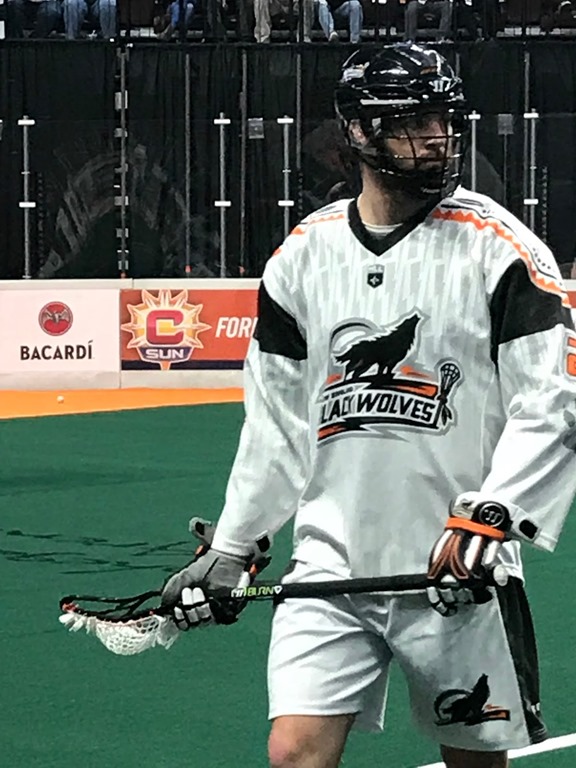
Category Archives: New England Black Wolves
2019 NLL Awards
This is the time when we look back over the season and pick the players who were the best of 2019. It’s also fun to see how close my random guesses predictions from the beginning of the season were. Every year, I pick a player for each team who I think will have an exceptional year, so let’s take a look at my “Look out for…” picks from the East and West previews as well.
MVP
 Original pick: Tom Schreiber
- Dane Dobbie
- Matt Vinc
- Callum Crawford
- Mark Matthews
- Dan Dawson
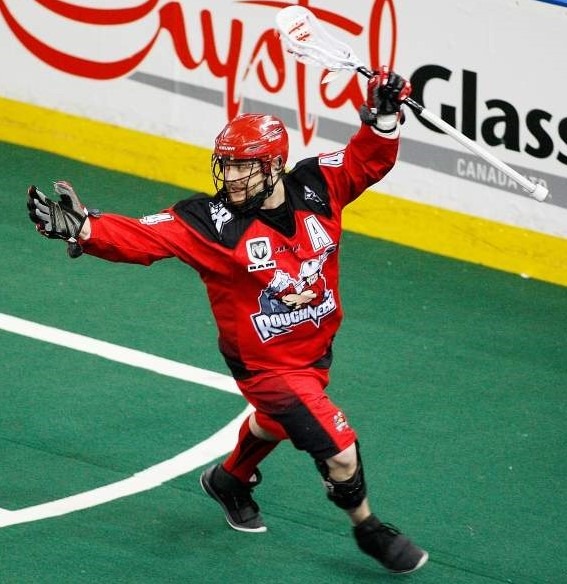
I don’t always like picking the guy with the highest point total as the MVP. It seems too easy and since I’m known to be a stats guy, it looks like I just went with the big numbers and ignored everything else. But this year, Dane Dobbie epitomized “most valuable” in every way. Not only did he lead the league in points (and finished second in goals, assists, and power-play goals), but he blew away his previous career high by 25 points. Most importantly, he carried the Roughnecks at the beginning of the season when Curtis Dickson, Wes Berg, and Jesse King were all out.
Goaltender of the Year
Original pick: Dillon Ward
- Matt Vinc
- Mike Poulin
- Frank Scigliano
- Christian Del Bianco
- Dillon Ward
Vinc led the league in GAA and save percentage among starters. He kept his opponents to single-digits seven times – and three of those were five or fewer. But most importantly he turned the Bandits struggling defense from last year into the stingiest in the league. Of course, he didn’t do it by himself but his play and the confidence he inspires in the rest of the defenders was obviously a huge part of that transformation.
Transition Player of the Year
Original pick: Challen Rogers
- Challen Rogers
- Steve Priolo
- Kiel Matisz
- Zach Currier
- Tyler Pace
Rogers plays excellent defense, is almost always the first guy up the floor in transition, and took many shifts on offense. He played on the man-up and man-down, and when watching the Rock play, it seems that he’s just always on the floor. He does it all, does it all well, and always looks like he’s having fun while doing it.
Defensive Player of the Year
Original pick: Graeme Hossack
- Graeme Hossack
- Kyle Rubisch
- Brad Kri
- David Brock
- Mike Messenger
Hossack and Rubisch are both masters of the stick check. They don’t just make it difficult for offensive players to get to or even see the net, leaving them with a bad shot or no shot at all, though they’re great at that too. These guys prefer to simply strip them of the ball and toss it to one of their teammates in transition. It’s clean, it’s quick, it gives your team a chance to score, and if you watch these guys do it, you might think it’s easy. It’s not.
Rookie of the Year
 Original pick: Austin Staats
- Austin Staats
- Steph Charbonneau
- Kyle Killen
- Trevor Baptiste
- Ian MacKay
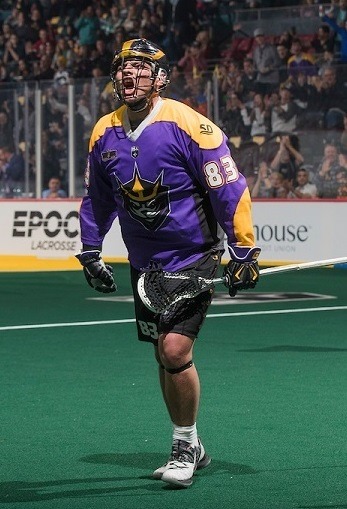
Before he got injured, Staats was on pace for 78 points which was 17 short of the rookie record (held by his big brother). Other rookies have scored more goals and picked up more loosies, but few have had the overall impact that Austin Staats had this season. His goal-scoring, energy, and obvious love for the game was the talk of the league all season. In a non-traditional lacrosse market, having a young, exciting, dynamic player like Staats had to be a huge help in trying to build their brand and fanbase. Hopefully he is fully recovered from his ACL surgery by next season because his career will be an amazing one to watch.
Unsung Hero
- Casey Jackson
- Matt Hossack
- Bryan Cole
- Greg Downing
- Keegan Bal
When you think of the Seals offense, you think Staats, Dawson, Billings, Buchanan, but Casey Jackson doesn’t jump to mind. But Jackson led the Seals in goals and after playing all of four games in his career before this season, fit in very nicely among the rookie phenom and veteran scorers.
Comeback Player of the Year
- Garrett Billings
- Jordan McBride
- Tyler Digby
- Dan Coates
- Cam Holding
Billings missed all of 2018 and only played four games in 2017. Between work commitments and injuries, it seemed that his NLL career might be over. But Billings matched the points total from his 2010 rookie season and looked a lot like the old Billings, which was likely a little scary for Seals opponents. He certainly scored some beautiful goals but as we’ve come to expect, in every game he played he had more assists than goals, sometimes many more.
Les Bartley Award
Original pick: Pat Coyle
- Patrick Merrill
- Matt Sawyer
- John Tavares/Rich Kilgour
As a GM, Merrill put together a great bunch of players. As a coach, he turned them into a great team. Of course having vets like Dawson, Billings, and Buchanan on his team really helped too, but clearly the Seals players bought (and dove) in early in the season and that teamwork was obvious all year.
GM of the Year
Original pick: Steve Dietrich
- Patrick Merrill
- Steve Dietrich
- John Arlotta
When you look at an expansion team’s roster, you usually hope that the team might be pretty good in a couple of years. The Seals looked very good from the beginning and didn’t disappoint. Even after the season started, Merrill wasn’t done. He brought in Paul Dawson to give the defense even more toughness and leadership. He took chances on Garrett Billings and Kyle Hartzell and they paid off. When he lost Austin Staats, he brought in Joe Walters. He put together a great mix of leaders who could still produce on the floor and a solid young group that can be the core of this team for years.
Final standings
East: My picks were Buffalo, Georgia, Toronto, New England, Rochester, Philadelphia. In that order. Nailed it.
West: My picks were Saskatchewan, Calgary, Colorado, San Diego, Vancouver. Move San Diego to second and I nailed the west too, but I really only got two right: first and last.
Look out for…
I got some of the above picks right, and missed on others. But of the eleven below, I’d say I nailed five (Duch, Buchanan, Staats, Digby, Lintner) and got four more pretty close. Only two were really wrong.
Calgary: Rhys Duch. Calling that a win. He didn’t get back into the 90’s in points, but then he wasn’t expected to be the guy on the Roughnecks like he was on the Stealth. He helped set up the guy (Dobbie) and the other guy (Dickson) and had a great year.
Colorado: Tim Edwards. 53.5% at the dot this year, fourth among face-off guys. Not a bad season at all.
San Diego: Kyle Buchanan. 67 points, 28 goals, a veteran presence and lots of hustle – exactly as expected from Buchanan.
Saskatchewan: Travis Cornwall. We all thought he was brought in to basically replace his brother Jeff on the transition but he played more of a defensive role for the Rush. As such, the numbers don’t tell us much but the fact that Cornwall played all 18 games for the first time in his career tells you what the Rush coaching staff thought of his play.
Vancouver: Colton and Zack Porter. More defenders so the numbers don’t tell you much but these guys were tough on opposing forwards. Not big guys (each is 5’8″) but tenacious. The Warriors players voted Zack as their rookie of the year.
Buffalo: Shawn Evans. 94 points, which is excellent for most but only very good for Evans. Like Duch, he had to get used to not being the guy on the Bandits offense but his presence helped make them one of the strongest in the league.
Georgia: Randy Staats. 96 points makes this the best year of his career, narrowly eclipsing his 95 in his rookie year.
New England: Tyler Digby. 72 points in 17 games, almost back to his 74 in 18 back in 2015. In fact, he had a higher points-per-game average so I’d call that a career year.
Philadelphia: Brett Hickey. Would have been a career year for Hickey, I’m sure, if he didn’t get injured after only three games.
Rochester: Pat Saunders. Only played four games.
Toronto: Dan Lintner. Played in all eighteen games and set career highs in goals, assists, points, loose balls, and CTOs.
Could happen…
I love doing this every year. There are only a few weeks left in the season, so it’s time to look at the possible-but-unlikely playoff scenarios. In most cases below, I’ve listed a single way that the specified outcome can happen, but there may be more than one.
Just for clarification, “win out” means a team wins all of the rest of their games (also known as “runs the table”), while “lose out” means that a team loses all the rest of their games (also known as “defecating in one’s sleeping apparatus”).
Swarm and Bandits tie for first
Swarm win out, and the Bandits win out except they lose to Toronto. Then Georgia and Buffalo finish tied for first and tied 1-1 in the season series as well. The Swarm would end up with a 10-3 division record while the Bandits would be 9-4, so the Swarm finish first.
Rock win the east
Rock win out. Bandits lose any one game and Georgia loses any two. Then the Rock are 13-5, the Bandits are at best 13-5 (and Toronto owns the tiebreaker), and the Swarm are at best 12-6.
Black Wolves win the east
Black Wolves win out. Bandits lose out, Georgia loses three and Toronto loses one. Then the Bandits and Black Wolves are both 12-6, 1-1 against each other, and 8-5 in their division. The tiebreaker in this case is head-to-head goal differential. The Bandits beat the Black Wolves 15-5 in January, so the only way the Black Wolves win the division is if all those things listed above happen and they beat the Bandits by more than ten goals on April 20.
Four-way tie at 12-6 in the east
New England wins out, Buffalo loses out, Georgia wins one and loses the other two, and Toronto wins out except for a loss to New England. Then those four are all 12-6. Georgia wins the first tiebreaker, New England wins the second, and Toronto wins the third, leaving Buffalo in fourth.
Three-way tie at 8-10 in the east
Toronto loses out, Philly wins out, and New England beats Toronto but loses all the rest of their games. Then those three are tied for third at 8-10 while the Bandits and Swarm finish first and second in some order. New England wins the three-way tiebreaker and finishes third, and Toronto wins the tiebreaker against Philadelphia and takes fourth. The Wings and Knighthawks are out.
Rush finish last in the west
If the Rush lose out (including one to Vancouver) and the Warriors win two of their other three games, the Rush are last. Let me say that again: at the end of March, it’s still possible for the Saskatchewan Rush to finish last in their division. I think the Rush clinched a playoff berth in February last year.
Warriors win the west
OK, this one is complicated. Vancouver wins out. Rush lose to Philly and twice to Colorado but beat San Diego and Calgary. San Diego loses out. Calgary beats San Diego and Philly but loses to Georgia and Saskatchewan. Colorado loses to Vancouver, San Diego, and Rochester but beat Saskatchewan twice. In that case, the Warriors win the west at 9-9, while the other four teams are all 8-10. That completes the proposed scenario but we still need to find out what happens, so we need to break the four-way tie.
The first tiebreaker is each team’s record against the other teams involved in the tiebreaker, but that doesn’t help here. Colorado and Saskatchewan would be 5-4 while San Diego and Calgary would be 4-5. The second tiebreaker is each team’s record within the division, in which case Saskatchewan wins at 9-3. Thus the Rush finish second, and we go to a three-way tiebreaker.
Again, the first is not helpful as each team is 3-3 against the other two. Back to the division record where the Seals are 8-4 and so they come third. The final tiebreaker is won by Colorado with a 2-1 record over the Roughnecks. Colorado finishes fourth and Calgary is out.
Seals finish first in the league
If San Diego wins out, that would put them at 14-4 and give them a win over Buffalo, which means the best Buffalo could do is also 14-4. With that win, San Diego would own the tiebreaker, so all San Diego has to do to finish first overall is to win out. No other conditions need to be met.
Four way tie for first in the west
San Diego loses out except they beat Georgia. The Rush beat Vancouver, San Diego, and Calgary but lose to Colorado twice and Philadelphia. Calgary beats San Diego and Philly and loses to Georgia and Saskatchewan. Colorado beats Saskatchewan twice and San Diego but loses to Rochester. Then all four are 9-9 while the Warriors are at best 7-11. Interestingly, the tiebreaker scenario listed above (under “Warriors win the west”) works out exactly the same way, so we have Rush, Seals, Mammoth, Roughnecks, and Warriors.
The Crawford suspension: dangerous
You probably haven’t heard much about this issue – it’s kind of flown under the radar. Well, other than being talked about by just about every lacrosse writer and fan (and many players) on social media. Of course I’m talking about Callum Crawford’s suspension.
In case you missed it, Black Wolves forward and potential MVP candidate Crawford was given a major penalty for a high hit on Toronto’s Brad Kri back on February 24. The week after the game, the penalty was upgraded to a match penalty by the league, which gives Crawford an automatic one-game suspension. He appealed, allowing him to play in New England’s next game against Colorado (in which he scored four goals and added seven assists), but the match penalty was upheld the week after that, and he sat out last weekend’s game.
Rule 41.4 in the NLL rule book is called “Repeat Offender” and states: “Any player who is assessed a second match penalty, a second Dangerous Contact to the Head penalty (Rule 77), or a combination thereof within a two year period shall be assessed an additional five (5) game suspension.“
Very clear and unambiguous. This matters because in January of 2018, Crawford was given a match penalty for a similar hit on a Roughnecks player. That’s two match penalties within two years, so Crawford gets an automatic five games, right? Not this time. The same arbitrator who was brought in to decide on the match penalty announced that he was not ruling on the extra five games until later, though nobody could figure out why. Then on Friday, the answer came down: Crawford will sit out one game rather than five.

The PLPA released a statement from the arbitrator on why, but the statement is puzzling. The arbitrator, Andrew Brandt, mentions a similar situation two years ago when Calgary’s Greg Harnett received his second match penalty in two years, and was given a five game suspension by that arbitrator, a Mr. McGuire. Brandt says “Mr. McGuire correctly concluded that the league had no other choice than to impose an additional five game penalty. However as the rule was unilaterally adopted by the league and not a part of the CBA, it was not binding on an arbitration officer.“
Why would rules in the rule book not be binding on an arbitration officer? I’m not a lawyer, but it seems to me that by agreeing to play games (more than half the season so far) with this rule book, the PLPA has implicitly agreed to all of the rules in the rule book. This is not a rule that was added mid-season without the PLPA’s knowledge or consent. If there are rules in there that they don’t agree with, that should have been ironed out long before the season started. And yes, I do remember that they were busy trying to make sure there was a CBA so that the season could happen, but I have not heard any complaints from the PLPA since then (before this incident) that this rule was unfair and should be changed.
Mr. Brandt also states “And in his testimony for the league, Mr. Lemon [Brian Lemon, NLL VP] explained how he did not believe the foul should result in a two-game penalty, one reserved for more severe infractions.” I agree, that one hit by itself does not deserve a multiple-game suspension. But the five game suspension is not for that one hit, it’s for the fact that there were two such hits within two years. A subtle difference, but a difference nonetheless.
He continues: “The decision to lessen Mr. Crawford’s additional five-game suspension in no way diminishes the league mission to eliminate reckless and endangering play, nor does it undermine the league’s authority.” In my humble opinion, wrong and wrong. The rule says that receiving two match penalties within two years will get you a suspension. It was written that way intentionally, even clarified this past off-season, to say that this behaviour will not be tolerated regardless of who the player is. The arbitrator’s decision says that this behaviour may or may not get you a suspension and thus it may or may not be tolerated, depending on… what? It’s not clear what. How long you’ve been in the league? How many points you have?
It also says that some of the rules in the rule book don’t hold if someone else decides they shouldn’t. I wonder what other rules are not in the CBA and are thus of questionable value?
The PLPA did everything they could to stand up for Callum Crawford. That’s their job, to represent the players, and I get that they did not explicitly make this decision. But who stood up for Brad Kri? Who’s out there trying to make sure that these kinds of hits don’t happen again?
I love watching Callum Crawford play lacrosse. He’s fast, skilled, dynamic, and exciting. I don’t think he’s a dirty player. But he made two bad decisions resulting in two dangerous hits. Those hits were close enough together in time to trigger rule 41.4, so he should be sitting out for five games. Yes he’s a veteran and yes he’s having an MVP-type season, but suspending him anyway would have sent the message that the NLL will not accept these types of hits regardless of who you are. Now, the message they are sending is that if you are a veteran or a great player, you can get away with stuff that other players can’t.
Not only does this make the league look unprofessional, it’s a very dangerous precedent to set.
Rochester’s trade frenzy
Wednesday was a bit of a crazy day in the NLL – more trades happened on that day than the rest of the season combined, and all of them involved the Rochester Knighthawks. According to sources, they’re not even done.
It began with Joe Resetarits being sent to the New England Black Wolves in exchange for a couple of draft picks – a second round pick this year and a first in 2022. Perhaps Joey Res was uninterested in playing for a Halifax-based team. Maybe they were having trouble deciding who they would protect in this summer’s expansion draft and figured they could get a couple of draft picks for him and help make the decision easier. Either way, it’s a great deal for the Knighthawks on the assumption that they are admitting defeat for this season.
The deal makes a ton of sense for the Black Wolves, who will likely be without Callum Crawford for most of the rest of the season. Crawford was on pace for another hundred-point season before his six-game suspension, so bringing in another righty who got 100 last season is logical and makes the Black Wolves that much more dangerous once Crawford returns. If Resetarits can help the Black Wolves even go .500 for the six games Crawford will be out and then they get to have Resetarits and Crawford for the playoffs, that’s easily worth a couple of draft picks.

The next deal announced was defender Paul Dawson being sent to play with his brother Dan in San Diego. The Knighthawks get another two draft picks for Dawson, and the Seals get a big, strong, tough veteran defender to help in their playoff push. Another good deal for both teams, again assuming the Knighthawks are building for next year.
The third one was more surprising. The Knighthawks send Cory Vitarelli to the Mammoth in exchange for Ryan Benesch, one for one. No draft picks going in either direction. Another great deal for the Knighthawks, who get one of the top scorers in league history. However I’m not sure of the incentive for the Mammoth to make this trade. Vitarelli and Benesch are both lefties and they’re about the same age (Vitarelli is five months younger). Vitarelli is a very good player who can score some acrobatic goals, but he’s no Ryan Benesch. Think of it this way: Vitarelli’s best season by average was 2015 when he scored 39 points in 12 games. That’s 3.25 points per game. Benesch has only had one season in his twelve-year career as low as Vitarelli’s best, his lone season with the Edmonton Rush in 2009. His career average (4.95 points per game) is almost double Vitarelli’s (2.68).
Of course, numbers aren’t the only thing to use to compare players. Vitarelli generally serves a different purpose than to be the primary scorer, so you don’t expect 90 points from him. You expect hard picks, digging in corners, making space for the primary scorers, and scoring the occasional jaw-dropping goal, and he excels at those jobs. But they just traded away Stephen Keogh, who also excels at those jobs. It’s puzzling.
Here’s one possibility: Vitarelli is listed as 5’10” but a very solid 220 pounds. That’s an inch taller and forty pounds heavier than Benesch. If you look at the other forwards on the Mammoth, there’s a pattern: McLaughlin and Ruest are 185 pounds, Lee and Wardle are 175, Noble is 170, and Kyle Killen is only 150. Vitarelli is thirty five pounds more than biggest forward the Mammoth have. Perhaps they decided that they really needed some more size up front but if that’s the reason, I still think they overpaid. But when you’re 3-7, maybe you have to overpay.
As for the Knighthawks, was this a fire sale because they’re most likely out of the playoffs, or more of a moving sale because they’re heading to Halifax after the season? Probably a bit of both. My guess is that Matt Vinc didn’t want to move to Halifax or be a fly-in, so he opted to leave Rochester. Maybe Vitarelli and/or Resetarits were in the same boat and Rochester GM Curt Styres decided he could get something for them now rather than have them leave later.
The Knighthawks are 2-8 and the odds of them making the playoffs are not great. Trading players for picks is an odd (and likely ineffective) way to improve your team enough to rebound and make the playoffs, so it’s likely that Styres is indeed building the best team he can for next season in Halifax. If there are more Knighthawks deals coming before Monday’s trade deadline, perhaps those will help to reveal his strategy.
Top ten surprises of the NLL 2019 season
Surprising things happen every year in every sport. This is partially why we love sports, isn’t it? If all of your predictions were correct every year, it’d get pretty boring pretty quick. Here are my top ten surprises from the 2019 season so far. At least these were surprises to me, you will probably have different opinions. Feel free to leave a comment if I missed any.
2018-19 NLL Preview: East division
Just like yesterday’s West division preview, today we’ll cover the East: where I think they will end up in the standings, who might have a breakout year, and a haiku for each team.
 Buffalo Bandits

Coupla changes in Buffalo. The Alex Buque experiment didn’t work out so well last year, but I think they’ve solved that problem. Reigning Goaltender of the Year Matt Vinc was brought in from Rochester to shore up the goaltending. I don’t think Vinc was thrilled with the prospect of the team moving to Halifax next year, and Buffalo is closer to his home in St. Catharine’s, so he’s happy.
But Steve Dietrich also brought in Corey Small, Bryce Sweeting, Ethan O’Connor, and Jon Harnett. Add a couple of defensive/transition studs in Ian MacKay and Matt Gilray (two of the top four draft picks) and the changes to the Bandits roster are impressive. They had a pretty potent lineup last year but needed goaltending and defensive help. They’ve addressed those shortcomings and improved their offense, which makes them my top pick for the East.
Look out for
Shawn Evans didn’t have a great year in 2018 by his standards. 83 points certainly ain’t bad, but after five straight 100+ point seasons, it’s a bit of a drop. I think he’ll want to prove that he’s still got it.
Prediction
First in the east.
Haiku
Corey Small up front
Lots of defensive changes
Vino in the net
 Georgia Swarm

The Swarm lost Kiel Matisz, Jordan Hall, and Jesse King over the summer. So who’s going to score their goals? Well, let’s not panic just yet. They still have Lyle Thompson, Miles Thompson, Shayne Jackson, Randy Staats, and Holden Cattoni, so I think they should still be OK in the offense department. The transition lost vets Ethan O’Connor and Joel White and replaced them with rookies, so that’s a possible concern. Everyone focuses on the Swarm’s offense so their defense gets kind of ignored. They don’t have the big names like Saskatchewan but I think the Swarm D as a whole is underrated.
Look out for
Randy Staats’s points-per-game average dropped to 4.3 last year, a full point below his rookie season and a point and a half below 2017. With fewer bodies to share the ball, I see his numbers going back up from the “very good” range to the “elite” range.
Prediction
Second in the east.
Haiku
Lots of great offense
But their defense is good too
So is Mike Poulin
 New England Black Wolves

For a team that had Kevin Crowley (who scored 51 goals), Stephan Leblanc, Kyle Buchanan, and half a season each of Johnny Powless, Shawn Evans and Callum Crawford, it’s surprising that other than the Stealth, nobody scored fewer goals than the Black Wolves in 2018. In 2019 they’ll have a full season of Crawford and while they lost Buchanan, they’ve gained Tyler Digby who will likely be getting more floor time than he got with Calgary. That’s some pretty decent firepower up front but I’m not sure it’ll be enough. They’ll have to get increased production from a guy like Reilly O’Connor and either acquire some more offense or hope for productive rookies.
This is assuming that Kevin Crowley re-signs. If he doesn’t, they’re in a bit of trouble.
Goaltending is also a question as the Black Wolves are trying the Alex Buque experiment, Part II. As I said above, Part I in Buffalo last season wasn’t exactly a rousing success.
Look out for
Tyler Digby had a great sophomore season in Vancouver and two good seasons in Calgary before his numbers fell off a cliff last season. He’ll likely get more playing time in New England and I see his numbers climbing back into the 50s.
Prediction
Fourth in the east.
Haiku
Black Wolves big scorers
Crowley, Digby, and Crawford
They’re all freakin’ huge
 Philadelphia Wings

There are a couple of question marks for the Wings. Matisz, Hall, and Hickey make a pretty good top three, I’ve only heard good things about Chris Cloutier and Matt Rambo, and guys like Vaughn Harris, Blaze Riorden, and Josh Currier give them some pretty good secondary scoring. Will it be enough? Maybe. Defense looks pretty good, with a number of proven NLL defenders like Zach Reid, Liam Byrnes, Liam Patten, and Frank Brown. No superstar defensive studs (though a lot of people are big on Brown) but a decent core. Goaltending is a question since Davide DiRuscio has shown flashes of being a solid #1 stopper but has been inconsistent, and he also missed all of last season with an injury. The only other goalie on the Wings roster is Doug Buchan, who has zero NLL minutes.
Look out for
Brett Hickey’s last four seasons were 81, 28, 79, and 40 points, which means he’s due for another 80-ish point season. I don’t know if he’ll get there, but he’ll have more than 40.
Prediction
Sixth in the east.
Haiku
Moose is the captain
Hall, Hickey, and Big Fish too
Philly has its Wings
 Rochester Knighthawks

The Knighthawks made the NLL Finals just last year and didn’t make that many changes but I’m still picking them to finish 5th in the East this year. First off, their appearance in the finals was unexpected. They were the best team in the East down the stretch and beat who they had to beat in the playoffs to get to the finals, so it’s not as if they didn’t deserve it, but I’d say very few were calling the Knighthawks to come out of the East. Secondly and more importantly, they lost Matt Vinc, one of the best NLL goalies ever and a no-doubt Hall of Famer. The Knighthawks are now pinning their hopes on Vinc’s backup Angus Goodleaf, who’s been an excellent backup to Vinc for years. But Goodleaf has only hit 200 minutes in a season once in his career; Vinc has recorded 900 minutes nine times in the last ten years (and recorded 890 in the tenth year).
The Knighthawks also lost Sid Smith to retirement injury (I heard that he retired but he’s starting the season on the IR) and lost Josh Currier and Frank Brown (who only played three games) to the Wings in the expansion draft, but that’s it. Their offense was very good last year thanks in part to rookies Austin Shanks and Eric Fannell. Can they repeat their success? Is the Joe Resetarits of 2018 the real thing or was that a fluky season? (I suspect it’s the former.) The defense and transition are anchored by Defensive Player of the Year Graeme Hossack and Rookie of the Year Jake Withers, so they should be fine but the goaltending is my concern.
Look out for
Pat Saunders is, I’m sure, happy to be back in the east. Not sure he’ll get back to the 44 goals he had in 2016 but 25-30 isn’t unlikely.
Prediction
Fifth in the east.
Haiku
No Vinc, no problem
Knighthawks have faith in Goodleaf
Lots of young kids too
 Toronto Rock

Last year, the Rock without Tom Schreiber was a very different team than the Rock with Tom Schreiber. He’s back and healthy and looked great in the scrimmage against the Mammoth, but I imagine they’ll set up their offense so that they don’t seem so uncoordinated if he’s not there or has an off night. Adam Jones also looked good in the scrimmage as did Johnny Powless. Between those guys and Rob Hellyer, Phil Caputo, Dan Craig, and Dan Lintner, I’m really looking forward to watching the Rock offense. The transition will be great as well, even without Brodie Merrill. Challen Rogers, Damon Edwards, Sheldon Burns, and Latrell Harris make up a pretty potent squad and I’m curious if Jesse Gamble will return. He took last year off for work reasons and I assumed he’d be back this year but I’ve heard nothing about him at all. As for goaltending, I have no concerns about Nick Rose but Riley Hutchcraft has played all of 15 minutes in his career.
Look out for
Dan Lintner was a healthy scratch in a number of games last season. I posted a few times that I felt bad for him and even suggested the Rock should trade him so he’d actually get to play somewhere. I don’t think he’ll be sitting as much this year and his patience will have paid off.
Prediction
Third in the east.
Haiku
Powless joins the Rock
Schreiber leads the offense, but
Challen wears the C
2019 NLL Predictions
Here are my predictions for the final regular season standings as well as the major annual awards. The “Dark Horse” predictions are my “not as likely but could happen” picks.
Final Standings
East
- Buffalo Bandits
- Georgia Swarm
- Toronto Rock
- New England Black Wolves
- Rochester Knighthawks
- Philadelphia Wings
West
- Saskatchewan Rush
- Calgary Roughnecks
- Colorado Mammoth
- San Diego Seals
- Vancouver Warriors
Individual Awards
MVP
Winner: Tom Schreiber
Short list: Shawn Evans, Mark Matthews
Dark horse: Ryan Benesch
Goaltender of the Year
Winner: Dillon Ward
Short list: Christian Del Bianco, Evan Kirk
Dark horse: Frank Scigliano
Defensive Player of the Year
Winner: Graeme Hossack
Short list: Robert Hope, Kyle Rubisch
Dark horse: Brett Mydske
Transition Player of the Year
Winner: Challen Rogers
Short list: Zach Currier, Joey Cupido
Dark horse: Jordan MacIntosh
Rookie of the Year
Winner: Austin Staats
Short list:
Dark horse:
Full disclosure: I don’t follow MSL or WLA in enough detail to know any of them. In previous years I’d seen a few players here and there but not this year. I have seen Staats play in Six Nations and was impressed so I have some basis on which to list him, but anything else I put here is pure guesswork.
Les Bartley Award
Winner: Pat Coyle
Short list: Glenn Clark, Derek Keenan
Dark horse: Matt Sawyer
GM of the Year
Winner: Steve Dietrich
Short list: Derek Keenan, Mike Board
Dark horse: Patrick Merrill
2018-19 NLL: Who’s in, who’s out
Here it is: a complete summary of all the roster changes for each team, all in one place.
Note that these are the changes as of the final roster from last season, so a player might be listed as “In” even if he played for that team during 2018. And a player who’s injured but still part of that team will be listed as “out”. Not all teams have announced who’s on their IR, PUP, or holdout lists and only the Seals seem to have an “inactive roster”.
 Buffalo Bandits

In: Matthew Bennett, Chase Fraser, Matt Gilray, Rich Kilgour (head coach), Ian MacKay, Ethan O’Connor, Corey Small, Matt Spanger, Bryce Sweeting, John Tavares (head coach), Matt Vinc
Out: Reid Acton, Alex Buque, Troy Cordingley (coach), Ryan Fournier, Vaughn Harris, Mitch Jones, Rich Kilgour (assistant coach), Bill O’Brien, Zack Reid, Mark Steenhuis, John Tavares (assistant coach)
IR: Jon Harnett, Mark Steenhuis
PUP:
Holdout:
Practice Roster: Dallas Bridle, Zach Herreweyers, Devlin Shanahan
 Georgia Swarm

In: Brendan Bomberry, Holden Cattoni, Matt Dunn, Joel Tinney, Adam Wiedemann
Out: Jordan Hall, Warren Hill, Brayden Hill, Jesse King, Kiel Matisz, Ethan O’Connor, Joel White
IR:
PUP:
Holdout:
Practice Roster: Tyler Ferreira, LeRoy Halftown, Steven Orleman, Craig Wende
 New England Black Wolves

In: Kevin Buchanan, Alex Buque, Tyler Digby, Greg Downing, Dereck Downs, Ryan Fournier, Darryl Gibson (offensive coach), JP Kealey, Jackson Nichimura, Seth Oakes, Andrew Suitor
Out: Aaron Bold, Kyle Buchanan, Mark Cockerton, Kevin Crowley, Dylan Evans, Anthony Joaquim, Tracey Kelusky (offensive coach), Johnny Powless, Derek Suddons, Jay Thorimbert
IR:
PUP:
Holdout:
Practice Roster: Tal Bruno, Dave Emala, Ethan Woods
 Philadelphia Wings

In: Everybody
Out: Nobody
IR: Blaze Riorden
PUP:
Holdout:
Practice Roster: Chris Collins, Isaiah Davis-Allen, Justin Guterding
 Rochester Knighthawks

In: James Barclay, Dylan Riley, Darryl Robertson, Pat Saunders, Luke Van Schepen, Warren Hill
Out: Frank Brown, Josh Currier, Eric Fannell, Billy Dee Smith, Sid Smith, Matt Vinc
IR: Sid Smith
PUP: Eric Fannell
Holdout:
Practice Roster: Cam Milligan, Leland Powless, Brandon Robinson
 Toronto Rock

In: Sheldon Burns, Creighton Reid, Phil Caputo, Dan Craig, Riley Hutchcraft, Adam Jay, Johnny Powless, Brandon Slade
Out: Drew Belgrave, Sandy Chapman, Brett Hickey, Jordan Magnuson, Brodie Merrill, Brandon Miller, Reid Reinholdt, Dan Taylor
IR: Jordan Magnuson
PUP: Reid Reinholdt, Scott Dominey
Holdout:
Practice Roster: Mitch Gustavsen, AJ Kluck, Brad Lyons
Protected: Paul Rabil
 Calgary Roughnecks

In: Chris Boushy, Reece Callies, Rhys Duch, Jesse King, Tyler Richards, Eli Salama, Shane Simpson, Dan Taylor
Out: Wes Berg, Holden Cattoni, Curtis Dickson, Tyler Digby, Garrett McIntosh, Curtis Manning, Creighton Reid, Frank Scigliano
IR: Curtis Manning
PUP: Ryan Martel
Holdout:
Practice Roster: Carter Dickson
 Colorado Mammoth

In: Brent Adams, Dan Coates, Pat Coyle (interim GM), Julian Garritano, John Lintz, Andrew McBride (assistant coach), Shawn Williams (assistant coach)
Out: Dan Carey (GM), Greg Downing, Chris Gill (assistant coach), Zack Greer, Dan Stroup (assistant coach), Bryce Sweeting
IR:
PUP:
Holdout:
Practice Roster: Rowan Kelly, Kyle Killen, Steven Lee, Jeff Wittig
 San Diego Seals

In: Everybody
Out: Nobody
IR:
PUP:
Holdout:
Practice Roster: Jules Heningburg, Nick Ossello, Mikie Schlosser
Inactive Roster: Garrett Billings, Zach Bryant, Austin Divitcos, Connor Fields, Marcus Holman, Quinn MacKay, Brandon Ranford
 Saskatchewan Rush

In: Travis Cornwall, Nick Finlay, Tyler Gaulton, Jordi Jones-Smith, Mason Pynn, Ryan McLean, Connor Robinson, Adam Shute, Jeremy Tallevi (assistant coach)
Out: Nic Bilic, Tyler Carlson, Robert Church, Jeff Cornwall, Dan Dawson, Ryan Dilks, Mike Messenger, Jimmy Quinlan (assistant coach), Adrian Sorichetti
IR:
PUP:
Holdout:
Practice Roster: Zach Gould
 Vancouver Warriors

In: Keegan Bal, Owen Barker, Aaron Bold, Jean-Luc Chetner, Tyler Codron, Chris Gill (coach), Mitch Jones, Dan Lomas, Jordan McBride, Joel McCready, Cole Porter, Zack Porter, Dan Richardson (GM), Justin Salt, Jarrett Toll
Out: Jamie Batley (coach), Tye Belanger, Casey Jackson, Brandon Clelland, Travis Cornwall, Rhys Duch, Brandon Goodwin, Doug Locker (GM), Seth Oakes, Chris O’Dougherty, Pat Saunders, Corey Small, Andrew Suitor, Cody Teichroeb
IR: Brandon Goodwin, Brody Eastwood, Andrew Gallant
PUP: Chris O’Dougherty
Holdout:
Practice Roster: Travis Burton, Dallas Wade, Nate Wade
The 2019 NLL Schedule: Byes, doubles, and runnin’ back to Saskatoon
The 2019 NLL schedule was released this past week. Once fans see their team’s schedule, the first thing fans say about it is how “difficult” it is. Usually that involves what teams they’re playing but today I’m going to look at it a little differently.
Each team plays 18 games and the season is spread over 21 weeks, so each team has at least three weeks with no games (called a “bye” week). Each bye week you get beyond three means you have to make up that missed game by playing two games in a weekend (which I’m calling a “double”). If you’re lucky, one will be Friday night at home and the other will be Saturday night or Sunday afternoon in a city not far away, giving you lots of time for travel and potential delays – remember the NLL plays during the winter. If you’re not lucky… well, we’ll get to that.
Let’s look at how many bye weeks each team has as well as how many double weekends they have (and where those games are).
 Buffalo: Five bye weeks, but two of them are the last four weeks. They have two double weekends: first Rochester and New England in week 9 and then Philadelphia and Buffalo in week 15. Last year, they also had five byes and two doubles.
Calgary: Four byes, one double weekend: San Diego and Colorado in week 8. Last year the Roughnecks had three byes and no double weekends at all.
Colorado: Four byes but three of them come in the first six weeks including weeks five and six. The Mammoth play twice in week 17, in Vancouver and at home. Last year, they had five byes and two double weekends.
Georgia: Five bye weekends, all spread out. The Swarm have two double weekends: In week 8 they play in Toronto and then New England, then week 9 is a bye, then in week 10 they play at home on Friday and in Rochester on Saturday. Last year the Swarm had six byes and three double weekends. All three of their doubles last year followed a bye.
New England: Four byes and similar to the Mammoth, they have three in the first six weeks. Only one double weekend: Philly and New England in week 12. Last year, the Black Wolves had four byes and one double weekend.
Philadelphia: Five byes including two back-to-back. They play one game in the first four weeks of the season. They have two doubles: Philly and New England in week 12 (coincidentally, the same as the Black Wolves!) and Saskatchewan and Vancouver in week 20.
Rochester: Five byes and similar to the Wings, they play only once in the first four weeks. Also similar to the Wings, they have two double weekends: Philadelphia and Rochester in week 10 and Rochester and Toronto in week 16. Last year was roughly the same: five byes and two doubles.
San Diego: Five byes including one back-to-back – between January 19 and March 2, the Seals only play twice. They have two doubles: San Diego and Vancouver in week 8 and Georgia and New England in week 19.
Saskatchewan: Four byes including weeks 3 and 4. One double weekend but it’s a doozy: San Diego on Friday and back at home in Saskatchewan on Saturday of week 20. After a brief perusal on Expedia, I found that you can get from San Diego to Saskatchewan in about 7½ hours if you really push it (about 45 minute stopover in Minneapolis) or over 14 hours if you don’t mind a 7+ hour stopover. Either way, that’s going to be a brutal travel day for the Seals and Rush. Five byes and two doubles last year for the Rush.
Toronto: Five byes including weeks 3 and 4 as well as the final weekend of the season. The Rock play two doubles late in the season: Georgia and Buffalo in week 17 and Toronto and Rochester in week 19. Last year, the Rock had three byes and no double weekends.
Vancouver: Four byes and one double weekend: Vancouver and Colorado. Last year the Stealth had four byes and one double.
For my money, the most difficult schedule would be one where you have byes near the end of the season. If you are in the playoff hunt (i.e. every team in the East last season), you want to be playing during those last weeks to control your own fate, not watching others play hoping for the right result. In the last five weeks of the season, the Buffalo Bandits play the Rock twice, the Black Wolves once, and have two byes. Playing teams from their own division is helpful for the Bandits if they’re fighting for a playoff spot but two weeks off is not. On the upside, byes can help players recover from injuries without missing games. If Dhane Smith has a sore knee, a week off before a game with playoff implications could be a godsend.
There are a number of teams that have multiple byes near the beginning of the season but only the Bandits have more than one in the last six weeks or so. In terms of the criteria I’m going by here, nobody has a really terrible schedule. The Bandits byes near the end of the season make them a strong candidate but I’m going to say that the San Diego Seals have the most difficult schedule. They have one game in the first three weeks and then a span of five weeks in the middle with only two games. The game before those five weeks, the game after, and one of the two games in the middle are against the same team – Vancouver. However this schedule challenge is offset by the fact that they get to play half their games in southern California.
I’ll let you, the reader, insert your own joke here: Maybe we should say that [insert team name] has the worst schedule because they have to play half of their games in [insert city you don’t like]. Ha ha!
The league lengthened the season last year in order to try and cut down on the double weekends. The teams that used to be hit the most by long travel days were the Black Wolves and Rush. From most major airports in North America, you can fly directly to Denver or Calgary or Toronto but not Saskatoon, so most flights would have included a stopover. Some of those stopovers can be long, but really, who doesn’t love sitting in an airport for five hours? To get to Mohegan Sun, you need to fly to Hartford CT (also requiring stopovers from many airports, particularly in the west) and then take a several hour bus ride.
Update: Taking public transportation from Hartford airport to Mohegan Sun would be several hours. I would assume teams would charter a bus, in which case travel time is not much more than an hour. Thanks to Thomas for the correction.
In 2019, both of these teams only have one double weekend, so mission accomplished, right? For the Black Wolves, they’re coming from Philadelphia on their double, which is probably the closest NLL city. But as I mentioned above, the Rush have to get from San Diego to Saskatoon in a day. Last year, the Rush had two doubles, playing at home on the back half of each. While one was coming from Vancouver, which is likely a direct flight, the other was coming from Colorado which is almost as bad as San Diego. Those Colorado/Saskatoon travel days were part of the reason for the schedule change in the first place, and yet the Rush still have to deal with one.
It’s not like the people who make the NLL schedule haven’t thought about this, and so it’s likely that as crappy as that weekend will be, it was the best option available.
 NLL Chatter