Garrett who?

Garrett Billings has been out of the Rock lineup all season but his agent tweeted last week that Billings has been cleared to play. So where is he? Not only has he not played, but the Rock haven’t said a word about him. No tweets, no mention of him at games, nothing. I’m hearing that Billings is an RFA but has not signed a contract with the Rock. Now that the team is 8-1 and first overall, they’re not exactly desperate to get him back into the lineup, so the combination of Billings being ready and the Rock’s silence has raised rumours that he’s going to be traded. The two big questions here are: 1. Where? 2. For who?

Seeing as he’s from Langley BC, the obvious choice is the Vancouver Stealth, and I do remember seeing a tweet this past weekend (though I can’t remember who and I can’t find it now) that implied that Billings would only play for the Rock or the Stealth. Then on Saturday night, Teddy Jenner tweeted:

This startled a few people but he clarified later that there had been no move and he was just referring to the rumours.
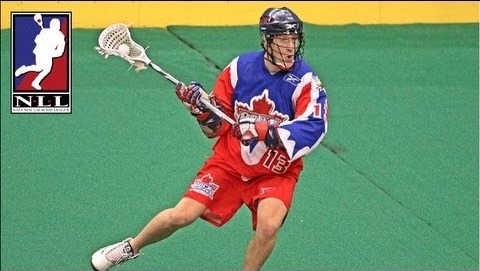
Garrett Billings

Interesting aside: Note the similarity in the picture above to the player in the NLL logo.

The “for who” question is even more interesting. What would the Rock want in return? Billings is arguably the best player in the NLL over the past three seasons (though Cody Jamieson might disagree), so any deal better be significant. But the Rock are 8-1 and don’t really need anything. They have the best 1-2 goaltender combo in the league. Their defense is also among the best in the league and they’ve scored more goals per game than anyone except, ironically, the Stealth. If the Rock trade Billings anywhere in the east or for anything less than three first round draft picks, Jamie Dawick should fire himself as GM.

Personally, I think the best idea for the Rock would be to keep Billings and drop a defender (likely Bill Greer since he was just called up, though I’d be OK with Patrick Merrill or Bill Hostrawser since they take too many penalties). But if they decide they can’t and they want to trade Billings for Rhys Duch, I guess I could live with that. Or I’d take Tyler Digby and a couple of first rounders. But Duch and Digby are both right-handed, as is Billings, so the Rock would end up with the same “problem”, if you want to call having too many talented players a problem.

Maybe Billings can get together with Jeremy Noble and just hang out until their teams stop playing so well.

Update: As Tyler brought up on Addicted to Lacrosse, this was the same injury that Athan Iannucci had back in about 2008 and he was never the same afterwards. In my discussion above, I was assuming that Billings will be 100% back to his old self – if not right away, then shortly thereafter. But it’s possible that he may never get back to where he was. Perhaps three first round picks for the old Garrett Billings might have been fair but until we know how full his recovery was, nobody’s going to give up three firsts for an unknown.


Here’s an unrelated thing I want to bitch about but doesn’t warrant an entire article: the Western Union commercials that have been playing during NLL games. One features Swarm defender David Earl talking about when he was struggling at college and his father came to visit him and helped him get back on track. The other has Mammoth forward Drew Westervelt, who talks about discovering his dyslexia and how his family was very helpful and supportive while he worked to overcome the academic problems that came with that. But then the narrator says “Western Union is there for you”. Are they really trying to equate or even compare their services with the support and care that a family provides? And what the hell does “Moving money for better” mean? It’s not even an English sentence. Are these commercials supposed to make me want to use their services?

Being a sports blogger

I’ve been blogging since 2005, and some of my earliest blog articles are about lacrosse. I didn’t start writing for lacrosse-only blogs until 2010, but I’ve now written for four different ones, including what are two of the most popular lacrosse blogs anywhere. For anyone who’s interested in such a career occupation job pastime (for any sport, not just lacrosse), here is a bit of information I’ve discovered through my experiences. I hope this helps future generations of sports bloggers.

There’s only one real rule for being a sports blogger:

  • You have to make pre-season predictions on final standings and awards such as MVP and Goaltender of the Year. Feel free to ignore your predictions at the end of the season when the actual winners are announced and you realize that your Goalie of the Year pick finished 11th in GAA – in a 9-team league.

Many people seem to have opinions about sports bloggers. I have been accused of each of these:

  • If you choose the team from the city in which you live to win anything, you are a hopeless homer who knows nothing about sports. Doesn’t matter if your home team is 13-1 and they’re playing the 2004 Anaheim Storm.
  • If you do not choose the team from the city in which you live to win something, you are obviously a hater and not a REAL fan. REAL fans of the 2004 Anaheim Storm picked them to win every game cause that’s what REAL fans do. REAL is apparently not short for “realistic”.
  • You created a sports blog, therefore you are arrogant and consider yourself an expert with knowledge exceeding that of everyone else. You couldn’t possibly have created it just because you like to write.

haters-gonna-hateWhen making game predictions, there are four possibilities for each game:

What you pick the team to do: What the team does: What it means:
Win Win You got lucky. Or everybody knew that that team was going to win, so your pick doesn’t mean anything.
Win Lose It’s your fault. Somehow your pick affected the players or the coaches or the equipment manager or the space-time continuum enough that it made the team lose. Or you got it wrong because you just don’t know anything.
Lose Win You obviously don’t know anything.
Lose Lose See the first entry – the team you picked to win did win, so you got lucky.


And in all seriousness, these final rules are the most important. These are not specific to lacrosse or blogging, but pertain to publishing or performing anything: writing, acting, music, sports, etc.:

  • Some people are going to think your performance sucks. A small percentage of them will tell you so. Some people are going to think your performance was excellent. A small percentage of them will tell you so. The two percentages are unrelated. They generally depend on the size of your audience and are not always indicative of the quality of your performance.
  • Take and use constructive criticism and, as difficult as this sometimes is, ignore the insults and personal attacks. Don’t change what you’re doing to please the haters.

Personally, I’ve been lucky so far as a sports blogger. I’ve only had a handful of overtly negative comments and only a couple that turned into personal attacks. But I know others who get them all the time. This is purely a question of audience size, not because people disagree with me less than they do other people.

In May 2013, Wil Wheaton posted an article that discussed dealing with the haters. To the bloggers and writers and athletes and musicians and actors out there, here it is in a nutshell: Making hurtful comments is easy. Doing what you do is hard.

Can the Rock compete without Colin Doyle?

If you follow the NLL at all, you’ve probably heard by now that Colin Doyle will be missing the entire 2015 NLL season due to shoulder surgery. Specifically, he hurt his rotator cuff this past summer while playing for the Mann Cup-winning Six Nations Chiefs of MSL.

The last time the Rock played an entire season without Doyle, well, it wasn’t pretty. It was 2009 and Doyle was playing his third season in San Jose. The Rock went 6-10 and missed the playoffs. They won no annual awards. They had nobody on either All-Pro team or the All-Rookie team. They had two players in the All-Star Game, Jason Crosbie and Cam Woods, and Woods didn’t even play. They only had 3 people break 60 points and nobody broke 70. Doyle, on the other hand, led the league in points with 111, made the first All-Pro team, and started the All-Star Game.

Colin Doyle

But that was a much different Rock team. There’s a new owner, a new (old) GM, a new coaching staff, and only four players – Rob Marshall, Jeff Gilbert, Cam Woods, and Kasey Beirnes – from that 2009 team are still around. The offensive leaders were Luke Wiles, Lewis Ratcliff (who dropped from 85+ points in 4 straight years to 68), Blaine Manning, Jason Crosbie, Kasey Beirnes, and Craig Conn. Only two of them averaged more than 4 points per game. Compare that to the offensive guys who will need to take over for Doyle this season: Garrett Billings (though he’ll likely miss at least the first month), Stephen Leblanc, Josh Sanderson, Biernes, Rob Hellyer, and Kevin Ross. Last year, only Biernes was under 4 points per game, and Billings was almost 7.

So no, we can’t use 2009 as a guide to what’s coming for the Rock this season. It’s not time to panic. The Rock have some pretty talented players up front, and they aren’t going 3-15 this year because they’ve lost Colin Doyle. But while losing one of your offensive leaders is bad, losing Doyle’s leadership and presence in the locker room might be worse.

With Doyle gone for the year and Billings out for a while too, what happens now? Is Terry Sanderson making phone calls looking for big-name help?

Calgary has tons of firepower, would they be willing to give up a Jeff Shattler? Edmonton managed to get along just fine last year without Corey Small, would they be willing to trade him to the East? Could T send a couple of draft picks to the Knighthawks for Cody Jamieson? OK, probably not that last one.

Of course, you have to give up something significant if you want to bring in a big name. Obviously, we’re not giving up any forwards. I, for one, am much happier with the Rose/Miller combination in goal than I would be with either one as the lone starter, so they both stay. Defense was the Rock’s weak point last year, but they’ve added Brock Sorensen and Jeff Gilbert. This doesn’t turn them into the Edmonton Rush, but along with guys like Bill Greer, Sandy Chapman, and Patrick Merrill, it ain’t half bad. That said, it’s not good enough to trade anyone away.

The transition is pretty good – in fact, I might say that guys like guys like Brodie Merrill, Jesse Gamble, Damon Edwards, and Rob Marshall give you one of the best transition teams in the NLL. Would Gamble and a high pick or two get you a strong lefty shooter? Maybe – the Stealth got (lefty) Johnny Powless and Joel McCready for 3 first round picks and a high second. But lefty shooters seem to be in rather high demand throughout the league. And I have no idea what kind of first round draft picks the Rock have in upcoming years. And I really don’t want to give up Jesse Gamble.

In 2012, Doyle missed two games, scored a single point in each of the next two, and then missed another one. In 2013, he only missed one game. In those six games, the Rock were 4-2 (including 2 wins against the Knighthawks) so they can play and win without Doyle. But can they pull that off over an entire season? I say yes, provisionally. As long as a few things fall in the Rock’s favour, they can compete.

First, Billings has to return at close to his normal level less than 6 weeks into the season. If he misses half the season or more, that would be too much for the Rock to recover from. Secondly, we can’t afford to have anyone drop in production. Guys like Leblanc, Sanderson, and Hellyer need to keep their numbers up where they were last year. Third, Kevin Ross needs to make the most of what will likely be lots more playing time. His best season was 59 points in 16 games for the Swarm in 2012; the Rock need that kind of production out of him. And fourth, there are a bunch of rookie forwards currently listed on the Rock roster – one of them needs to make the team and produce. A Rhys Duch / Mark Matthews kind of rookie season is a bit much to ask for, but a solid 30-35 points would be great.

If all four of those things happen, the Rock are in good shape. If they get two or three of them, they’ll be fine. But if none of those things happen, barring a huge trade, we may see the same level of playoff success as that 2009 Rock team.

Controversy at the Mann Cup

Some controversy has erupted after game 5 of the Mann Cup. If you haven’t heard about it, Victoria Shamrocks goaltender Matt Flindell started games 1 through 4 but after getting hit partway through game 4 and missing the rest of the game, he did not play in game 5. There have been suggestions (I’ve seen them on Twitter, Facebook, and the IL Indoor message board) that Flindell is not as injured as he says he is and that he has therefore bailed on his team. The alleged reasons for this are varied – one person said he “couldn’t stand the heat” while another said that he “didn’t want to play bad and ruin his NLL stock”. I don’t know Matt Flindell and I haven’t talked to anyone on the Shamrocks so these rumours are all I have to go by. But I find either of these ideas a little hard to swallow for a few reasons.

First of all, he got hit pretty hard in game 4. I was sitting right behind the net and saw him go down. He was down on the floor for a couple of minutes, at the same time his teammate Tyler Burton was also down. Burton was helped off the floor while Flindell eventually walked off on his own, but neither player returned to the game. One newspaper report said he got hit in the head, though I thought it was in the chest. Another report simply said he was “bowled over”. Here’s a picture from twitter (credit: Jules) showing both Flindell and Burton on the floor.

Burton missed the rest of the game. Nobody complained. Jon Harnett missed games 3 and 4. Nobody complained. Dhane Smith missed game 2. Nobody complained. Then Flindell misses game 5 after possibly getting hit in the head and he’s a selfish quitter?

At the World (Field) Lacrosse Championships in Denver this past summer, John Grant was not allowed to take the medication he’s been taking since his life-threatening illness in 2009. He decided to sit the tournament out rather than risk his health by not taking the meds. Nobody called him a quitter or said he was bailing on his country. Everyone was all “health is more important” and they were right. Is that not true anymore? Have we learned nothing from head injuries in hockey and football as well as lacrosse over the last decade? If an athlete may potentially have a concussion, shouldn’t he be encouraged to sit out rather than ridiculed for it?

Couldn’t he have pulled himself from the lineup because he feels his injury means that he can’t play at his best? Perhaps he decided that the team has a better chance of winning with Cody Hadegorn at 100% than Flindell at 80%. Sounds like a team player to me.

Secondly, Flindell is an athlete playing at the highest level of his sport. He’s 27 years old and has likely been playing lacrosse for 20+ years, including 6 in the WLA. You don’t get to be the starting goalie on a Mann Cup team without playing through injuries once or twice. He’s also a goaltender and we all know that they play under pressure all the time.

In a baseball game, when it’s tied in the bottom of the ninth and the game is on the line, there are some players who want the ball to be hit to them – they want the pressure because they thrive under pressure. They have the confidence that they will make the play. Others think “Don’t hit it to me! I don’t want to screw it up!” People who have the personality that would put them in this second group do not generally become goaltenders and they certainly don’t make it to the highest level of their sport. So how likely is it that Flindell plays 6 seasons in the WLA and finally gets to the Mann Cup, plays 3½ games (winning two of them), and then folds under the pressure?

And thirdly, not playing won’t help him gain favour with the NLL GM’s. Not playing because he’s injured won’t help either, and it might hurt him a little. And if he’s not injured but says he is, he’s got to know that it’ll get out and then he’s got no chance of ever seeing action in the NLL again. But you know what would help his chances? Playing as much as he possibly can in the Mann Cup, even if his team loses. So why would he voluntarily give that up?

Conclusion: The only reason for Flindell to be faking an injury would be to get out of playing in the tournament he’s been dreaming of playing in for his entire lacrosse career. It’s unlikely that a 27-year-old goalie with 6 years of experience in the WLA would fold under pressure of playing in the Mann Cup, particularly halfway through the tournament when he’s been playing well. Nobody knows the real extent of his injury except him and his doctors. Nobody knows what kind of pain he’s feeling except him. Given the number of careers that have been cut short by concussions, tempting fate by continuing to play when you may have one is dangerous.


Now, I could be way off here. I’m freely admitting the possibility that I’m dead wrong. It’s true that some of the people who have been talking about this situation know the Shamrocks players, while I do not. In particular, Teddy Jenner (a former Shamrock himself) knows everyone in lacrosse, and he’s not likely to throw a player under the bus if it’s not deserved. It’s also true that I have not seen any tweets or other public comments from Shamrocks players defending Flindell. Maybe it’s the critical thinker in me who doesn’t believe stuff just because someone said it – I want proof, or at least evidence, none of which seems to be available.

But if the only source for actual evidence would be the Shamrocks, it’s likely that even if they’re angry, nobody will be calling Flindell out publicly. So perhaps evidence is simply not forthcoming. But until I see it, I’m giving Flindell the benefit of the doubt, and I wish him a speedy recovery.

The Homer

Every group of fans has its homers. You know the ones. If someone on their team hits a player on the other team, that’s gritty, hard-hitting lacrosse. It’s a rough game. If you don’t want hitting, go watch figure skating. But if a player on their team gets hit, that’s a cheap shot.

Every goal against their team is a lucky shot while every goal they score was a brilliant play.

Every penalty against the other team was well deserved. That player crossed the line and has to pay for it. Every penalty against their team is a stupid ticky-tack call and the refs shouldn’t be so literal in their interpretation of the rule book. Just let ’em play.

It’s annoying, but I can deal with homer-ism when it’s a fan. But not when it’s an announcer.

Every team has its home announcers and they don’t try to be completely balanced in their calls. If their team scores, they get loud and excited. If the other team scores, it’s announced with somewhat more subdued tones. If their team scores in overtime, they sound like they just won the Championship. If the other team scores in overtime, the disappointment is sometimes quite evident. I totally get this, and this is not what I’m talking about. They’re excited for the team they work (and likely cheer) for, and I don’t have a huge problem with this or expect anything different.

What I don’t like is when the announcers forget that they’re not just chatting with friends. I don’t expect completely unbiased opinions, but they have to make some sort of effort to be relatively unbiased, don’t they?

In a recent game in Vancouver, Shawn Evans was cross-checked and dropped to the floor. Play was immediately stopped and a Stealth player penalized. The announcer immediately claimed that it was a dive and no penalty should be given. I’m not convinced that it was a dive, but I can’t say for certain that it wasn’t. In my opinion, it wasn’t a blatant dive. Obviously in his opinion it was. At the time I thought that the announcer should have kept his opinion to himself because the player was on the opposing team. If it had been a Stealth player, I imagine he would have kept that opinion to himself. But in retrospect, perhaps I overreacted.

If I’m at a Rock game and I see an opposing player commit some infraction that doesn’t get called, I get angry about it and may question the visual acuity of the officials. But if I see a Rock player do the same thing, I’m not going to scream and yell about the unfairness. I might say quietly to the person beside me “Wow, we got away with one there”. I keep waffling on whether announcers should be afforded that luxury as well. As long as they really do call the games honestly and not with the my-team-coloured glasses on, I think it’s generally fine. Sometimes the players on the other team do dive and the announcers should be able to express that opinion.

But all that being said, sometimes the announcers cross the line from giving a bit of a biased opinion to complete homer-ism.

During a Rock / Knighthawks game earlier this season, Chris Driscoll, who I was a huge fan of during his time with the Rock, made a number of comments that rubbed me the wrong way. The one I specifically remember happened at the 41:50 mark. Damon Edwards scored a very nice transition goal but instead of saying it was a nice goal, Driscoll actually said “It’s one of those things that… it’s unfortunate that stuff like that happens.” He then said it was a nice pass by Gamble but that “it’s unfortunate that [Vinc] didn’t make the save”. Maybe as a Rock fan I was being overly sensitive but that didn’t sound like the kind of thing we should be hearing on the broadcast. Perhaps “it’s unfortunate for the Knighthawks that he didn’t make the save”, but don’t talk like it’s simply unfortunate in general.

But the best one came from the Mammoth announcer at the end of their loss to the Bandits back in January. Shortly before the game ended*, he said that the loss was puzzling or surprising or something because “Colorado has the most talented roster in the NLL”. Do they have some talented players? Absolutely, including John Grant, one of greatest of all time, as well as Westervelt, Jones, Powell (who had yet to play for them at the time), Snider, Dalgarno, and others. There’s talent there, no question. But the most talented roster in the league? That’s a claim that would be difficult for any team to defend. But when your team is 1-5, as the Mammoth were at the time, and just lost by 7, it’s a huge stretch. It sounds just like the kind of thing that someone might say when they’re familiar with their own team and not with any other.

* – I was unable to find this on the video.

On a recent Addicted to Lacrosse episode, Melissa mentioned that she was watching a game in Edmonton (I believe) and at one point she had to check where the game was located because after listening to the announcers all night, she couldn’t tell. In my opinion, this is doing it right. In the days when a broadcast was completely local, the whole homer-as-announcer thing was commonplace. Say you’re the Detroit Turbos announcer, and the game is only broadcast in the Detroit area. In that case, go ahead, be as pro-Detroit as you want. Just about everyone listening is likely to be a Detroit fan. But in this era of live broadcasts around the world as well as YouTube archives of every game, a good portion of your audience (I’d say far more than half) is going to consist of people who are not fans of the home team. They don’t want to hear “rah rah home team!” announcers. They don’t want to hear “Oh, the visiting team scored. That’s too bad.”  They want to hear more unbiased (or perhaps minimally-biased) analysis of both sides. At least, I do.

What do you think? Should the announcers be completely unbiased? Or should they be able to speak their mind, regardless of how one-sided it might be?

On the importance of handshakes

One of my favourite things about the NLL is the handshake line after the game. Fans of the game are always talking about the fact that they do this; it’s something unique about lacrosse and displays the camaraderie and respect among the players. Hell, I think it should be a selling point for the league – the fact that they can battle so hard for 60 minutes and then shake hands with the other team once they’re done should be part and parcel of the whole “weekend warrior” / “for the love of the game” thing. But if some people have their way, this tradition will be a thing of the past.

Last weekend, there were a couple of incidents that happened during the handshakes. In the Toronto/Buffalo game, John Tavares held up the line for half a minute while airing some grievances to the Rock players. It didn’t last long before Shawn Williams went around Tavares and began the handshakes. Tavares followed suit shortly thereafter, and that was the end of it. In that case, nothing really physical happened. In another game, Joel McCready had some strong words for Jeremy Thompson after the handshakes, and that confrontation did get physical. After that game, Buffalo assistant coach (and former Rigger coach – hence the handle) Dave Pym tweeted:

Example of why handshakes after games are not smart. Macready and Thompson getting into it after shake in edm.

I have tremendous respect for Mr. Pym, but I must disagree with him here.

Here’s the perceived problem with the handshakes. You have a bunch of young, competitive, testosterone-filled men who have been battling each other for 60 minutes, in a very physical and rough (some might even say violent) sport. There were probably lots of hits (some legal, some not), lots of penalties, lots of things that one side or the other think should have been penalties, lots of trash talk (some friendly, some not), and maybe even some fights. Half of these guys are excited because they won the game, the other half disappointed because they lost. Then immediately after the game ends, you get those same guys together and have them all shake hands. Sounds like a recipe for disaster, right? You might think so, but the numbers show that it’s just not.

Problems during the handshake lines are few and far between. I’ve seen a number of games over the years where the handshake line goes awry and turns into the exact opposite of the show of respect it’s intended to be. But really, how often does it happen? A few times a year? Sure it happened twice last weekend (in the same night) but that’s definitely the exception and not the rule – and nothing significant happened in the Buffalo case anyway. In 90+% of the games, the handshake line is the show of respect it’s intended to be, and many a newcomer to a lacrosse game is surprised (and impressed) when they hear that it happens after every game.

If they do decide to get rid of it, how would they announce this? What would the press release look like? What reasons would they give? More importantly, how would the fans and media react? Even if the announcement by the league is innocuous, can’t you just see a news story that starts like this:

National Lacrosse League abandoning handshakes

The National Lacrosse League announced today that the players will no longer shake hands after every game. For more than 25 years, the league’s players have held the traditional handshake line immediately following every game, both during the regular season and the playoffs. But the league has decided that due to incidents of fighting during or following the handshakes, this tradition will be scrapped.

What kind of impression does that give about lacrosse players? I know people who already think lacrosse is a brutally violent game for thugs who like to hit each other with sticks. This is simply going to reinforce that negative stereotype.

Why not point the finger at the real culprits here – the players who can’t keep their emotions in check? I realize that that’s a totally unfair statement. We’ve all had times where we’ve been so angry at someone that the thought of shaking their hand at that moment is repulsive, so I get that sometimes it’s an incredibly hard thing to do. But if that’s the case, walk away. If you don’t think you can hold yourself back enough to get through the handshake line, just head to the dressing room. In extreme cases, the refs may decide that emotions are running high enough that the handshake line is too much of a powderkeg, and they should cancel it for that game. It’s happened in the past, and it’s a perfectly viable solution. But we shouldn’t remove it from every game because a problem might happen in a handful of them.

I think the handshakes are a very important part of the NLL and I would be very disappointed to see them abandoned. During the handshakes in Buffalo, every Rock player and coach hugged Shawn Williams, and they all expressed their thoughts and hopes for a quick recovery for his son Tucker. During that line, none of the Rock players remembered or even cared, just for a few seconds, that they had lost the game. That was a special moment for all fans watching, and especially for Williams and his family. I realize that a lot of the Rock players would likely have done it anyway at the post-game party or some other time, but doing it on the floor right after such a rough game was the quintessential example of the respect these players have for each other, and truly showed that they really are a big family.

In the NLL, nobody is overpaid

News flash: Lacrosse is different from other pro sports. Why? Lots of reasons. It’s the handshakes after every game, not just after a playoff series. It’s the post-game parties, where players hang out with fans. It’s the goalie sitting in the penalty box after a major penalty. But one of the most-often mentioned differences is that lacrosse players aren’t paid nearly as much as NHL, NBA, NFL, or MLB players. One quick example: if longtime Bandit John Tavares had made the current league maximum salary for a franchise player (about $34,000) for each of his 22 seasons, that would come to a little less than $750,000 over his entire career. Since the max salary hasn’t been that high the entire time, and Tavares hasn’t made the maximum every year, his actual career total would be much less. His nephew John Tavares, the captain of the New York Islanders, made $900,000 last year alone. And a number of hockey players make ten times that. Alex Rodriguez makes almost thirty times that.

The salary thing is brought up a lot, as proof that lacrosse players play for the love of the game and not for the money. I’m not going to argue with that statement (at least not right now, though I have before), but there is an important corollary that often goes unnoticed. With all the talk in Toronto this past week about Phil Kessel signing an eight-year $64-million extension with the Maple Leafs, it hit me.

Lacrosse fans don’t care about player’s salaries.

Lacrosse fans compare players like fans of every other sport. This guy has more goals / loose balls / saves than that guy. This guy has more Championships than that guy. This guy gets more playing time than that guy. There are lots of metrics that people use for comparing players, some more useful than others. But salary is never one of them.

When Kessel signed his deal, there were a lot of people talking about whether he was worth it. Who else in the league is making an average of $8 million a year, and how does Kessel compare with them? Did the Leafs overpay? These are questions never asked about lacrosse players. Obviously, it’s because the salaries are so low. But because the salaries are so low, the range of salaries is also low.

The league minimum salary for rookies is a little over $9,000, while the highest-paid player in the league makes less than 4 times that (the aforementioned $34,000). By contrast, the minimum NHL salary in 2013 is $525,000 while the highest-paid player, Shea Weber, makes $14 million, or over 26 times the minimum. Weber could use one year of his salary and cover the entire NLL player payroll several times.

It’s not that salary is never an issue. Just ask the Minnesota Swarm, who traded away Ryan Benesch this past summer and Aaron Wilson and Ryan Cousins a couple of years ago, in deals that very likely reduced their payroll significantly. Were these salary dumps? Maybe, but since we don’t have any details on what players make, we don’t really know. Fans generally know that NLL owners don’t make bucketloads of money from their NLL investment, and so if they have to trim back payroll, that’s just how it is.

The NLL doesn’t generally release salary information, but I’m sure that’s partially because fans aren’t asking for it. It’s interesting to talk about a player’s salary when he makes more in one year than you would in a century. It’s interesting when you figure out that Alex Rodriguez makes $40,000 per at-bat, and that’s if he’s healthy and plays a full season; if he only has 300 at-bats instead of 600, he makes $80,000 per. But if a player makes less than you do, it’s not quite as interesting a conversation. Who’s going to do the math and figure out how much Shawn Evans makes for every minute he’s on the floor? (Answer: No idea, since I don’t know Evans’ salary.) If you hear that one player makes $18,000 while another player who isn’t as good makes $21,000, who’s going to be outraged over the perceived injustice? It’s just not enough of a difference to get anyone angry, except perhaps the player himself.

But of course the player wouldn’t get angry, since he’s playing for the love of the game and not the money. Right?

The NLL schedule: A balancing act

The 2014 NLL regular season schedule was released a couple of weeks ago. It’s two games longer than previous years, and Minnesota is in the East now so they play Eastern teams a lot more than the past few seasons when they were in the west. Apart from that, it’s not a lot different from previous years. And that has a lot of fans unhappy.

Some of the problems are just scheduling weirdnesses:

  • Six of the Bandits’ last eight games are on the road.
  • The Mammoth play on January 10th and 11th, and then January 17th and 18th. That’s four games in 9 days.
  • Four teams play their 5th game on February 1. That night Colorado plays their 8th.
  • Edmonton’s first three games are against Colorado (2) and Calgary. Then four of their last five games are against Colorado (2) and Calgary (2).
  • Vancouver plays on February 14th in Colorado and the 15th in Calgary. Then they have a weekend off before playing in Edmonton on March 8. Then they have another weekend off before hosting the Roughnecks on March 21. Between February 15 and March 21, a day shy of five weeks, they play one game. Between January 25 and March 21, almost two full months, they have one game at home.

But we have to remember that the NLL teams are almost never the primary tenant in their arena. The Rock get dates only if the Leafs and Raptors don’t want them. Similarly, the Wings get dates if the Flyers and Sixers are on the road or idle. It’s the same for everyone else, though it’s not the NHL with Vancouver or Rochester. Is it ideal that the Stealth have two weekends out of three with no games? Obviously not but if the arena isn’t available, that’s what has to happen.

Also, the NLL players don’t make the money that the NHL and NBA players do. It might be easy for the Calgary Flames to move a Saturday game to Tuesday if a conflict comes up, but the Roughnecks can’t do that because most of the players work during the week. So the NLL teams are forced to stick to weekend games, thus limiting the number of available dates for them. And the league can’t afford to be flying teams across the country all the time – it’s not unlikely that one scheduling possibility is to fly the Stealth to Buffalo one weekend, Rochester the next, and Philadelphia the one after that. That’s three cross-country trips in three weeks. Nobody wants that. This season, the Stealth travel to play Toronto and Philly one weekend, and then Rochester two months later, and they skip Buffalo altogether. Considering the alternatives for east cost trips, that’s not bad.

The bigger issue people are having is that the schedule is so unbalanced. Each team plays every other team in its division either three or four times but it’s not consistent. Most pairs of teams in different divisions face each other only once while some play twice. And once again, Toronto and Colorado don’t face each other at all. The Rock and Mammoth have only played each other 6 times ever, despite the fact that they’ve both been in the league for more than ten years. The first game in Mammoth history was in Colorado against the Rock on January 3, 2003, but the Rock have played in Colorado only once since.

Why is this so inconsistent? Why do the Bandits play Toronto, Minnesota, and Philly three times each but Rochester four times? Why do the Rock play Edmonton, Calgary, and Vancouver twice each but Colorado not at all?

One option would have been to keep the schedule at 16 games and have each team play every other team exactly twice – once at home, and once on the road. That gives each team 16 games and things are nice and balanced. Once you’ve done this, you can do away with the divisions entirely, since they are no longer meaningful. I actually don’t mind this idea.

But say you want to keep the idea of divisions to keep travel costs down, which is a very realistic goal for the NLL. The first thing you need to do in order to have a balanced schedule with divisions is to make sure each division has the same number of teams.

You could keep the schedule at 16 games and have each team play each other team in its division 3 times and each team in the other division once. That gives the Eastern division 16 games and the Western division 14. So the Western teams would have to play two teams in their own division once more. But then you have the Stealth playing, say, the Mammoth and Rush four times and the Roughnecks three times and we’re almost back to where we are now.

You also have to remember the symmetry of the schedule. I tried to think of a way to balance each division, but have the balancing different. I was getting close to having a working solution, except that in such a scheme, you might have the East teams play the West teams a different number of times than the West teams play the East teams. So for example, Buffalo might play Colorado a different number of times than Colorado plays Buffalo. This is, of course, not possible.

I don’t pretend to have the answer. Personally, I might go with the 16-game balanced schedule and nuke the divisions. The new 18-game schedule isn’t really that bad, except for the missing Rock-Mammoth game. If we could just add the requirement that every team must play every other team at least once a season, that would improve things quite a bit. But given the requirements and limitations all the teams have to work with, sometimes it seems surprising that they end up with a workable schedule at all.

The NLL Hall of Fame: Why is "not yet" an option?

Pat O’Toole, the former goaltender for the Rochester Knighthawks, Buffalo Bandits and New York Saints (!!) was elected last month to the NLL Hall of Fame. He was unquestionably deserving – 16 seasons in the league, second overall in total saves, two Championships, one Goaltender of the Year award, and he leads the Knighthawks in every goaltending category there is. He’s the third straight person to be elected into the Hall by himself, and also the third straight goaltender, after Bob Watson and Steve Dietrich.

What was even more interesting about the announcement was who was not going in. Four other players were nominated: Pat McCready and Kaleb Toth both received 48% of the vote, well short of the 75% required, and Chris Driscoll and Regy Thorpe both received 21%. The 1993 Buffalo Bandits were nominated as a team and received 42%. The omission of Toth, in particular, had some heads shaking throughout the IL Indoor forums and Twitter. Many were saying he should have been a shoo-in, while others said that he was good but not quite worthy of the Hall of Fame.

This begs the question: what would make a player worthy? Obviously there’s no criteria that guarantees you entry into the Hall, though being good enough for long enough to pick up 1000 career points (only 6 players have ever done it) would probably be the equivalent to 300 wins for a pitcher in baseball. But there will be lots of players that don’t get 1000 points that deserve to be in the Hall – Paul Gait, Tom Marechek, Darris Kilgour, and Dan Stroup are already in the Hall with fewer. And that number’s only useful for scorers – what about transition guys, defenders, and goalies? Finally, there’s more to Hall of Fame worthiness than just numbers.

Kaleb TothBut I’m going to start with the numbers because, you know, that’s what I do. Kaleb Toth finished his 13-year career with 713 points (14th all-time) in 186 games (24th), for a career average of 3.83 (46th). He had 9 seasons (in ten years) with 50+ points (14th), and 6 seasons with 60+ points (13th). Only Andrew McBride has played more games as a Roughneck. He’s the team leader in goals, assists, and points; the next closest current Roughneck is Scott Ranger, 241 points back.

So he’s 14th all-time in points. You might think well, he didn’t make the top 10. But consider this: 1243 players have played at least one game in the NLL. Only 13 have more points than Toth, putting him in the top 1.2%. Was he as dominant as guys like Grant or Tavares? No. Was he the best player on his team his entire career? No, he played with guys like Tracey Kelusky, Lewis Ratcliff, and Josh Sanderson. But it’s safe to say that he was one of the top 2 or 3 guys on the Roughnecks for eight straight years from 2002 until 2009.

You also have to consider the non-stats factors. He was the face of the Roughnecks for much of his career, being a hometown Calgary boy, and Calgary is now one of the cornerstone franchises in the league. Toth spent a lot of time in the community and attempting to grow lacrosse in Alberta and from what I understand, this has been very successful. And you can’t forget his two years in Toronto, scoring one of the most famous goals in Toronto Rock history, if not league history.

So I think I’ve made my case for why Kaleb Toth deserves to be in the NLL Hall of Fame. Personally, I think Pat McCready should be in there as well. It would be harder to make a similar argument for McCready, but only because he was a defender and so comparing numbers is much harder. And I’d be OK with the ’93 Bandits going in as a team. But that’s not what this article was supposed to be about. It was supposed to be looking at the question of how we decide whether or not a player deserves Hall of Fame inclusion. But other than maybe the 1000 point plateau, there’s no definite criteria for Hall of Fame candidates, so each has to be examined individually.

Because the NLL Hall hasn’t been around all that long (there are only 21 people in it, 8 of which were not players), it’s a little more difficult than other sports to say “so-and-so is in the Hall, and this guy’s career was similar (or better), so he should be in as well”. But if we want to go down that road, we can. Dan Stroup is in the Hall of Fame. Toth played 4 more games than Stroup but had 184 more points. They were both forwards so logic says that if Stroup’s in, Toth should be in.

What’s probably happening here is the same idiocy that happens in other Halls of Fame: the concept of a “first-ballot Hall of Famer”. The idea is that there are those players who were so good, they deserve to be inducted into the Hall of Fame as soon as they are eligible (on their first ballot). Meanwhile there are other players who are good enough to be in the Hall, but not as good as the “first-ballot” players, so they should not be inducted as soon as they’re eligible, they should be made to wait a year or two (or nine, right Andre Dawson?). This makes no sense to me, and I wrote about it (in the baseball world) four years ago. From that article (and this part applies to the NLL Hall of Fame as well):

The Hall of Fame is not an ordered list of players. If someone deserves to be there, vote for him. If he gets 100% of the vote, well good for him, but it doesn’t mean that he’s better than Ruth or Cobb [or Gait or Veltman].

If you think Toth is worthy of the Hall of Fame, vote for him. If you don’t think he’s good enough, that’s fine. But don’t give me this “not yet” crap.

I’m not sure which I hope for more: (1) that the NLL Hall of Fame voters do not think this way (good) and they just believe that Toth isn’t good enough (bad). Or (2) that the voters do think this way (bad) and that Toth will get in next year (good). We’ll have to wait for the results of next year’s voting to see which it is.

The Pros and Cons of Parity

One of the biggest stories of the 2013 NLL season was the parity in the league. The best regular season record was only 4 games better than the worst and as was stated many times during the year, any team can beat any other team on any given night. But is that really what we want?

Certainly there are advantages to this level of parity. The bit about any team can beat any other team ensures that the majority of games are meaningful and exciting. If you look at the IL Indoor staff picks every week, there were a few times where every person chose the same winner in a game, but that was pretty rare. But how many games were there last season where you were truly shocked by the outcome? I’m not talking about lopsided wins or high- or low-scoring games here, just being shocked by who won the game.

In 2004, the Rochester Knighthawks (coming off three straight 10-win seasons – one of them in only 14 games) travelled west to meet the Anaheim Storm, who were in their inaugural season. The Storm defeated the Knighthawks 13-10 for their only win that season. The fact that the Storm pulled off that win was a complete shock to everyone – to the point where I remember it happening nine years later. Were there any games last year that are that memorable strictly because of who won?

One of the advantages of parity is that every team has a chance to win the Championship. But one of the disadvantages is that every team has a chance to win the Championship. Were the Knighthawks the best team in the NLL in 2013? No. In 2012? No. But they have two Championships in two years. In both years they made the playoffs and then won three straight games, so you could argue that they deserved both titles and I wouldn’t argue against you. But the league Champion is supposed to represent the best team in the league that year, not the best in the final three games. If winning the Championship doesn’t mean you’re the best team, what does it mean? Doesn’t it kind of lose some significance if you have two teams with 11+ wins but the Champion is a team that’s only a single game over .500 including the playoffs, as the Knighthawks were in 2012?

Another disadvantage of parity is the legacy. People look back and remember the years when one team was dominant. Remember the Rock of the early 2000’s? What about the 1993-1994 Bandits? Or the 2007 Knighthawks? In other sports we have the Canadiens of the 70’s. The Islanders and Oilers of the 80’s. The Yankees of the 90’s and 2000’s. The Bulls of the 90’s. The Lakers of the 2000’s. Those teams were all dominant, and we all remember those years and those Championships.

Quick – who won the NLL Championship in 2006? Mammoth fans probably answered right away, but I had to look it up. Not the Mammoth didn’t deserve their championship, but they weren’t part of a dynasty and didn’t have nearly as dominant a season as the Knighthawks the next year (with their 12 game win streak to end the regular season) so it’s a little tougher to remember. In ten years, who’s going to look back on the 2012-2013 Knighthawks and say “remember when those mediocre Knighthawks won two straight Championships”? If they finish around .500 in 2014 but win their third straight Championship, would anyone consider them a dynasty, or even close to one?

But these arguments against parity are mainly from a purist point of view. For fans in general, parity is great. To answer my opening question: yes, this is really what we as fans want. The disadvantages I listed above are real, but are greatly outweighed by these advantages:

  • You (generally) don’t have to watch your team struggle through a 3-13 season.
  • You don’t have to go to a game and think “we have almost no chance of winning this”.
  • When you watch a game, you know it’ll be a hard-fought game on both sides. You know that the players aren’t going to be mailing it in because “it’s only the Edmonton Rush and we can beat them easily”. Not anymore, you can’t. Not easily.
  • Even if your team is below .500 with only a few games to play in the regular season, the games are likely still important.

There might be some lacrosse fans who consider the Knighthawks’ recent championships as less meaningful than previous years, but Knighthawks fans don’t.

The same rule that applies to goals applies to Championships as well: the ugly ones count just as much as the pretty ones.